
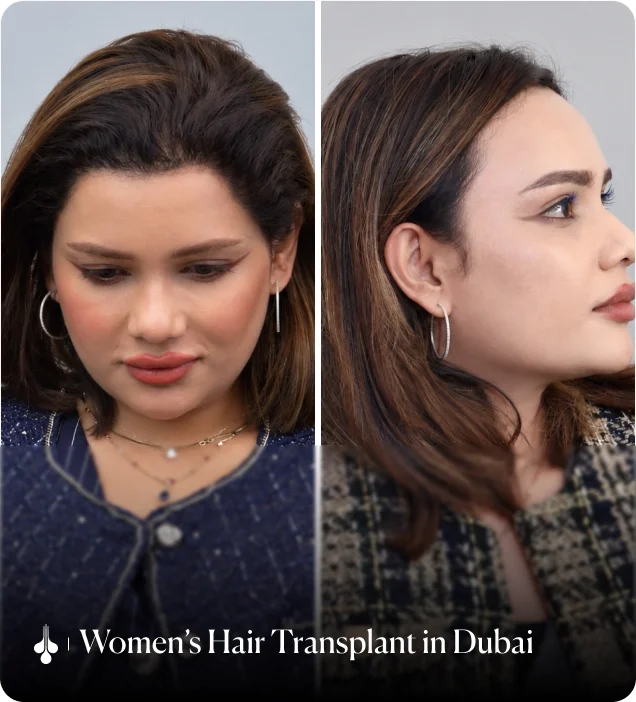
Women’s hair transplant in Dubai at Padra focuses on restoring thinning hairlines, temples, and selected areas of hair loss. Treatment plans consider donor hair quality, existing density, and the patient’s styling preferences.
Subtle, Natural, Transformative: Women Hair Transplant in Dubai
For most women, hair thinning isn’t a sudden shock; it’s a slow creep. You might first notice it when your ponytail feels a little lighter, or when that part in your hair starts looking wider than you remember. It’s more than just a “beauty issue”-it hits your confidence and makes getting ready in the morning feel like a chore.
This is exactly why clinics like Padra have become a go-to, as they focus specifically on the delicate approach required for female hair patterns.
When the usual serums and supplements stop cutting it, many women are turning to hair transplants in Dubai to get that density back. The goal isn’t a “pluggy” look; modern restoration is all about soft, subtle female hair transplant results that blend right in. Dubai has really stepped up as a global hub for this, mostly because the clinics there focus on the specific artistry needed for female hairlines.
How Much Does a Women Hair Transplant Cost in Dubai?
How you wear your hair helps shape the discussion about where more coverage may be needed. At Padra in Dubai, women’s hair transplants start from AED 4,000 and up. The doctor assesses your hair concerns, checks the donor area and reviews the density required before recommending a suitable treatment category. Your final cost is established after this evaluation, with the proposed plan explained in relation to the areas you want to address. Book your free consultation to explore your options and understand the price for your case.
Why Female Hair Restoration Requires a Specialized Approach
Hair loss in women does not always follow the same pattern seen in men. In many cases, women experience diffuse thinning rather than complete bald areas. The frontal hairline may remain intact, while density decreases across the scalp.
Because of this, women’s hair transplant in Dubai requires a different surgical strategy. The goal is not simply to fill a bald patch, but to rebuild fullness in a way that blends naturally with existing hair.
Female restoration also requires attention to:
- Hairline softness and shape
- Direction and angle of growth
- Donor area preservation
- Long-term stability of native hair
This is why female hair transplant planning is often more detailed and individualized.
Key Differences Between Female and Male Hair Transplants
Female hair restoration follows different aesthetic and medical priorities. The table below outlines the main clinical differences:
| Feature | Female Hair Transplant | Male Hair Transplant |
| Hair loss pattern | Diffuse thinning, wider part line | Receding hairline, bald patches |
| Hairline design | Soft, irregular, natural framing | Often more defined reconstruction |
| Donor area considerations | More conservative extraction needed | Usually stronger donor concentration |
| Density goals | Subtle thickening and blending | Higher density in bald zones |
| Long-term planning | Often combined with medical support | Often focused on permanent bald areas |
This is why Female hair transplants in Dubai require specialized experience rather than a standard approach.
FUE, DHI and NTF: Understanding the Differences
These terms describe different parts of a transplant plan. FUE refers to donor-graft harvesting, DHI to graft placement, and NTF to Padra’s approach to eyebrow restoration. Understanding their roles helps make the treatment plan clearer.
| Comparison point | FUE | DHI | NTF |
|---|---|---|---|
| What it describes | Follicular Unit Excision, commonly called Follicular Unit Extraction: individual graft harvesting from the donor area. | Direct Hair Implantation: a term commonly used for placement with a sharp implanter pen. | Nano Transplant Fakhraei: Padra’s named protocol for personalized eyebrow restoration. |
| Donor-graft selection | Individual follicular units are removed with a small punch, with attention to donor density and graft quality. | Grafts are commonly collected using FUE before being loaded into an implanter. | Fine donor hairs are selected to suit eyebrow texture and prepared for individual placement. |
| Placement and design | Harvested grafts can be placed using forceps or an implanter, according to the treatment plan. | A sharp implanter can create the recipient opening and place the graft in one step. | Brow shape, single-hair placement, shallow angles and changing growth directions guide the design. |
| Areas considered | Scalp, beard or eyebrows, depending on the diagnosis and donor suitability. | A placement option for suitable scalp or facial-hair restoration cases. | Eyebrow restoration, with attention to the brow front, arch and tail. |
| Healing and scarring | Small, round donor scars can remain. Their visibility depends on extraction and healing. | Donor scarring depends on the harvesting method. Implantation still involves skin entry and healing. | Temporary redness, sensitivity or small crusts may occur. Recovery varies with the procedure and individual healing. |
| What matters for the result | Donor preservation, suitable graft selection and careful placement planning. | Correct angle, depth and graft handling; an implanter alone does not determine the outcome. | A brow design that fits the face, appropriate donor-hair characteristics and controlled placement. |
Your doctor may combine harvesting and placement approaches within one plan. Natural-looking results depend on assessment, design, technique and aftercare. No method name alone guarantees density, graft survival or faster recovery.
Understanding the Cause Before Treatment
A professional clinic will always begin with a proper evaluation. Hair thinning in women can have multiple underlying factors, and procedure is only appropriate when the condition is stable and transplantable.
Common causes include:
- Female pattern genetic thinning
- Hormonal changes, including menopause or thyroid imbalance
- Post-pregnancy shedding
- Stress-related telogen effluvium
- Traction alopecia from tight hairstyles
- Autoimmune scalp conditions
- Nutritional deficiencies, such as low iron
Clinics providing women’s hair transplantation in Dubai often perform scalp analysis and medical review before confirming candidacy. This step is essential for safe planning and realistic results.

Hair Transplant for Women: How Is It Done at Padra?
At Padra, hair transplant procedures are planned with a focus on natural density, facial harmony, and preserving a feminine appearance throughout the process.
The procedure begins with a personalized hairline design. Our specialists consider your face shape, natural growth pattern, forehead proportions, and aesthetic goals to create a hairline that looks soft, balanced, and natural. After your hair is washed, the required donor and recipient areas are prepared for the procedure. The approach is planned carefully to support precise follicle placement while keeping the overall appearance as discreet as possible.
Local anesthesia is applied to the scalp to keep you comfortable during the procedure. If needed, it may be reapplied during the session to maintain comfort throughout the treatment. Healthy hair follicles are carefully extracted from the donor area, usually from the back or sides of the head. This step is performed with precision to protect donor area density and preserve the quality of the follicles.
The extracted follicles are placed into tiny openings in the recipient area. Their direction, angle, and distribution are carefully planned to match natural female hair growth and create a fuller, more seamless appearance. After the procedure, the treated areas are protected as needed, and you receive clear aftercare instructions. Following these guidelines helps support healing and protects the transplanted follicles during the early recovery stage.
Initial visible improvements usually begin within the following months, while fuller results typically develop between 6 and 12 months. As the transplanted hair grows and matures, the hairline and density gradually look more natural. The timing and extent of results vary from person to person.
Determining Candidacy for Hair Restoration
While surgical intervention is not always necessary, a hair transplant is often recommended when hair loss has stabilized, and conventional medical therapies have proven insufficient. The ideal candidate typically presents with healthy donor hair and specific areas of thinning that require targeted restoration.
In these instances, a female hair transplant in Dubai offers a long-term solution for restoring density. By utilizing stable follicles to ensure natural regrowth, the procedure provides a permanent and effective alternative for those seeking to address persistent hair loss.
Targeted Restoration Areas for Women
Female hair restoration is often focused on improving overall density rather than creating a completely new hairline. The transplant plan depends on the thinning pattern and the stability of the donor area.
In hair transplant for women in Dubai, the most commonly treated areas include:
- Frontal hairline softening, when recession has occurred gradually
- Temple thinning, which can change facial framing
- Crown and mid-scalp density loss, often seen in female pattern thinning
- Traction-related thinning, especially around the edges
- Localized patches, when the condition is stable and suitable for grafting
Each area requires a different graft angle, density approach, and long-term planning. Female procedures are typically designed to enhance fullness without overcorrecting.
Modern Techniques Used for Female Hair Transplants in Dubai
Dubai clinics now offer advanced methods designed to minimize scarring, protect donor areas, and deliver refined results.
Follicular Unit Extraction (FUE)
FUE is a commonly used technique in hair transplantation for women in Dubai. Individual hair follicles are taken from the donor area and placed into thinning regions. It is preferred for its natural results, minimal scarring, and relatively quick recovery.
Direct Hair Implantation (DHI)
DHI is a refined method where grafts are implanted directly using a specialized tool. It allows precise control over angle and density, making it especially suitable for delicate areas such as the hairline and temples in Women’s hair transplant in Dubai.
Customized Female Restoration Planning
Some women require a staged approach, particularly when thinning is widespread. In these cases, doctor may recommend combining transplantation with supportive therapies to maintain overall scalp health.
The most successful outcomes come from careful planning rather than aggressive grafting.
Donor Area Management in Women
One of the most important clinical differences in women’s hair transplantation in Dubai is donor preservation.
Unlike many male patients, women often have less concentrated donor density. Hair thinning may be more widespread, which means extraction must be conservative.
A professional clinic approach includes:
- Detailed donor assessment before procedure
- Avoiding overharvesting in visible zones
- Selecting grafts with the strongest growth potential
- Maintaining natural density in the back and sides
This careful planning ensures that the donor area remains healthy and visually balanced after the procedure.
The Art of Natural Hairline Design
A high-quality female hair transplant focuses on achieving a seamless, natural appearance by prioritizing soft, irregular hairline designs and precise graft spacing. By mimicking the natural direction of growth and focusing on gradual density building, the procedure ensures that the restored areas blend indistinguishably with existing hair.
To maintain long-term results and aesthetic integrity, practitioners in Dubai emphasize conservative donor management to avoid over-harvesting. When these technical standards are met, the transplanted hair grows normally, restoring thickness without creating harsh lines or obvious signs of surgical intervention.
Density Expectations and Natural Outcome Planning
Women seeking hair restoration often want results that are natural and discreet, aiming for fuller, healthier-looking hair rather than a dramatic transformation. In female hair transplants in Dubai, doctor prioritize gradually increasing density, avoiding overly thick frontal grafting, preserving soft, natural transitions along the hairline, and seamlessly blending new grafts with existing thinner hair.
The most successful outcomes are subtle-hair that looks naturally fuller, never obviously “added.” Because with the right approach, no one should ever guess you had a transplant.
Recommended Pre-Procedure Medical Preparation
Before procedure, most clinics offering Women’s hair transplant in Dubai follow structured preparation to improve graft survival and healing.
Clinical recommendations may include:
- Stabilizing active shedding before transplantation
- Treating underlying scalp inflammation
- Correcting iron or vitamin deficiencies when present
- Reviewing hormonal health when needed
- Avoiding harsh chemical treatments before procedure
- Planning the hairline conservatively for long-term natural results
A transplant works best when the scalp environment is healthy, and the hair loss pattern is well understood.
Procedure Overview in a Clinic Setting
A typical clinical process for hair transplant for women in Dubai includes several stages:
- Medical consultation and scalp evaluation
- Hairline and density design based on facial balance
- Donor graft extraction using FUE or refined methods
- Careful implantation with angle control
- Post-procedure follow-up and scalp monitoring
Most procedures are performed in a single day under local anesthesia, with comfort-focused care throughout.
Recovery and Growth Timeline
The recovery and growth process following a female hair transplant is a gradual journey that requires patience as the scalp heals and follicles stabilize. While most patients return to their routine activities within the first week despite mild redness, the hair itself undergoes a specific cycle: temporary shedding typically occurs within the first month, followed by early regrowth around months three to four.
Visible improvements significantly develop between months six and nine, with the final density and natural integration becoming fully apparent from the twelfth month onward.
Post-Procedure Healing and Follow-Up Care
Healing is generally straightforward, but proper follow-up is essential for optimal outcomes.
After a woman’s hair transplant in Dubai, clinical follow-up often includes:
- Monitoring graft healing in the first 10 days
- Supporting scalp recovery with gentle care
- Evaluating early regrowth after 3–4 months
- Reviewing density progression at 6 and 12 months
Long-term care may also include supportive therapies to protect native hair, especially in cases of ongoing female pattern thinning.Combined Treatment Approaches for Stronger Results
Supporting Long-Term Hair Health
In many cases, transplantation is part of a broader medical plan. Women may benefit from additional treatments that support both transplanted and native hair.
These may include:
- PRP therapy
- Medical scalp treatments
- Nutritional support
- Hormonal monitoring when appropriate
Clinics specializing in hair transplant for women in Dubai often combine surgical expertise with long-term care to ensure lasting results.
Combined Treatment Approaches for Stronger Results
In many women, transplantation is part of a broader strategy. Clinics offering Hair Transplant For Women in Dubai & Abu Dhabi often combine procedure with supportive options such as:
|
Supportive Option |
Purpose |
|
PRP Therapy |
Enhances healing and supports graft strength |
| Medical scalp treatments |
Reduces inflammation and shedding |
|
Nutritional correction |
Improves hair quality and growth environment |
| Long-term monitoring | Maintains balance between grafted and native hair |
This integrated approach is especially valuable in women with diffuse thinning rather than isolated bald spots.
Finding the Right Clinic in Dubai
Let’s be honest: picking a clinic isn’t just about finding a doctor who knows how to use a scalpel. It’s about finding a team that actually sees hair restoration as an art form. Women’s hairlines don’t follow the same rules as men’s; they need a softer touch and a real eye for female aesthetics. You’re looking for a result that looks like you, not a medical procedure.
This is where Padra Clinic has really made a name for itself, focusing on those subtle details that make a restoration look completely natural.
If you’re doing your homework on Dubai clinics, keep an eye out for these “green flags”:
- They dig into the “Why” first. A great clinic won’t just rush you into the chair. They’ll spend time obsessing over your scalp health and donor hair to make sure you’re actually a good candidate for this. If they don’t ask about your medical history, that’s a red flag.
- The “Invisible” Hairline. It shouldn’t look “placed” or artificial. The design has to respect your natural contours so the final look is soft and feminine. If it looks like a straight line, it’s not done right.
- Being gentle with your donor hair. They should treat the hair you do have like gold. The goal is to get the follicles they need without leaving behind visible scars or thinning out the back of your head in the process.
- Real talk, not sales pitches. You deserve a team that’s 100% honest about what’s possible. If a clinic is promising you “perfect” hair by next week, walk away. Hair growth takes time.
- They don’t ghost you after procedure. The journey doesn’t end when you leave the clinic. You want a team that’s checking in on you, monitoring your growth, and guiding you through the awkward “shedding” phase of recovery.
At the end of the day, the best clinics treat this as a life-changing transformation. It’s not just another appointment on their calendar-it’s your confidence on the line.
Why Dubai Is a Leading Choice for Female Hair Restoration
Dubai’s reputation in aesthetic medicine continues to grow because of its combination of:
- International clinical expertise
- Advanced technology and sterile surgical environments
- High privacy standards for female patients
- Structured follow-up care
- Strong cosmetic and medical regulation
For this reason, Hair Transplants for Females in Dubai are now considered among the most refined options in the region.
Hair Transplant For Women in Dubai & Abu Dhabi
The UAE has become one of the strongest regions for female hair restoration. While Dubai remains a central hub, Abu Dhabi also offers advanced clinical options.
Many women explore care options in both cities, especially when seeking specific expertise or techniques.
The availability of Hair Transplant For Women in Dubai & Abu Dhabi reflects the growing demand for medically guided, female-focused hair transplant services.
Restore Your Confidence: Final Outcomes
For many women, a transplant is not about changing appearance. It is about restoring what has gradually been lost. The most successful outcomes are those that look effortless, natural, and balanced.
With modern techniques and careful clinical planning, hair transplantation in Dubai continues to offer women a reliable solution for long-term density restoration.
Clinics such as Padra highlight how advanced care and personalized planning can support natural, lasting results. Dubai’s medical standards, combined with aesthetic precision, have made Female hair transplants in Dubai one of the most refined options in the region.
For women seeking subtle improvement with lasting results, Hair Transplants represent a medically advanced and highly personalized approach to hair restoration.