
Hair PRP in Kuwait
Hair PRP in Kuwait uses platelet-rich plasma prepared from a small blood sample and injected into planned areas of the scalp. In selected patients with active follicles, treatment may support stronger-looking hair, improved density, or reduced shedding. The recommended plan depends on the cause and pattern of hair loss, scalp condition, and individual response.

Who We Are
Padra Kuwait is part of Padra’s international hair restoration and medical aesthetics network. Hair-loss treatment starts with understanding the individual case, from the pattern and progression of thinning to follicle activity, scalp condition, medical history, and treatment goals.
- Medically guided non-surgical treatment options
- Individual planning for different hair-loss patterns
- Supportive and restorative care based on suitability
- Coordinated follow-up across the Padra network
Hair PRP Planned Around Your Hair Loss
At Padra Kuwait, the focus is not simply on offering PRP, but on understanding whether it fits your hair-loss condition. The assessment helps distinguish cases that may benefit from supportive PRP treatment from those better suited to another non-surgical option or a hair transplant evaluation.
What to Know About Hair PRP in Kuwait
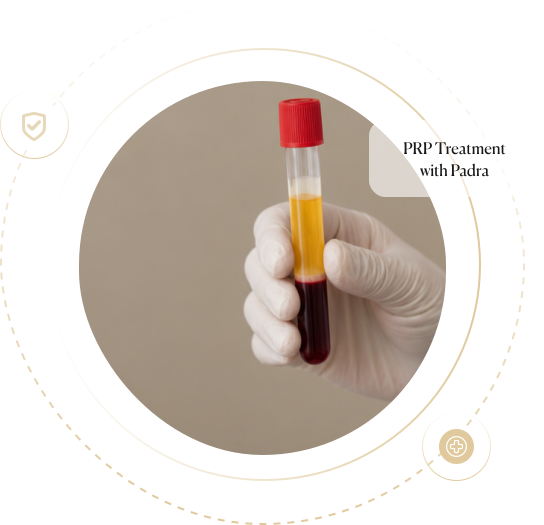
Hair PRP is a non-surgical, minimally invasive treatment in which platelet-rich plasma is prepared from a small sample of the patient’s blood and injected into selected scalp areas. Its role is to support existing follicles as part of a broader hair-loss plan.
Key points:
- Uses plasma derived from the patient’s own blood
- May support active or miniaturized follicles
- Can be considered for selected thinning and reduced density
- Treatment schedules are personalized
- Results vary and require time to assess
- Does not regenerate follicles in long-standing bald areas
Who Is an Ideal Candidate?
Hair PRP may be appropriate when assessment confirms that active follicles remain and supportive treatment is reasonable.
- Early or progressive hair thinning
- Reduced density with existing follicles
- Men and women with an assessed hair-loss pattern
- Patients with realistic expectations around treatment and maintenance
The patient’s blood is processed to prepare platelet-rich plasma, which contains platelets and signaling proteins. This plasma is delivered into selected scalp areas and may support hair quality or density in suitable patients. Effectiveness varies according to the diagnosis, protocol, and individual response.
The treatment process includes scalp assessment, blood collection, PRP preparation, targeted injections, and aftercare guidance. The total session time depends on the treatment area, preparation process, and clinical protocol.
- Review medical history and treatment areas
- Collect a small blood sample
- Prepare the PRP
- Inject selected scalp areas
- Explain scalp care and follow-up
PRP should be assessed over several months rather than after a single session. Some patients may notice less shedding or improvements in hair quality or density. Whether treatment continues or moves into maintenance depends on the individual response and overall hair-loss plan.
Where Hair PRP Fits in Your Hair-Loss Treatment Plan
| Treatment | What It Uses | Primary Role | Key Limitation |
|---|---|---|---|
| Hair Filler | Product-specific injectable scalp formulation | May support scalp or hair quality in selected cases, depending on the approved product and protocol. | Evidence and claims vary by product. The exact formulation and indication must be verified. |
| Hair PRP | Platelet-rich plasma prepared from the patient’s own blood | May support hair density or quality in selected patients with active follicles. | Protocols and response vary. PRP does not create new follicles in long-standing bald areas. |
| Hair Mesotherapy | Clinician-selected intradermal formulation | A targeted supportive scalp treatment that may be considered after diagnosis. | There is no universal formulation or treatment schedule. Evidence varies by protocol. |
Hair PRP in Kuwait may be considered as one option within a broader hair-loss treatment plan. It uses platelet-rich plasma prepared from the patient’s own blood, distinguishing it from laser-based treatments and injectable formulations such as mesotherapy or hair filler.
Key points:
- Uses the patient’s own platelet-rich plasma.
- Designed to support existing active follicles.
- May support density, hair quality, or reduced shedding.
- The number of sessions depends on the individual treatment plan.
- PRP does not create new follicles in long-standing bald areas.
-
Fotona Laser for Hair Loss
A non-invasive laser option that may provide supportive care for selected cases of thinning.
-
Hair PRP
Uses platelet-rich plasma prepared from the patient’s own blood to support existing active follicles in appropriate cases.
-
Hair Mesotherapy
Delivers a selected formulation directly into targeted scalp areas as part of diagnosis-led supportive care.
-
Hair Filler
An injectable option whose benefits and limitations depend on the specific approved product and protocol.
-
Hair Transplant for Men
A surgical option for suitable men when permanent hair loss cannot be addressed through supportive treatments alone.
-
Hair Transplant for Women
A customized transplant option for selected women when hair-loss pattern, donor quality, and medical assessment support surgery.
10:00 AM – 9:00 PM
Hair PRP FAQs in Kuwait
Hair PRP is a minimally invasive treatment that uses platelet-rich plasma prepared from the patient’s own blood and injected into selected scalp areas.
It may be suitable for selected men and women with thinning, shedding, or miniaturized hair where follicles are still active.
No. PRP does not create new follicles and is not expected to restore long-standing bald areas.
No. PRP uses the patient’s own blood, while mesotherapy and hair filler use different injectable formulations.
Temporary redness, tenderness, mild swelling, or scalp sensitivity may occur after treatment.
A typical session at Padra Kuwait may take around 45–60 minutes.
The number of sessions varies depending on the hair-loss pattern, treatment plan, and individual response.
Session intervals depend on the selected protocol and should be confirmed after assessment.
Changes develop gradually over several months, and results vary between patients.
Some patients may benefit from maintenance sessions depending on their response and long-term treatment goals.
Cost depends on the number of sessions, treatment area, and individual treatment plan.
Key factors include the number of sessions, treatment area, and recommended PRP protocol.
Yes. The final cost can be confirmed after assessment and treatment planning.
This depends on the treatment plan, so patients should confirm whether pricing is per session or for a treatment course.
Costs vary because PRP, mesotherapy, hair filler, and hair transplantation are different treatment options.