
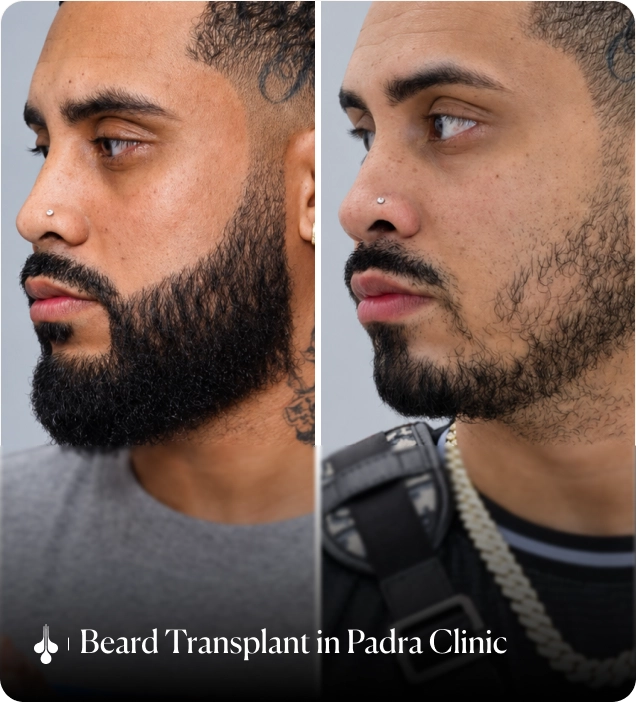
What Is a Beard Transplant?
A beard transplant is a surgical procedure where hair follicles are extracted from a donor site (usually the back of the head) and transplanted to the beard area. It’s a popular choice for men seeking to enhance their beard density or fill in patchy areas.
There are two primary techniques for beard transplants:
- Follicular Unit Extraction (FUE): Individual hair follicles are extracted and transplanted. This method minimizes scarring and ensures precise placement.
- Follicular Unit Transplantation (FUT): A strip of hair is removed from the donor area, and individual grafts are implanted into the beard.
With modern techniques, the beard transplant results are virtually indistinguishable from a natural beard, offering seamless integration and a fuller appearance.
Beard Transplant Cost Shaped Around Your Look
Filling a few beard gaps and planning wider facial coverage can call for different levels of treatment. At Padra, the doctor evaluates your existing facial hair, donor area and preferred beard density before recommending the right treatment category. Beard transplants start from AED 4,000 in Dubai, SAR 4,000 in Saudi Arabia, QAR 4,000 in Qatar and KWD 400 in Kuwait, with the final cost set after assessment. Book your free consultation to discuss your preferred beard shape and understand the price of a plan built around your needs.
FUE, DHI and NTF: Understanding the Differences
These terms describe different parts of a transplant plan. FUE refers to donor-graft harvesting, DHI to graft placement, and NTF to Padra’s approach to eyebrow restoration. Understanding their roles helps make the treatment plan clearer.
| Comparison point | FUE | DHI | NTF |
|---|---|---|---|
| What it describes | Follicular Unit Excision, commonly called Follicular Unit Extraction: individual graft harvesting from the donor area. | Direct Hair Implantation: a term commonly used for placement with a sharp implanter pen. | Nano Transplant Fakhraei: Padra’s named protocol for personalized eyebrow restoration. |
| Donor-graft selection | Individual follicular units are removed with a small punch, with attention to donor density and graft quality. | Grafts are commonly collected using FUE before being loaded into an implanter. | Fine donor hairs are selected to suit eyebrow texture and prepared for individual placement. |
| Placement and design | Harvested grafts can be placed using forceps or an implanter, according to the treatment plan. | A sharp implanter can create the recipient opening and place the graft in one step. | Brow shape, single-hair placement, shallow angles and changing growth directions guide the design. |
| Areas considered | Scalp, beard or eyebrows, depending on the diagnosis and donor suitability. | A placement option for suitable scalp or facial-hair restoration cases. | Eyebrow restoration, with attention to the brow front, arch and tail. |
| Healing and scarring | Small, round donor scars can remain. Their visibility depends on extraction and healing. | Donor scarring depends on the harvesting method. Implantation still involves skin entry and healing. | Temporary redness, sensitivity or small crusts may occur. Recovery varies with the procedure and individual healing. |
| What matters for the result | Donor preservation, suitable graft selection and careful placement planning. | Correct angle, depth and graft handling; an implanter alone does not determine the outcome. | A brow design that fits the face, appropriate donor-hair characteristics and controlled placement. |
Your doctor may combine harvesting and placement approaches within one plan. Natural-looking results depend on assessment, design, technique and aftercare. No method name alone guarantees density, graft survival or faster recovery.
Benefits of a Beard Transplant
A beard transplant provides a range of benefits, both aesthetic and emotional:
- Achieve a Full, Natural Beard: Say goodbye to patchy or thin areas. A beard transplant creates uniform density for a natural look.
- Boost Confidence: A fuller beard can significantly enhance self-image and make styling easier.
- Permanent Results: Unlike temporary fixes or treatments, a beard transplant offers a lifelong solution with proper care.
- Styling Flexibility: Once healed, you can trim, shape, and groom your beard however you like.
Whether you want a rugged stubble or a bold, statement beard, this procedure offers limitless possibilities.
Beard Transplant Procedure: What to Expect

Understanding the process can help you feel more comfortable and prepared for your journey:
- Consultation:
Your doctor will assess your facial structure, hair density, and goals to determine the number of grafts needed. This personalized approach ensures optimal results. - The Procedure:
- Donor Hair Extraction: Hair follicles are carefully removed from the donor site under local anesthesia.
- Graft Placement: The doctor implants each follicle into the target areas of the beard, following your natural hairline and growth patterns
At Padra Clinic, our advanced techniques and post-op care ensure a smooth experience and stunning outcomes.
Beard Transplant Aftercare: Ensuring Proper Healing and Growth
Proper aftercare is essential for optimal healing and long-term beard growth. Follow these guidelines to protect your transplanted follicles and ensure the best results.
1. First 48 Hours
- Avoid touching or scratching the transplanted area.
- Keep your face dry; do not wash the area.
- Sleep with your head elevated to reduce swelling.
2. Cleaning and Washing
- After 48 hours, gently cleanse with a mild shampoo.
- Use a cup of lukewarm water instead of direct shower pressure.
- Pat dry—avoid rubbing or applying pressure.
3. Managing Swelling and Redness
- Mild swelling and redness are normal for a few days.
- Apply cold compresses to the donor area if needed.
- Avoid strenuous activities and sweating for one week.
4. Avoiding Irritants
- No smoking or alcohol for at least one week to aid healing.
- Avoid direct sunlight and harsh skincare products for a month.
5. Shedding and Growth
- Transplanted hairs may shed within 2–4 weeks—this is normal.
- New growth starts at 3–4 months, with full results in 8–12 months.
6. Long-Term Care
- Once healed, you can shave and style as usual.
- Maintain beard hygiene and use nourishing oils for healthy growth.
By following these steps, you’ll ensure a smooth recovery and a natural-looking, long-lasting beard transplant.
How Much Does a Beard Transplant Cost?
The cost of a beard transplant varies depending on factors such as:
- Number of Grafts: The more grafts required, the higher the cost.
- Clinic Location and Expertise: Premium clinics with experienced doctors may charge more but provide better results.
- Techniques Used: Advanced methods like FUE may cost slightly more due to their precision.
On average, the price is $4000. At Padra Clinic, we offer transparent pricing, affordable packages, and financing options to ensure accessibility without compromising quality.
Why Choose Padra Clinic for Your Beard Transplant?
Padra Clinic has earned a reputation as a leading provider of hair transplant and restoration services, including beard transplants. Here’s why patients trust us:
- Expert doctors: Our specialists have extensive experience in performing precision beard transplants.
- State-of-the-Art Technology: We use the latest techniques like FUE to ensure natural-looking and permanent results.
- Personalized Care: From consultation to recovery, we tailor the experience to your unique needs.
- Satisfied Clients: With glowing reviews and success stories, we’re proud to be a trusted name in the field.
Your journey to a fuller beard starts with us. Book a consultation today at Padra Clinic!
Conclusion
A beard transplant is a life-changing procedure for men seeking a full, natural, and confident look. With advanced techniques and experienced specialists, Padra Clinic delivers outstanding results tailored to your goals. Ready to transform your appearance? Contact Padra Clinic today and take the first step towards achieving your dream beard.