








That moment you walk out of the clinic—that initial rush of hope, the excitement of knowing you’ve finally taken the leap—it’s amazing. You’ve invested time, money, and courage into changing your future. But let’s be real: the surgery itself is only the ticket to the dance. The next few weeks and months, the often-overlooked phase of hair transplant recovery, are what ultimately determine whether you’ll look back on this journey with massive satisfaction or just a deep sense of regret.
This process isn’t rocket science, but it demands patience and a little discipline. The first two weeks, in particular, require a near-religious adherence to simple guidelines, because this is when the fragile new grafts either lock into place or are lost forever. I’ve consulted with hundreds of men and women who have navigated this path, and the single, unifying factor among the success stories—the ones who send me grinning selfies a year later showing off natural, dense coverage—is simple: they followed the rules, even when it was inconvenient. The quality of your results is 10% the surgeon’s and 90% your commitment to the recovery process. Ignore the aftercare, and you risk patchiness, odd angles, and wasting the investment you just made. Here’s a detailed, phase-by-phase breakdown of the journey ahead, starting with the most critical days.
Book Your Personalized Recovery Consultation
The First Week: Treat Your Head Like It’s Made of Glass
Days 1–3 are the most fragile. Those new grafts are literally just sitting there, held in place by tiny blood clots. Is hair grafts secure after 3 days? Honestly, no, not really. One accidental bump against a door frame and you can lose a bunch. By day 5 things feel a lot better, are hair grafts secure after 5 days? Yes, way more than day 3, but I still wouldn’t risk wearing a baseball cap or scratching an itch.
Your clinic will give you a special shampoo and a little cup for washing. You basically pour lukewarm water over your head like you’re watering a cactus, no direct shower stream on the grafts for at least 4–5 days. Sleep with two pillows so your head is elevated; it cuts down the puffiness around your eyes that freaks everyone out on day 2–3.
No gym, no beer, no bending over to tie your shoes hard. Hair transplant downtime the first week is real. Most people take 7–10 days off work if their job involves any physical stuff.
Week 2–4: Looking Weird but Feeling Better
By 14 days after hair transplant, the scabs start falling off when you wash (don’t pick them, ever). The redness calms down, and you can usually go back to the office without anyone doing a double-take.
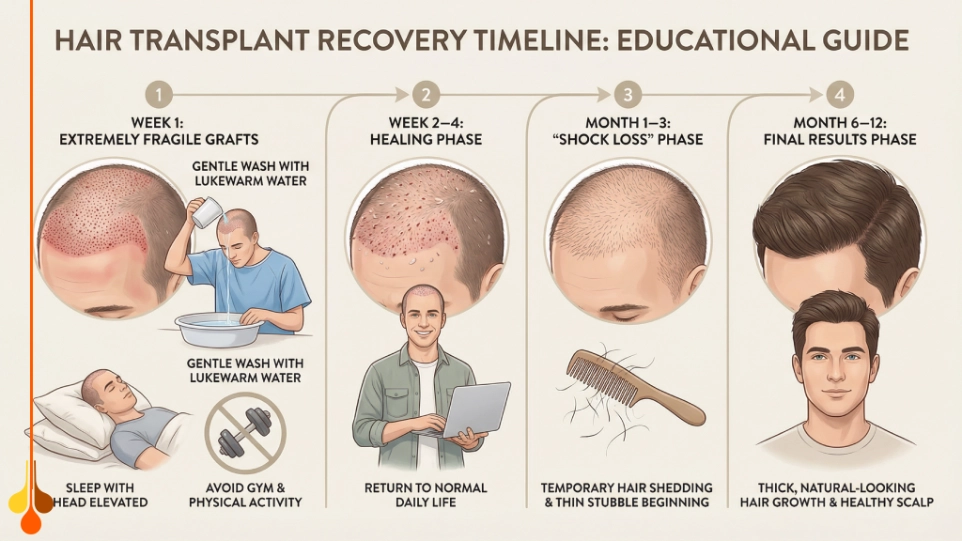
This is when care after hair transplant surgery gets easier. You can finally take a normal shower, though still no rubbing the scalp like you’re trying to get gum out of a kid’s hair. Light cardio is usually fine after day 10–14, but wait a full month before lifting heavy again.
Month 1–3: The Ugly Duckling Phase
Welcome to shock loss. Somewhere around week 3–6, a bunch of the transplanted hairs fall out. It looks terrible and everyone panics. Relax, it’s supposed to happen. The follicle is still alive underground; it’s just resetting. 1 month after hair transplant care is mostly about not freaking out and keeping your scalp moisturized.
You’ll see tiny stubble poking through by month 2–3. It’s thin and weird at first, but it’s coming.
Month 6–12: The Big Reveal
This is the part people post on Reddit with the “worth every penny” caption. Hair keeps getting thicker every month. By month 8–9 most guys can buzz it short and it looks totally normal. Full, final density usually hits right at the 12-month mark.
Why Aftercare Actually Matters
Do it right and you get:
- Natural-looking hair that no one can tell is transplanted
- Almost zero chance of infection
- Faster, cleaner healing
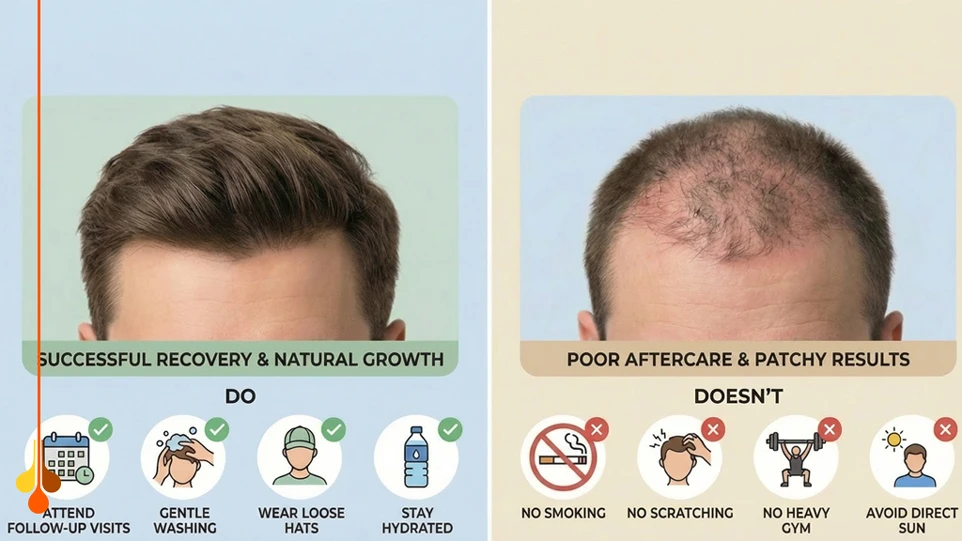
Skip the rules and you risk patchiness, weird angles, or losing grafts you paid good money for.
Hair transplant post op care isn’t rocket science, just common sense: don’t smoke, don’t scratch, don’t go full beast-mode at the gym too soon, and show up for your follow-ups.
Want to make sure you’re doing everything right for your specific case? Book Your Personalized Recovery Consultation, takes 10 minutes and they’ll look at your photos and tell you exactly what to do next.
The Bottom Line
Hair transplant recovery is 10% surgery and 90% not screwing it up afterward. Follow the boring rules, take your meds, keep it clean, stay patient, and a year from now you’ll forget you ever worried about a receding hairline.
Ready to get this right and end up with hair that looks like it’s always been yours? Start Your Recovery Journey Today, one quick message to the clinic and you’ll have a pro watching your back the whole way.
Ready for Personalized Peace of Mind?
Book Your 10-Minute Recovery Consultation.