
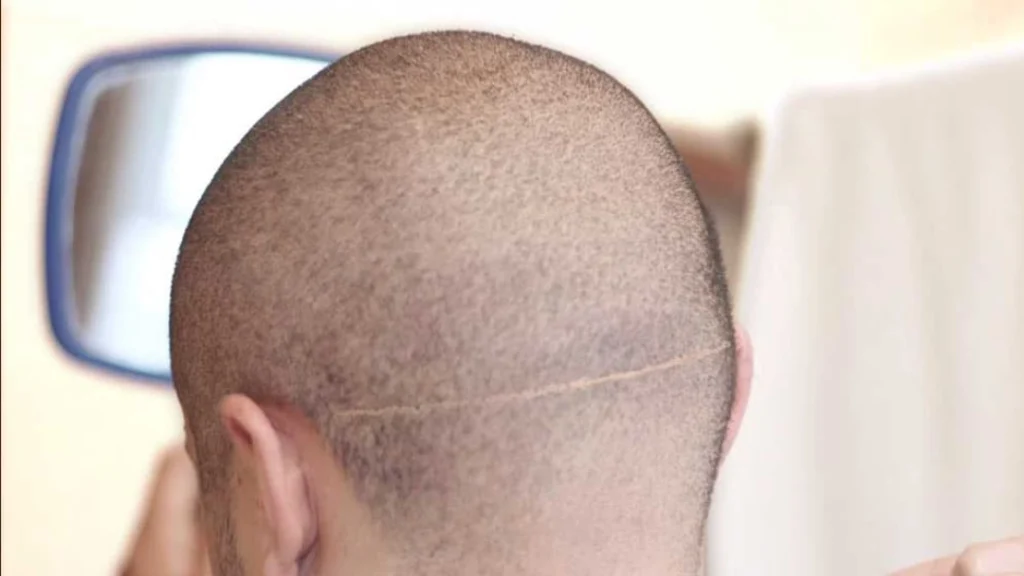
A hair transplant scar forms when your skin heals after the minor surgical wounds from the hair restoration procedure. Think about these scars like tiny reminders left after any minor injury you’ve had. These scars differ based on the type of hair transplant method you choose, whether it’s Follicular Unit Transplantation (FUT) or Follicular Unit Extraction (FUE). Each method leaves a distinct pattern and visibility of scars.
Do Hair Transplants Leave Scars?
Yes. A hair transplant procedure will leave scars. These scars usually appear where hair follicles are harvested (the donor area) or implanted (the recipient area). Although they might seem concerning initially, most of these scars become so faint with time and proper care that you’ll forget they’re even there. It’s all part of your body’s natural healing journey, and understanding how they form and heal can help ease your mind.
Are Hair Transplant Scars Permanent?
Technically, yes, hair transplant scars are permanent. But the word “permanent” shouldn’t alarm you. Just like small scars you might have from childhood scrapes or cuts, these scars significantly fade over time, becoming very difficult to detect. Modern techniques and proper aftercare ensure these scars usually blend seamlessly into your skin, making them virtually invisible.
Types of Hair Transplant Scars (Procedure-Based)
The visibility of these scars in the donor area after a hair transplant also depends greatly on your hair length and style choices. If you choose to wear your hair longer, the scars will naturally be hidden beneath your hair. Even with shorter hairstyles, modern hair transplant methods produce minimal scarring, ensuring your appearance remains natural.
FUT Scars (Follicular Unit Transplantation)
FUT, or Follicular Unit Transplantation, involves removing a strip of skin from the back or side of your scalp. Imagine this like cutting a thin strip of paper from a larger sheet. The resulting scar from FUT tends to be linear and noticeable if you prefer very short haircuts. However, it’s generally hidden if you wear your hair slightly longer.

Healing from an FUT scar requires careful post-surgery care. Initially, this scar might appear reddish or slightly raised, but over time, it fades significantly. Although this method leaves a more noticeable scar than other methods, skilled surgeons use precise techniques to minimize its appearance, making it easy to manage and cover.
FUE Scars (Follicular Unit Extraction)
Follicular Unit Extraction (FUE) creates tiny, dot-like scars. Think of these like tiny pinpricks—small dots scattered across the donor area. Unlike FUT, there’s no single large scar but rather numerous tiny scars that blend easily into the surrounding hair.
One of the advantages of FUE is that these scars become nearly invisible once your hair grows back. If you keep your hair short or shaved closely, you might spot faint dots, but typically they’re subtle enough not to draw attention. This method has become popular precisely because it minimizes visible scarring so effectively.
Recipient Area Scars
Recipient area scars form where the new hair follicles are implanted. Initially, you might notice very tiny puncture marks, similar to little dots created by a needle. These scars heal quickly and generally disappear completely beneath the new hair growth.
Most people never notice recipient area scars because your transplanted hair quickly covers them. Good aftercare, such as avoiding scratching and following your surgeon’s guidelines, ensures these scars heal swiftly and invisibly, leaving you with a natural-looking hairline and density.
FUE vs FUT vs DHI Scars: What Is the Difference?
FUE and FUT describe how follicles are harvested. DHI generally describes an implantation approach using an implanter pen, usually after FUE harvesting. Comparing them as three entirely separate extraction methods can be misleading.
Are These Scars Visible?
Visibility depends on factors like the chosen transplant method, your body’s natural healing process, and your hairstyle. FUT scars can be more visible if your hair is short, appearing as thin lines across the back of your head. FUE scars, on the other hand, are typically less noticeable, appearing as faint, scattered dots easily hidden by hair growth.
What Do Hair Transplant Scars Look Like?
Yes. Removing follicles creates small surgical wounds, and the skin repairs those wounds with scar tissue. The harvesting method determines the main donor-area scar pattern.
The recipient area also undergoes small incisions or punctures. These usually become less noticeable as healing progresses and hair grows, although visible textural changes can occur.
A “scarless hair transplant” is therefore not an accurate description of surgery. Avoiding a linear scar is different from avoiding all scarring.
FUE Scars
FUE scars usually appear as small, round dots distributed across the back and sides of the scalp. Once healed, some look lighter than the surrounding skin. Their visibility depends on the size and distribution of the extraction sites, remaining donor density, and healing.
With longer hair, these marks may be difficult to see. A very short buzz cut or shaved head can reveal both the dots and any unevenness caused by excessive extraction. Learn more about the procedure in our FUE hair transplant guide.
FUT Scars
An FUT hair transplant scar is typically a horizontal line across the donor area at the back of the head. It follows the incision used to remove a strip of hair-bearing scalp.
A healed scar may be narrow and flat, but some become wider or raised. Longer hair often conceals the line, while short haircuts can expose it. The FUT hair transplant guide explains how strip harvesting and wound closure work.
Recipient-Area Marks
Early redness, crusting, and small puncture marks are not the final appearance of a transplant scar. Persistent indentations, raised bumps, or uneven skin texture need assessment once the initial healing stage has passed.
The distinction matters: temporary healing changes should not automatically be labelled permanent scarring, but persistent abnormalities should not be dismissed as normal recovery.
Factors That Influence Scarring
When it comes to dealing with a hair transplant scar, several factors determine how noticeable your scar might be. First, the technique used in the hair transplant makes a big difference. Methods like FUT (Follicular Unit Transplantation), where a strip of scalp is removed, typically result in more visible scars compared to the minimally invasive FUE (Follicular Unit Extraction). With FUE, individual hair follicles are extracted, leaving tiny, less noticeable dot scars.
Solutions for Hair Transplant Scars
If you’re concerned about existing hair transplant scars, several effective solutions can help. One popular option is scalp micropigmentation (SMP), a method where tiny dots of pigment are tattooed onto the scalp. This technique matches your natural hair color and effectively camouflages scars, making them practically invisible. SMP works exceptionally well, especially for those who prefer short haircuts.
Another great solution is undergoing a second, carefully planned FUE transplant. Surgeons can strategically place new grafts into scar tissue, effectively concealing previous scars by encouraging natural hair growth in those areas. This approach is common and highly successful for people who have noticeable scars from older transplant methods.
Can Hair Grow Through Hair Transplant Scars?
Hair does not naturally regrow within scar tissue where the original follicles have been destroyed. Hair growing beside a scar may cover it, but that is different from new growth within the scar itself.
“Hair does not naturally grow in scarred skin where follicles have been destroyed.”
However, transplanting healthy follicles into selected scars is possible. This may be considered for a healed FUT scar or certain scars caused by injury or previous surgery.
The main limitation is the condition of the tissue. Scarred skin can have reduced blood supply and altered thickness or stiffness, making graft survival less predictable than in healthy scalp. A surgeon assesses scar maturity, circulation, donor availability, and whether inflammation is present.
A small test transplant or staged treatment may be considered before attempting wider coverage. Published research supports transplantation in selected postsurgical scars, but it does not establish a guaranteed outcome for every scar. Our guide to hair transplantation on scar tissue explores this distinction further.
Choosing the Right Hairstyle
One effective way to hide a hair transplant scar is through hairstyle adjustments. Growing your hair slightly longer can easily cover minor scars, especially those tiny dots left by FUE. If you’re comfortable wearing your hair longer, this is a simple and effective solution. I remember how Mark switched to a slightly longer hairstyle after his transplant. The scars became virtually invisible, and he felt much more confident.
Micropigmentation
Micropigmentation is another great option, especially if your scar is thin but noticeable. This procedure involves tattooing tiny dots that mimic hair follicles, effectively camouflaging the scar. The results look natural and can significantly boost your confidence, especially if you’re not keen on longer hair.
Laser Scar Revision
For more persistent or noticeable scars, laser scar revision is an option worth considering. Lasers can resurface the skin, smoothing out texture and blending scars into the surrounding skin more naturally. This method is effective and usually has minimal downtime, making it a convenient choice for many people.
Second Hair Transplant (Especially After FUT)
Sometimes, a second hair transplant is recommended to address noticeable scars from previous procedures, particularly after FUT surgeries. During a second transplant, follicles can be carefully implanted around or directly into scar tissue, significantly improving the appearance and reducing visibility.
Scar Excision or Surgical Revision
If your scars are severe, surgical revision or scar excision might be recommended. This involves surgically removing the scar tissue and stitching the skin neatly to create a thinner, less noticeable line. It’s effective but requires another surgery, so make sure you’re comfortable with the idea.
Topical treatments or injections
Topical treatments and injections can also play a supportive role in scar management. Options like silicone gels, steroid injections, and other medicated creams can help soften scars and reduce redness and itching. These treatments are often used alongside other methods to achieve the best possible outcomes.
Why FUE Is Commonly Chosen When Scarring Is a Concern؟
A Follicular Unit Extraction (FUE) hair transplant is a popular method for people experiencing hair loss. Unlike older techniques where surgeons would cut a strip of skin from the scalp, FUE is much less invasive. Your doctor individually extracts tiny hair follicles from a donor area, usually from the sides or back of your head. Because there’s no large incision involved, the recovery is quicker, and discomfort is minimal.
But does it leave a hair transplant scar? Yes, but these scars are tiny, almost like little dots, and they’re pretty subtle. Once your hair grows back, they’re typically invisible unless you decide to shave your head closely. Even then, modern techniques ensure they’re hardly noticeable.
Tips to Minimize FUE Scarring
Before your procedure, picking a skilled, experienced surgeon is vital. Choosing someone who knows exactly what they’re doing reduces the chances of visible hair transplant scars. Avoiding alcohol and cigarettes before surgery helps a lot too because these habits slow down your healing process.
After your transplant, it’s crucial to follow your doctor’s aftercare instructions closely. They’ll usually suggest keeping the area clean and moisturized, and you might need special creams to help your skin heal. Gentle massage of your scalp after a few weeks can boost circulation and soften the scar tissue, making scars even less visible.
Sun exposure can darken scars, so wear a hat or use sunscreen for a few months after surgery.
Common Misconceptions About FUE Scars
A frequent myth is that FUE doesn’t leave any hair transplant scar at all. While it’s true FUE dramatically reduces visible scarring compared to traditional methods, you still get those tiny dot-like scars. But honestly, they’re nothing like the old-school FUT (Follicular Unit Transplantation) method, where scars can stretch and become very noticeable.
Another common misunderstanding is thinking these scars won’t improve. Actually, with good aftercare, most FUE scars fade significantly over time. They won’t disappear entirely, but they’ll become practically invisible.
If you’re worried about scars, there are even solutions like scalp micropigmentation (SMP). SMP tattoos tiny dots that blend perfectly with your hair color and help hide any small scars.
When to Seek Additional Help
It’s rare, but sometimes complications do happen. If you see any unusual redness, swelling, or sores that don’t heal quickly, don’t wait—contact your doctor right away. Quick action prevents worse outcomes and helps your healing go smoothly. Most complications are minor and easily managed if caught early.
Setting Expectations
Realistically, completely eliminating a hair transplant scar isn’t always achievable, but you can significantly reduce its visibility. Scars fade naturally over time, typically becoming much less noticeable within a year. The initial redness and swelling usually disappear within weeks, but complete maturation. when the scar reaches its final appearance-can take up to 12 to 18 months.
Understanding this timeline is essential to avoid frustration. Immediately after your procedure, scars might seem prominent, causing unnecessary worry. Remember that the healing process is gradual, and improvements happen continuously. Patience and proper aftercare, such as using recommended ointments and protecting the scar from sun exposure, help speed this up. It’s normal for your scar to look its worst right after surgery, so give it some time before evaluating results. Over months, you’ll likely find the scar less noticeable, letting you enjoy the full benefits of your hair restoration without constant worry.
For a broader view of how the overall outcome develops beyond scar healing, reviewing hair transplant result cases can help illustrate changes in density, coverage, and the final appearance after recovery.
Contact us at Padra Clinic for a complementary consultation session and voice any concerns you may have. Our specialists are always there to answer your questions.
Conclusion
An FUE hair transplant can truly transform your life. It restores not just your hair but also your confidence. With proper care and realistic expectations, those tiny scars become an afterthought, overshadowed by the joy of having thick, healthy hair again. If you’re considering FUE, don’t let concerns about hair transplant scars stop you—the outcome is usually far better than most people expect.