




Seeing your scalp can reflect naturally fine hair or low hair density, but new or increasing visibility can also signal active thinning. If you are thinking, “my hair is so thin I can see my scalp,” start with three questions: has it changed, how quickly, and where? Those answers matter more than one photograph or one shower’s worth of shed hair.
These are clues, not diagnoses. Different causes can overlap.
Fine hair describes individual strand diameter; hair density describes how many hairs occupy an area of scalp. Thinning means coverage is decreasing from your own baseline. Naturally fine hair and active hair loss are therefore not interchangeable.
Common Causes
· Genetics: follicle miniaturisation. Inherited pattern hair loss produces progressively finer hairs.
· Stress or illness: telogen effluvium. More hairs enter a resting phase before shedding.
· Hormonal changes: altered hair cycling. Childbirth, menopause, and thyroid disorders can affect coverage.
· Styling damage: breakage or traction. Chemicals, heat, and sustained pulling can reduce fullness.
Genetics and pattern baldness
A follicle is the skin structure that produces a hair. Hair miniaturisation means affected follicles produce finer, shorter hairs, reducing coverage even before obvious baldness develops.
In male pattern baldness, genetically susceptible follicles respond to DHT, or dihydrotestosterone, a hormone derived from testosterone. Female pattern hair loss also involves miniaturisation, but its hormonal biology is more complex; it does not automatically mean someone has high testosterone.
Stress and illness
Telogen effluvium is excessive shedding caused by a shift of hairs into their resting phase. Fever, surgery, major illness, substantial weight loss, and significant stress can trigger it. Shedding often becomes noticeable two to four months later, so the relevant event may no longer feel recent.
Hormones and nutritional changes
Postpartum shedding follows pregnancy-related changes in hair cycling. Menopause can coincide with more noticeable pattern thinning, while an underactive or overactive thyroid can contribute to diffuse loss. Iron deficiency and inadequate nutrition also deserve consideration, especially after restrictive dieting. Supplements are not a substitute for identifying the cause.
In women, irregular periods, new facial hair, or significant acne alongside thinning are worth mentioning. These findings may justify investigating androgen-related conditions; scalp visibility alone does not establish a hormonal disorder.
Styling and breakage
Bleaching, repeated heat exposure, and rough handling can break shafts above the skin. Tight braids, ponytails, extensions, or other pulling styles can cause traction alopecia, hair loss from repeated tension. Breakage is not identical to follicle loss, but prolonged traction can cause lasting damage.
Is This Sudden or Gradual?
Sudden shedding over weeks raises questions about recent illness, childbirth, medication changes, dietary restriction, or another trigger. Tell your clinician when shedding started and what happened during the preceding months. Do not stop prescribed medication without advice.
Gradual change over months or years is more consistent with pattern thinning, particularly when the part becomes wider or the crown progressively loses coverage. However, a sudden shedding episode can reveal underlying pattern hair loss. The two are not mutually exclusive.
Newly noticed does not necessarily mean newly started. A different haircut, overhead photograph, or bathroom mirror may simply make an existing pattern easier to notice.
Where Is Your Scalp Most Visible?
Along the part
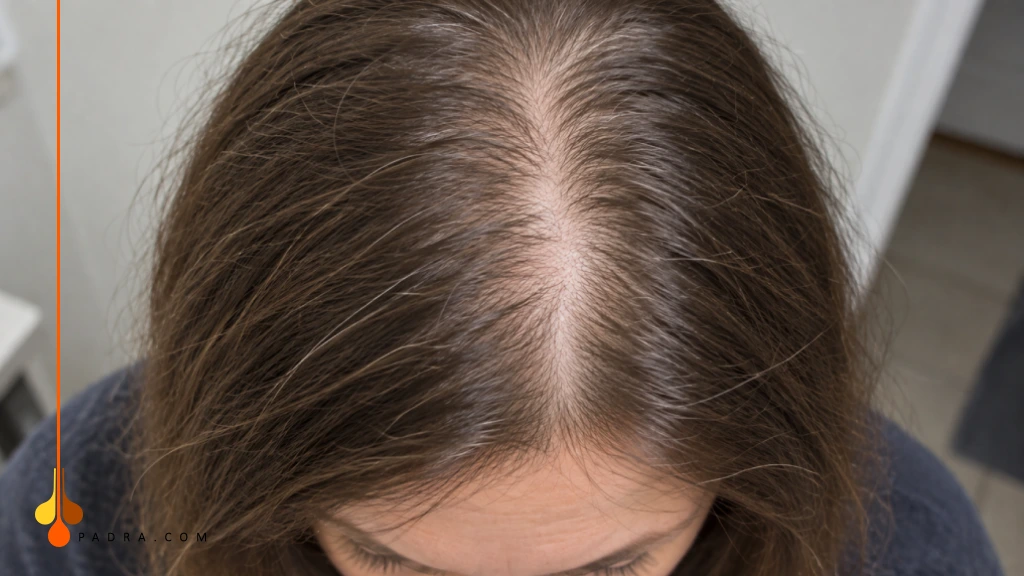
Parting width is the visible strip of scalp where hair separates. A consistently widening central part can suggest female pattern hair loss, especially alongside reduced ponytail fullness. Compare the same parting rather than a middle part with a deep side part.
At the crown
The crown contains a natural whorl where hair grows in different directions. Assess whether the exposed area is enlarging over time, not simply whether skin is visible at its centre. Progressive crown thinning can occur in both male and female pattern hair loss.
Around the hairline
Temple recession can accompany male pattern loss, while repeated pulling may affect the edges. A receding hairline has several possible explanations; pain, eyebrow loss, or an inflamed hairline calls for assessment rather than assuming genetics.
Across the whole scalp
Diffuse hair thinning means reduced coverage across a broad area rather than one isolated patch. Telogen effluvium, nutritional problems, thyroid disorders, and pattern hair loss can overlap in appearance. Distinct smooth patches require a different assessment, including consideration of alopecia areata.
Is Scalp Visibility Normal When Hair Is Wet or Under Light?
Wet hair groups into strands instead of forming the same spread-out covering as dry hair. Bright overhead lighting also makes exposed skin easier to notice. These conditions can exaggerate scalp visibility through hair, particularly along a part or whorl.
That appearance alone cannot establish hair loss. Equally, lighting should not be used to dismiss genuine progression.
For a useful comparison, photograph clean, dry hair with the same parting, camera distance, and lighting. Take front, part, and crown views, then compare periodically rather than repeatedly checking different mirrors.
Why online experiences can feel familiar
In online hair discussions, people describe noticing their scalp after changing how they part their hair, or looking dramatically thinner beneath downlights. These are personal accounts, not clinical evidence or proof that your situation has the same cause.
Use someone else’s experience to prepare questions, not to copy a diagnosis or prescription.
How to Tell Whether It Is Female or Male Pattern Baldness
Female pattern hair loss commonly affects the central part and upper scalp. The frontal hairline is often relatively preserved, although patterns vary. Male pattern hair loss more commonly involves the temples, frontal scalp, and crown, with relative preservation of the sides and back. Neither pattern should be diagnosed from sex alone.
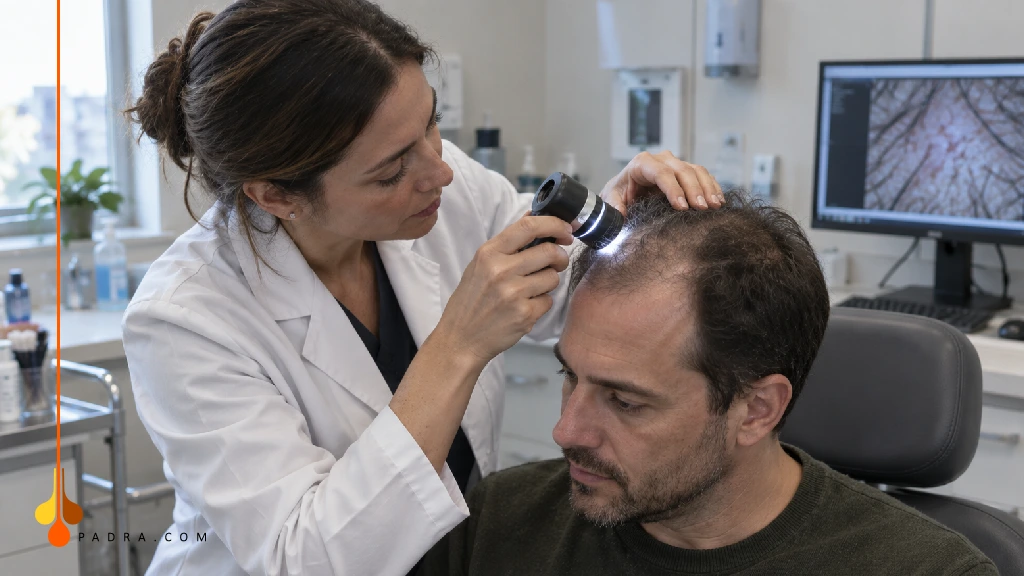
A dermatologist may use trichoscopy, a magnified examination of the scalp and hairs, to assess differences in shaft thickness and signs of miniaturisation. Your history, scalp condition, shedding pattern, and medication use matter too.
Blood tests are selected according to the findings, rather than automatically ordering every vitamin or hormone test. Suspected deficiency, thyroid disease, or another condition may justify targeted investigation. Occasionally, a scalp biopsy helps clarify an uncertain diagnosis.
Consult a skin specialist for hair loss when thinning is new, persistent, or progressive. Seek prompt attention for bald patches, scalp pain, burning, redness, pustules, marked scaling, or associated eyebrow loss. You do not need to wait until thinning becomes severe.
What should you do first?
Start a short record of when you noticed the change, whether shedding increased, and any illness, dietary restriction, medication change, or scalp symptoms. Bring this record and comparable photographs to your appointment.
Ask three practical questions: what diagnosis best explains the pattern, what improvement is realistic, and when should progress be reviewed? Depending on the diagnosis, success might mean slowing further loss rather than recovering every lost strand.
Avoid starting several supplements, oils, and treatments together while investigating unexplained thinning. Keeping your routine simple makes changes and side effects easier to discuss. There is no need to postpone assessment while trying to collect perfect photographs.
Concerned about a widening part or reduced coverage? Speak with Padra about your concerns and the next step toward a professional hair and scalp assessment.
Quick Fixes and Camouflage
Styling techniques
For immediate cosmetic coverage, try shifting your part slightly and adding gentle root lift. Lightweight, matte volumising products may give a fuller appearance without the flattened, separated look of heavy oils or wet-look gels.
Avoid aggressive backcombing, repeated high-heat styling, or tight extensions used to hide sparse areas. A cosmetic solution should not create more damage. A stylist can help choose a low-tension cut or parting while a clinician evaluates ongoing thinning.
Fibres, powders, and root sprays
Hair fibres cling to existing strands, while tinted scalp powders and root sprays reduce the contrast between hair and exposed skin. They can improve the appearance of a widening part, but fibres need existing hair to attach to; they cannot create coverage like growing follicles do.
Choose a suitable colour, follow product instructions, and stop anything that irritates your scalp. A lightweight topper or wig is another option when a larger area needs coverage.
Effective Medical Treatments
Minoxidil
Topical minoxidil is an established option for male and female pattern hair loss. It may improve coverage and help maintain hair, but it is not a universal treatment for every cause of shedding.
Allow months rather than weeks to judge progress; assessment commonly takes six to twelve months. Temporary early shedding, scalp irritation, and unwanted facial hair can occur. Benefits generally require continued use, and formulation instructions differ. Avoid minoxidil during pregnancy, when planning pregnancy, and while breastfeeding.
Oral minoxidil is sometimes prescribed off-label, meaning outside its approved indication, and requires medical supervision, including consideration of blood pressure and heart health. Dizziness, fluid retention, and a fast heartbeat are possible adverse effects.
It is not automatically more effective: a 2024 randomised trial in JAMA Dermatology enrolled 90 men and found no superiority over topical minoxidil for its primary hair-density outcomes after 24 weeks. Only 68 participants completed the study, and the finding does not cover every dose or patient group.
Anti-androgens and DHT-targeting medicines
For appropriate men, a clinician may prescribe finasteride, which reduces conversion of testosterone to DHT. Discuss sexual side effects and mood-related risks before treatment; prescriptions and follow-up should reflect your medical history.
For selected women, spironolactone may be considered off-label to reduce androgen effects. Kidney health, other medicines, blood pressure, and pregnancy potential affect suitability. These are not interchangeable treatments; spironolactone must not be used during pregnancy.
Treating an underlying cause
Correcting a confirmed deficiency, treating thyroid disease, or controlling an inflammatory scalp condition may be more relevant than starting a hair-growth product. Temporary telogen effluvium often improves after its trigger resolves, although restoring visible fullness takes longer than stopping excessive shedding.
Whether you can regrow hair depends on the cause, follicle condition, and response to treatment. Combining therapies can be appropriate, but adding more products without a diagnosis is not a treatment strategy.
Advanced Procedures: PRP, Mesotherapy, and Hair Transplantation
Platelet-rich plasma
Clinical studies suggest Hair PRP may improve hair density or hair quality in selected patients, but protocols vary considerably and individual response is not predictable
Mesotherapy
Mesotherapy involves injecting selected substances into the skin; it is not one standard formula. A 2023 systematic review in the Journal of Dermatological Treatment identified 27 eligible studies but noted a lack of standardised regimens and reported adverse effects. Ask what is being injected and what evidence supports that formulation.
Hair transplant
A hair transplant redistributes donor follicles; it does not create an unlimited supply or treat every cause of thinning. Suitability for a hair transplant depends on diagnosis, donor quality, scalp health, and future hair loss. Diffuse thinning that affects the donor area can limit candidacy, and surgery is not the first response to unexplained shedding.
Daily Habits and Home Remedies
Gentle care helps preserve the hair you have. Reduce pulling, minimise damaging heat and chemical processing, and use conditioner to manage dryness and breakage. Dry hair problems usually concern shaft condition; correcting them does not automatically reverse follicular thinning.
Eat enough calories and protein, and avoid crash diets. Hair growth supplements are most relevant when addressing an identified nutritional problem, not as an automatic response to visible scalp. High-dose biotin can also interfere with laboratory tests, so tell your clinician what you take.
Will scalp massage help hair growth?
A small study involving nine healthy men reported an increase in hair thickness from baseline after 24 weeks of standardized daily scalp massage. However, hair thickness and density did not differ significantly between the massage and untreated control areas, so the study does not establish scalp massage as a treatment for hair loss.
Bring your questions about thinning, treatment, and realistic expectations to Padra. Start with an assessment before deciding which approach is appropriate for you.