


What Does a Hair Transplant Actually Feel Like? A Realistic Guide to Pain and Comfort

A hair transplant is generally not painful; most discomfort comes only from brief anesthetic pinpricks at the start. During the procedure, patients feel pressure or movement—not sharp pain—and often relax or sleep. Recovery discomfort is usually mild, described as tightness or a sunburn-like feeling for 1–3 days. Modern FUE/DHI techniques greatly reduce trauma compared to […]
Minoxidil Side Effects: Itchy Scalp, Irritation, and What’s Normal

An itchy scalp, dryness, mild redness, and temporary shedding are common minoxidil side effects—especially in the first weeks. Itching is often caused by ingredients like alcohol or propylene glycol, not minoxidil itself. Increased shedding early on is normal and usually means follicles are entering a new growth cycle. Switching to foam, using the correct dose, […]
Finasteride Side Effects: What You Should Know Before Starting Treatment
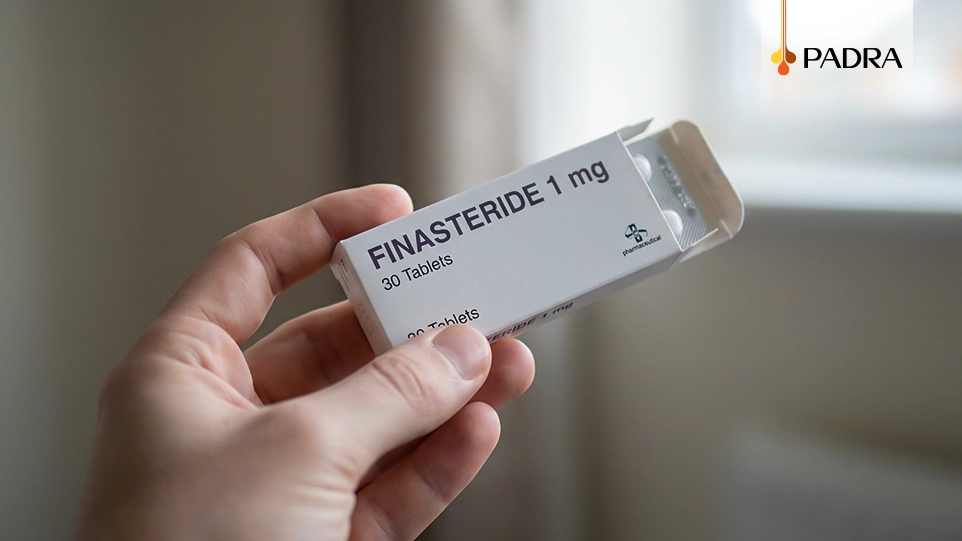
Finasteride helps slow hair loss by reducing DHT, but it can cause side effects in some users. Most common risks include sexual changes and mood symptoms; these usually improve after stopping. Persistent side effects are reported by a small group and require medical follow-up. Medical guidance, proper formulation, and monitoring are essential for safe use. […]
Insights on Hair Transplant Density: What You Can Expect from the Process

Hair transplant density is shaped by graft placement, donor strength, hair thickness, curl, and surgical planning—not just numbers. Early results often look thin due to shedding and fine regrowth, but real fullness develops gradually as hairs mature. Noticeable density typically improves between 6 and 9 months, with peak results typically occurring around 12 to 18 […]
Hair Transplant One Month: What to Expect After 30 Days
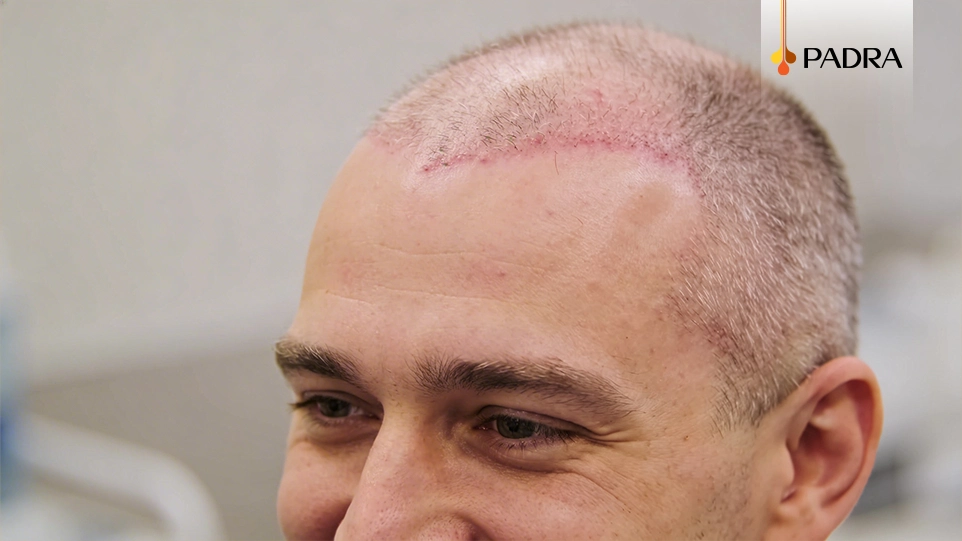
At 1 month after a hair transplant, shedding is normal and expected. Most transplanted hairs fall out during this phase (shock loss), even though the follicles remain healthy under the skin. Visible growth is usually minimal, and hair may look thinner or patchy. This stage focuses on healing—not results. New hair typically begins to grow around month 3, with noticeable improvement developing gradually over the following months.
What Does a Hair Transplant Look Like at Each Stage?
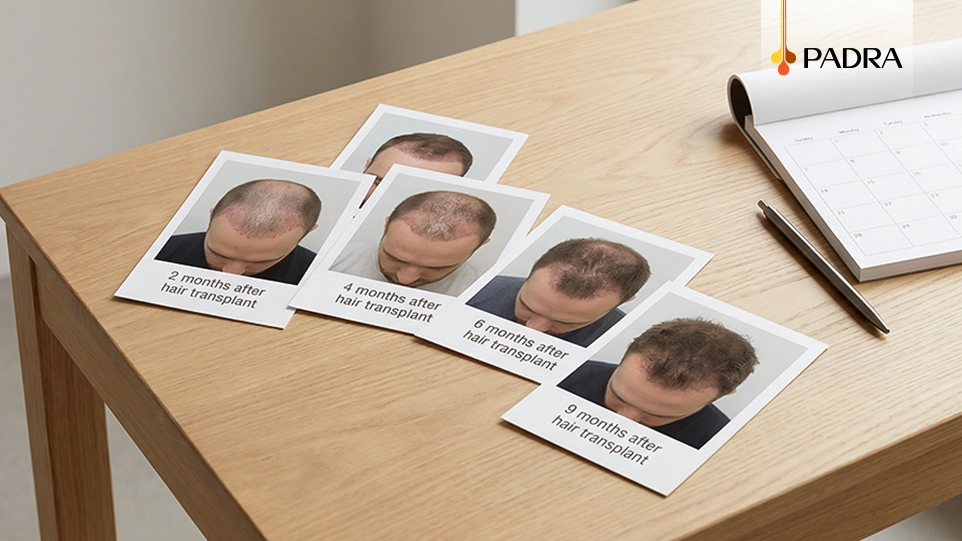
A hair transplant changes appearance in clear stages. Right after surgery, redness, scabs, and short grafts are normal and temporary. In the first weeks, scabs fall off and transplanted hairs often shed. Between 1–3 months, hair may look thin as follicles reset. Real visual improvement usually appears from 6–12 months, with thicker hair, better density, […]
Hair Transplant After 3 Months: What to Expect at This Stage

At 3 months after a hair transplant, it’s completely normal to feel uncertain. This stage is more about internal progress than visible results.
New hairs may just be starting to appear — usually fine, soft, and uneven
Patchiness and low density are common and not a sign of failure
Many follicles are only now waking up from their resting phase
Visible improvement often becomes clearer between months 4–6
Full density takes time — most results mature between 9–18 months
If nothing dramatic has changed yet, you’re likely still on track. At 3 months, patience matters more than comparison.
Does Transplanted Hair Fall Out? What’s Normal and What’s Not

Yes, transplanted hair often falls out—but this early shedding is normal and temporary. Known as shock loss, it usually happens between weeks 2 and 8 after surgery and affects only the visible hair shaft, not the follicle. New growth typically starts around months 3–4, with fuller results developing up to 12 months or longer. Permanent […]