







If you’ve spent any time looking into ways to fix a thinning crown or a receding hairline, you’ve definitely bumped into the term hair plugs. For most of us, that phrase triggers a specific image: those weird, “doll-like” tufts of hair from the 80s that looked like they were planted in rows.
But here is the reality: the world of hair restoration has evolved. Today, people are looking for a way to get their confidence back. Modern hair transplant surgery is a completely different beast—it’s subtle, natural, and nearly impossible to spot if done right.
The Real Story Behind “Hair Plugs”: Why We Still Use the Name (But Not the Tech)
To understand why people still ask, “what are hair plugs?“, we have to look at the history. Decades ago, surgeons used literal “plugs”—large, circular chunks of skin containing 15 to 20 hairs.
So, where do hair plugs come from? They were the best we had in the early days of mens hair surgery. Because these grafts were so big, they left gaps between them, creating that infamous “row of corn” look. While the technology has moved on to microscopic grafts, the name “hair plugs” stuck in our vocabulary. Today, most people use it as a nickname for any male hair surgery, even though the modern versions are light-years ahead.
Are Hair Plugs Still Used Today? (Short Answer: No)
The short answer is a hard no. You won’t find a reputable clinic in 2026 using those old punch-graft methods.
Instead of moving large chunks of skin, we now move individual “follicular units.” This transition from “plug surgery” to modern grafting is the reason why today’s results look like real hair—because they are your real hair, just moved with much more precision.
Is a Hair Transplant Right for You?
Take a moment to see how current techniques can match your specific hair loss pattern.
From “Doll Hair” to Invisible: Modern Hair Surgery for Men Explained
If you are hunting for the best hair transplant procedure, you aren’t looking for plugs; you’re looking for FUE (Follicular Unit Extraction) or DHI (Direct Hair Implantation).
In the world of men’s hair surgery today, the focus is on the “follicular unit.” These are the tiny, natural clusters of 1 to 4 hairs as they grow out of your scalp. By moving these individual units, a surgeon can mimic the natural flow and angle of your hair. This level of detail is why modern hair grafts for men no longer look like they were “installed”—they just look like they grew there.
The Donor Area Secret: Where Does the Hair for Your New Look Come From?
A common mystery for many is: where do they get hair for hair transplants? Do they use someone else’s hair or a lab-grown version?
Actually, the hair is yours. Specifically, where the hair from hair transplants come from is the “donor area”—the back and sides of your head. This hair is special because it is genetically programmed to be resistant to the hormones that cause balding (DHT). Even when moved to a new spot, those follicles keep their “permanent” traits.
The Big Question: Do Hair Implants Really Work and Will They Grow?
It’s normal to be a bit skeptical. You want to know: do hair plugs grow? Or more accurately, do hair implants grow?
Yes, does transplanted hair grow? Absolutely. But it isn’t a “magic trick” that happens overnight. Once the hair is moved, the follicle goes into a resting phase. The initial hair shaft will fall out (which can be scary!), but the root stays alive. After a few months, new hair begins to sprout. When people ask, “will hair transplant really work?“, the answer is usually yes—as long as you have enough donor hair and the patience to wait for the growth cycle.
Get a Professional Evaluation
Instead of relying on outdated “hair plug” myths, get the facts about your hair density from a specialist.
Is Hair Grafting a long-term solution? (What “Lifetime” Results Actually Mean)
When we talk about whether “is hair grafting permanent?”, we have to look at biology. Because the hair from the donor area is resistant to balding, those hairs generally stay for life.
However, does hair replacement surgery work as a “cure” for all future hair loss? Not exactly. While the transplanted hair stays, the surrounding hair can still thin out over time. This is why a great surgeon won’t just fill in today’s bald spot; they will plan a hairline that will still look good when you’re 60.
Why You Might See Hair Implants Fall Out After Surgery
It’s the number one cause of panic for patients: seeing their new hair in the sink. But do hair implants fall out permanently? Usually, no.
This is a phase called “shock loss.” It’s a temporary shedding where the hair shafts fall out due to the trauma of the move. It doesn’t mean the surgery failed. In fact, does hair transplant hair grow back? Yes, and often it comes back thicker once the follicle has “anchored” itself into its new home.
Hair Plugs for Men: Who Is Actually a Good Candidate?
Most hair plugs for men (the modern versions) are designed for those with standard male pattern baldness. To be a successful men hair transplant candidate, you generally need:
- A healthy “donor zone” on the back of your head.
- Realistic expectations (it can’t give you 100% of your teenage density).
- A man hair transplant works best when your hair loss has reached a stable point.
Fixing the Gaps: Hair Transplant for Alopecia and Bald Patches
Can you get a hair transplant for alopecia? It depends on the type. If you have a hair transplant bald patch caused by scarring or genetics, surgery is often the best fix. However, for autoimmune types of alopecia (like Alopecia Areata), a hair transplant bald spot might not be the right move because the body might attack the new hair too. A proper diagnosis is the most important first step.
Restoring the Frame: Frontal Hair Transplants for Receding Hairlines
The most popular request today is the frontal hair transplant. For many guys, hair implants for receding hairline issues are about more than just vanity—it’s about framing the face properly.
When performing a hair replacement for receding hairline areas, the surgeon acts like an artist. They use single-hair grafts at the very front to create a soft, irregular edge. This is what prevents that “straight-line” look that makes some transplants look fake.
Logistics: How Long Does Hair Transplant Surgery Take?
One of the most practical questions is: how long does hair transplant take?
You should block out a whole day. Generally, how long does hair transplant surgery take is anywhere from 4 to 8 hours. Some people wonder, “how long is hair transplant surgery if I only need a little bit?” Even small sessions take time because each graft is handled with extreme care under a microscope. It’s a marathon, not a sprint.
The Red Flags: Why Some “Hair Plug” Results Look Bad
We’ve all seen obvious hair plugs. Usually, these bad results happen because of:
- Outdated Tech: Using “plugs” instead of follicular units.
- Poor Design: A hairline that is too low or too straight.
- Overharvesting: Taking too much hair from the donor area, leaving it patchy.
Modern clinics avoid these by using artistic mapping and ensuring they don’t “exhaust” your donor hair in one go.
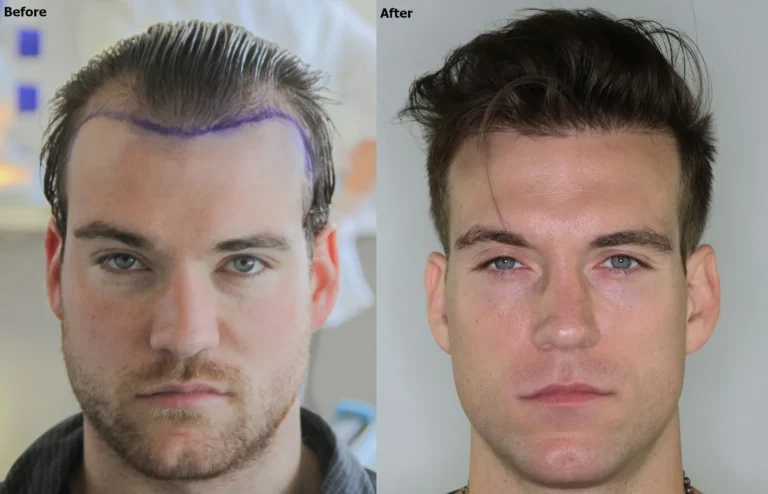
See Real Transformations Explore how modern grafting differs from old-school plugs through our gallery of natural results. [View Before & After Results]
Reality Check: What Modern Transplants Cannot Do
While the tech is amazing, we have to be honest about the limits.
- It cannot create “new” hair; it only redistributes what you have.
- It cannot stop the rest of your natural hair from thinning without extra help (like medication).
- It cannot give you infinite density if your donor area is already thin.
The Recovery Timeline: What to Expect After Surgery
| Timeframe | What’s Happening? |
| Day 1-3 | Minor swelling and redness. You’ll need to sleep with your head elevated. |
| Day 7-10 | Scabs begin to fall off. The grafts are now “secure” in your scalp. |
| Week 2-4 | The “Ugly Duckling” phase: Transplanted hairs shed. This is totally normal! |
| Months 3-4 | New “baby hairs” start to sprout. They might be thin at first. |
| Months 6-9 | Significant growth and density. You’ll start to see your new hairline in the mirror. |
| 1 Year | Full results. Your new hair is permanent and can be cut, styled, or dyed. |
Are Hair Plugs the Right Move for You Today?
The term “hair plugs” might be an old relic, but the confidence a full head of hair brings is timeless. Today’s restoration is a blend of medical science and art. Success isn’t just about the surgery itself; it’s about the planning, the surgeon’s skill, and having a realistic view of the journey.
If you’re tired of the “hat life,” forget the 80s horror stories. Modern hair transplants are discreet, life-changing, and—when done right—completely natural.