





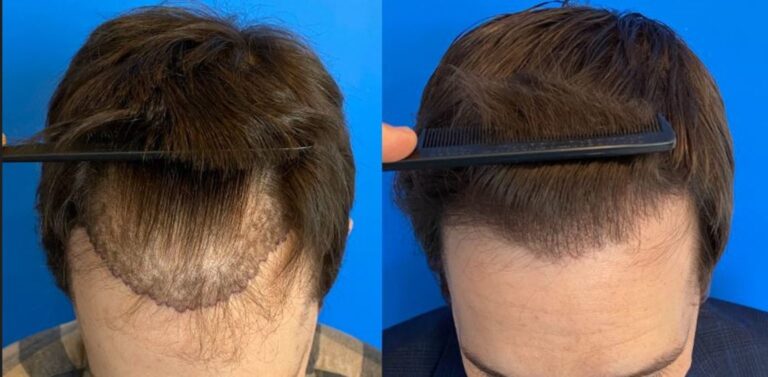
- Itching after a hair transplant is very common and usually a normal sign of healing.
- It often starts around days 4–5, peaks during the first 1–2 weeks, and fades as scabs fall off.
- Causes include skin healing, scab formation, dryness, and nerve recovery.
- Scratching can damage fragile grafts and must be avoided, especially in the first 10 days.
- Saline spray, gentle washing, hydration, and avoiding heat help relieve itching safely.
- Severe pain, spreading redness, pus, or fever are not normal and need medical review.
You’ve finally had your hair transplant, and you’re looking forward to seeing those new hairs grow. But a few days into recovery, you notice a distracting, tickling sensation. Suddenly, your head is all you can think about.
If you’re feeling itchy after hair transplant surgery, the first thing you should do is take a deep breath. You aren’t doing anything wrong, and your body isn’t rejecting the grafts. In fact, that annoying itch is usually a sign that your skin is working hard to heal itself.
Is Itching Normal After a Hair Transplant?
Yes, absolutely. Almost everyone who undergoes this procedure experiences some level of itching after hair transplant surgery. It is a standard part of the body’s inflammatory response. Think of it like a scraped knee—as the wound closes and the skin knits back together, it often gets a bit itchy.
On your scalp, thousands of tiny incisions were made to place the new follicles. As these tiny spots heal, they send signals to your brain that translate to an itch. It’s actually a “good” sign that your blood flow is active and the recovery process is in full swing.
Why Does Itching Occur After Hair Transplant Surgery?
It might feel like a mystery, but there are actually a few specific reasons why your scalp feels so sensitive right now:
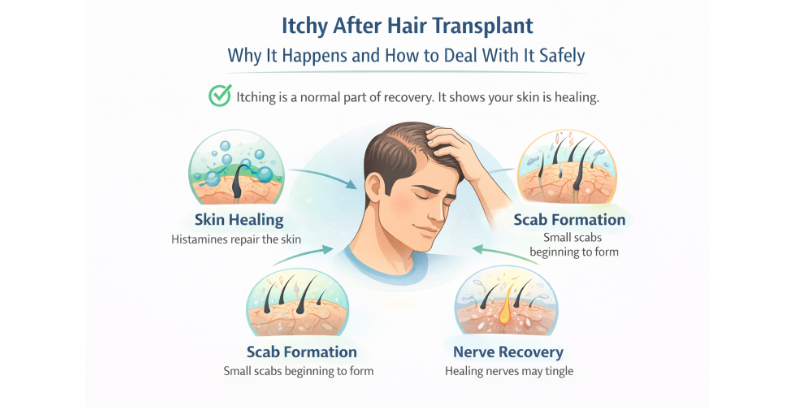
- Skin Healing and Regeneration: Your body is releasing histamines and other chemicals to repair the skin. This biological “repair mode” naturally triggers an itchy sensation.
- Scab Formation: As the tiny incisions dry out, small scabs form. These scabs can feel tight or “crusty” on the skin, causing post hair transplant itching.
- Dryness: During the first week, your scalp might get quite dry since you aren’t washing it the way you normally would. Dry skin is almost always itchy skin.
- Nerve Recovery: The surgery temporarily disrupts tiny nerve endings in the scalp. As these nerves “wake up” and begin to heal, they can tingle or itch.
When Does Post Hair Transplant Itching Usually Start and End?
Timing is everything. Most patients start feeling itchy around day 4 or 5 after hair transplant surgery. This is when the initial swelling goes down and scabs begin to harden. The itching is usually most intense during the first 7 to 14 days. This is the “scab shedding” phase.
For most, the discomfort drops off significantly after the second week once the scabs have naturally fallen off. Sometimes, you might feel a slight return of the itch around the 1-month mark. This is usually due to new hairs trying to break through the skin (often called “folliculitis”), but it is much milder than the initial post-op itch.
Itchy After Hair Transplant — Is It a Sign of a Problem?
While most itching is normal, it’s important to know the difference between healing and a complication.
- Normal: Mild to moderate itching, light redness, and small dry scabs.
- Potential Problem: If the itching is accompanied by intense pain, yellow discharge (pus), extreme swelling, or a fever, it could be a sign of an infection.
If the itching after a hair transplant feels unbearable or looks angry and red, don’t guess—check in with your medical team.
What Happens If You Scratch the Scalp?
This is the most important rule of hair transplant recovery: Do not scratch. In the first 10 days, your new hair grafts are not yet “set” in place. They are incredibly delicate. If you scratch or pick at a scab, you could literally pull the new hair follicle right out of your head. Not only does this cause permanent “gaps” in your results, but it also creates open wounds that are prone to infection and scarring.
Safe Ways to Manage Itching After Hair Transplant
Since you can’t scratch, how do you find relief? Here are the safest ways to handle the discomfort:
- Follow Aftercare Instructions: Use the specific shampoos or foams provided by your clinic. These are designed to soften scabs gently.
- Saline Spray: Many clinics provide a saline mist. Spraying this frequently keeps the area hydrated and takes the “edge” off the itch.
- Keep it Clean: Gently pouring water over the area (as instructed by your doctor) helps wash away sweat and oils that can make itching worse.
- Avoid Heat: Stay away from hot showers or hair dryers, as heat dries out the skin and increases the itch.
Itching After Hair Transplant Surgery vs. Other Side Effects
Here is a quick breakdown of what you might feel:
| Symptom | What it feels like | Is it normal? |
| Itching | Tickling, crawling sensation | Very Normal |
| Pain | Soreness or tenderness | Normal for first 2-3 days |
| Swelling | Fullness around forehead/eyes | Normal for first 5 days |
| Numbness | Lack of feeling in the scalp | Normal; can last weeks |
When Should You Contact the Clinic?
We want you to feel at ease, but we also want you to be safe. You should reach out to your clinic if you experience:
- Itching prevents you from sleeping.
- Pus or unusual discharge from the graft sites.
- Redness that seems to be spreading rather than fading.
- A “hot” sensation on the skin.
Remember, it is always better to ask a “silly” question than to ignore a potential issue. Your clinical team is there to support you through the itchy phase!