




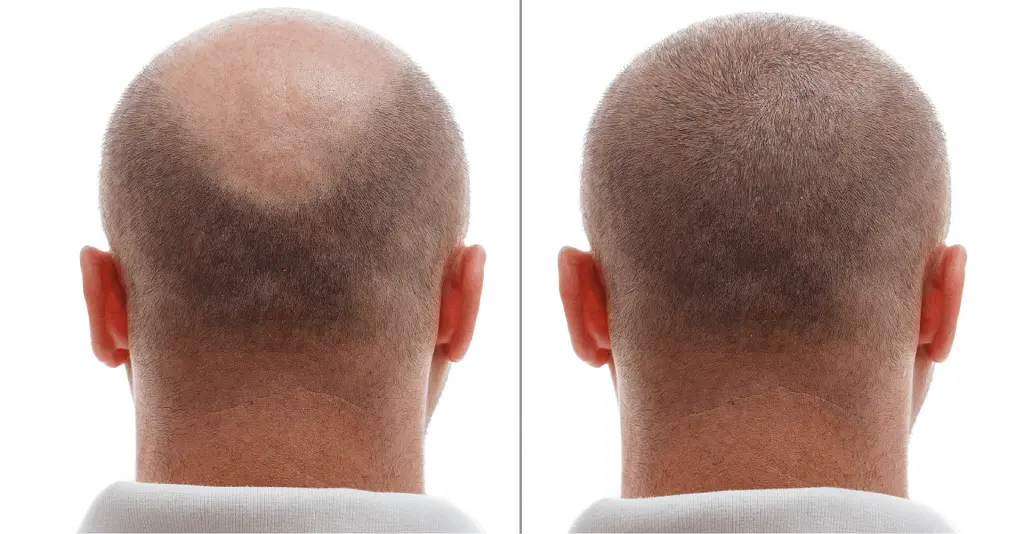
- Poor hair transplant results can be technical (low growth) or aesthetic (unnatural hairline or density).
- Common signs include patchy growth, visible scarring, low density after 12 months, or an artificial-looking hairline.
- Most failures are caused by poor technique, graft damage, overharvesting, or lack of medical supervision.
- Early shedding and redness are normal and not signs of failure.
- Many bad results can be improved with time, medical therapy, or corrective (repair) procedures by an experienced specialist.
Investing in a hair restoration procedure is a big decision, both financially and emotionally. Most people walk into a clinic with high hopes of looking and feeling like their younger selves again. So, when the results don’t match the promise, it can feel devastating.
If you are worried that you’ve had a poor hair transplant, you aren’t alone. While modern technology has made the process much safer, things can still go wrong. Understanding why a bad hair transplant occurs is the first step toward determining how to rectify it.
What Is Considered a Poor or Failed Hair Transplant?
A poor hair transplant isn’t always about a “total loss” of hair. Sometimes, it’s simply a result that looks “off” or doesn’t meet the patient’s realistic expectations.
A failed hair transplant typically falls into two categories: technical failure (where the hair simply didn’t grow) or aesthetic failure (where the hair grew but appeared unnatural). Disappointment is subjective, but true failure is often visible to any trained medical eye.
Signs of a Failed Hair Transplant
How do you know if you are looking at an unsuccessful hair transplant? Here are the most common red flags:
- Low or No Growth: If you’ve waited 12 months and the area is still thin, you may be dealing with hair transplant failure.
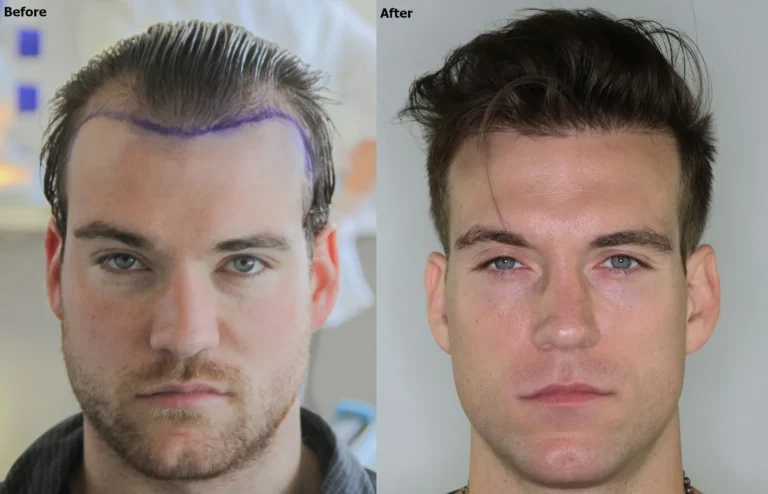
- Unnatural Hairline: A hairline that is too straight, too low, or has hair pointing in the wrong direction is a hallmark of a bad hair transplant.
- Patchy or Uneven Density: Seeing “clumps” of hair with bald spots in between suggests the grafts weren’t placed correctly.
- Visible Scarring: While all surgery leaves some marks, excessive or “wide” scarring in the donor area is a sign of a botched hair transplant.
- Rejected Hair Implants: While the body rarely “rejects” its own hair like an organ, follicles can die if they aren’t handled with care, leading to a rejected hair transplant appearance.
Can a Hair Transplant Fail?
The short, honest answer is yes. Even though the success rate for hair restoration is generally very high, no surgery is 100% guaranteed.
While a specific hair transplant failure rate is hard to pin down because it varies wildly between clinics, failures are almost always preventable. It rarely happens because of the patient’s genetics; it usually happens because of what happened inside the operating room.
Why Do Hair Transplants Fail?
If you’re asking why hair transplantation fail, the answer usually comes down to one of these factors:
- Poor Surgical Technique: If the surgeon or technician isn’t experienced, they might damage the delicate follicles during extraction.
- Incorrect Graft Handling: Hair grafts are living tissue. If they spend too much time out of the body or aren’t kept at the right temperature, they won’t survive the move.
- Overharvesting the Donor Area: If a clinic takes too much hair from the back of your head, they can leave you with permanent thinness or “moth-eaten” scarring.
- Lack of Medical Supervision: Many worst hair transplants happen in “black market” clinics where a licensed doctor isn’t actually performing or overseeing the surgery.
- Poor Aftercare: If a patient doesn’t follow instructions—like scratching the area or exercising too soon—it can lead to a failed hair transplant.
Hair Plugs Gone Wrong — Why Older Techniques Look Terrible
When people talk about bad hair plugs or worst hair plugs, they are usually thinking of the “doll hair” look from the 1980s. These bad hair implants happened because surgeons used large “plugs” containing 10–20 hairs each.
Modern techniques use individual follicles, but hair plugs gone wrong still happen today if a clinic uses outdated tools or lacks an artistic eye. A terrible hair transplant today often looks like a “see-through” hairline or hair that sticks straight up because it was planted at the wrong hair transplant angle.
Hair Transplant Gone Wrong vs. Temporary Healing Issues
Before you panic and think you have a hair transplant surgery gone wrong, remember that healing takes time.
- Shedding is NOT failure: It is normal for the new hairs to fall out 2–4 weeks after surgery. This is called “shock loss,” and the hair will grow back.
- Early redness is NOT permanent scarring: Your scalp will be pink for a few weeks. This is just blood flow helping you heal.
- Timing matters: You cannot judge a bad hair transplant until at least 12 months have passed.
Can Hair Implants Be Rejected?
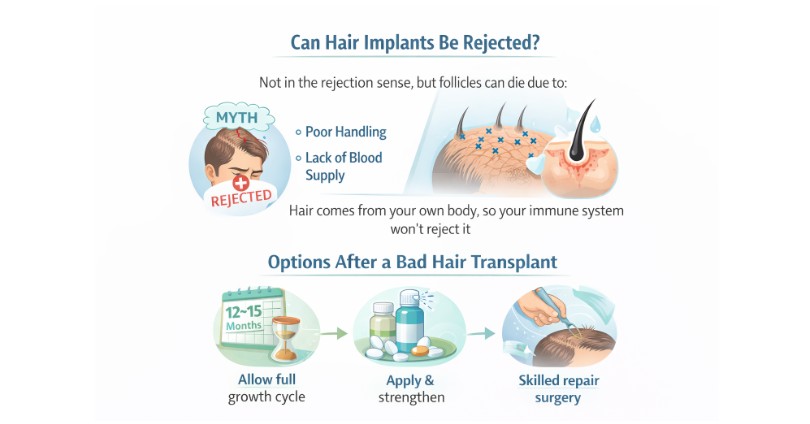
You might hear the term rejected hair implants, but this is a bit of a myth. Since the hair comes from your own body, your immune system won’t attack it like it might a foreign object. When people say they had rejected hair transplant results, what usually happened was that the follicles died due to poor handling or lack of blood supply, not because the body “pushed them out.”
What Are the Options After a Bad Hair Transplant?
If you are living with an unsuccessful hair transplant, you don’t have to just “deal with it.” There are ways to improve the situation:
Sometimes, you just need to wait for the full 12–15 month cycle to see the final result. Medications can sometimes strengthen the existing hair to hide a poor hair transplant. A skilled surgeon can often perform a “repair” surgery. This might involve removing bad hair plugs, softening an unnatural hairline, or adding density to patchy areas.
How to Reduce the Risk of a Poor Hair Transplant
The best way to avoid a hair transplant gone wrong is to do your homework before you sit in the chair.
- Research the Surgeon: Don’t just look at the clinic name. Who is actually performing the surgery?
- Check “Real” Reviews: Look for long-term follow-ups, not just “day of” photos.
- Avoid “Bargain” Clinics: If the price seems too good to be true, they might be cutting corners on safety or staff experience.
When Should You Seek a Professional Evaluation?
If you are seeing signs of infection, or if you are 12 months out and see very little growth, it’s time to talk to an expert. Don’t rely on internet forums for a diagnosis. A professional can tell you if you’ve had a failed hair transplant or if you just need a bit more time and a different care routine.
Read these articles to undrestand 3500 Grafts Hair Transplant Before and After .