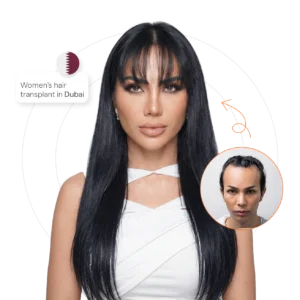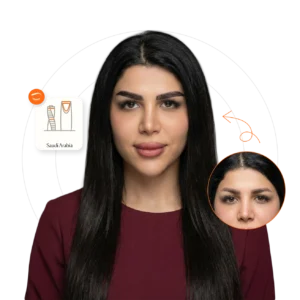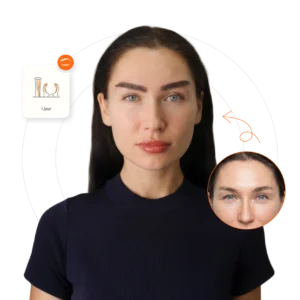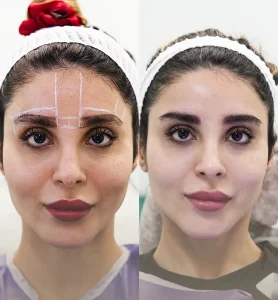




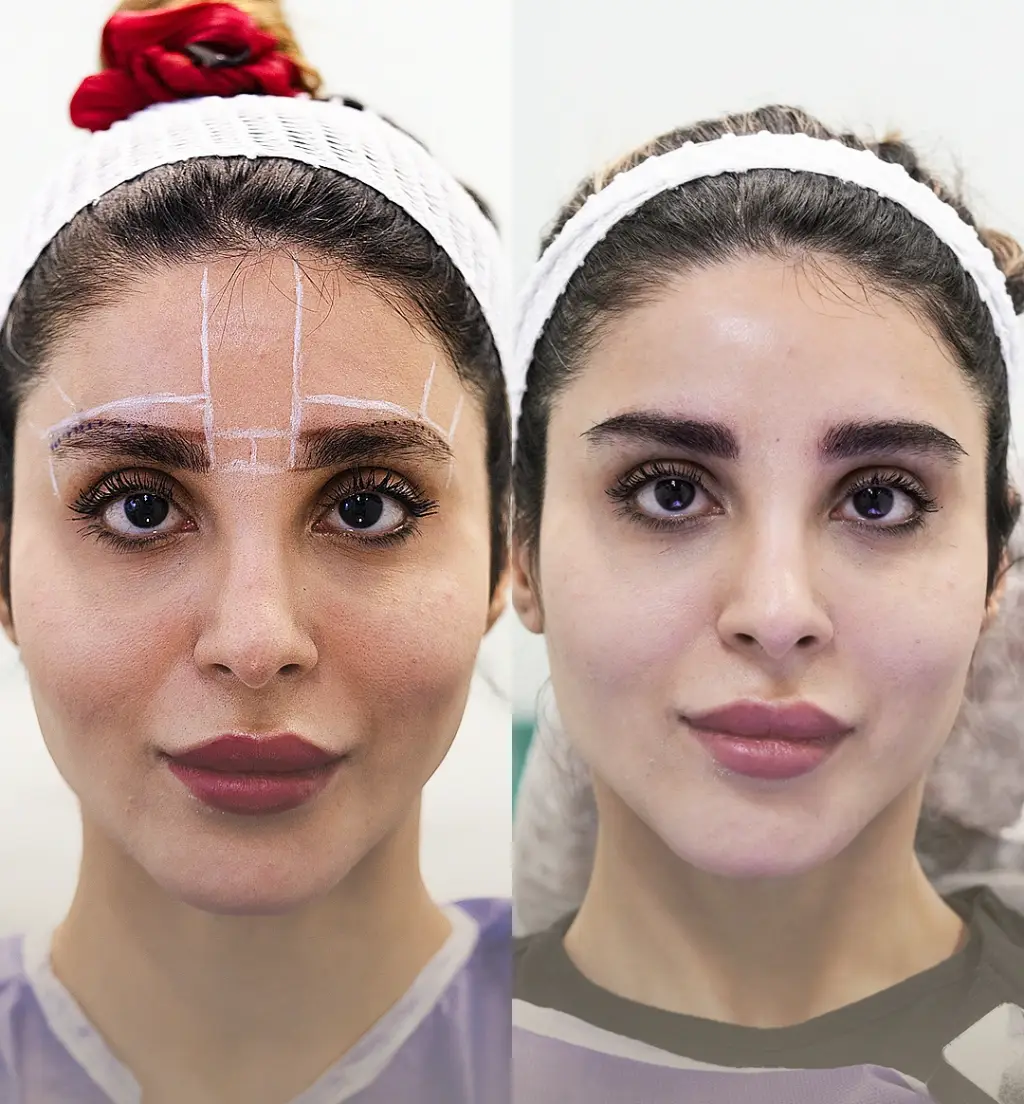
At Padra Clinic, the NTF method (Nano Transplant Fakhraei) has been developed as a next-generation approach to eyebrow transplantation. This technique is built around three core advantages: nano-level precision in hair placement, significantly reduced inflammation and tissue trauma, and minimal to virtually no social downtime for patients. Taken together, these factors position NTF as one of the most advanced and effective options currently available for eyebrow restoration.
What Is the NTF Method?
The NTF method is an eyebrow transplant technique designed to combine medical precision with aesthetic planning. It is based on the principle that successful eyebrow restoration depends not only on density, but also on the angle, direction, thickness, and distribution of each transplanted hair.
In NTF, each graft is carefully selected from donor areas where the hair structure most closely resembles natural eyebrow hair. These grafts are then implanted one by one, using instruments and protocols designed to control:
- Depth of insertion
- Angle and direction of growth
- Alignment with the designed eyebrow shape
This approach aims to reproduce the natural architecture of eyebrow hair, rather than simply filling empty areas.
Why NTF Can Be Considered a Best-in-Class Eyebrow Transplant Method
Evaluating whether a method is “better” than others requires looking at clear criteria: natural appearance, control over design, tissue impact, inflammation, recovery time, and long-term consistency. The NTF technique addresses each of these areas in a structured way.
1. Nano-Level Precision in Placement
In many conventional eyebrow transplant techniques, the emphasis is primarily on density. While this can improve fullness, it sometimes leads to hair growing at slightly incorrect angles or with an unnatural pattern.
The NTF method is built around engineering-level precision in placement. Each graft is inserted according to a pre-defined design that accounts for:
- The natural direction of growth in different segments of the eyebrow
- Break points, curves, and arches specific to the patient’s facial structure
- Smooth transitions between head, body, and tail of the eyebrow
This degree of control is a key reason NTF can deliver results that are difficult to distinguish from naturally grown eyebrows.
2. Reduced Inflammation and Lower Tissue Trauma
A common concern in eyebrow transplant procedures is visible post-operative inflammation, swelling, or redness. These do not only affect appearance in the short term, but may also impact patient comfort and willingness to return to daily activities.
The NTF method uses a less invasive implantation protocol, designed to:
- Minimize incision size
- Reduce trauma to surrounding tissue
- Limit superficial damage in the eyebrow area
In practice, this often translates to:
- Milder inflammation compared to more aggressive techniques
- Less visible irritation in the days immediately after the procedure
- A more comfortable overall recovery experience
For patients who are active professionally or socially, this reduction in visible side effects is a practical advantage.
3. Minimal Downtime and Rapid Return to Daily Life
Another important factor that distinguishes NTF from many traditional methods is the impact on daily routine. Because the technique focuses on low-trauma implantation with precise handling of grafts, the social downtime is significantly reduced.
In many cases, patients can:
- Resume normal daily activities very quickly
- Appear in social or professional settings with minimal visible traces of the procedure
- Avoid extended periods of hiding redness or irritation
This makes the NTF method particularly suitable for individuals who cannot afford long recovery windows or who prefer a discreet treatment process.
Matching Hair Characteristics to Eyebrow Texture
One of the technical challenges in eyebrow transplantation is the mismatch between scalp hair and eyebrow hair. If not addressed properly, this can lead to a result that appears too coarse or visually inconsistent.
In the NTF protocol, graft selection is not random. It is based on:
- Choosing donor hairs that are as close as possible in thickness to eyebrow hair
- Accounting for how the hair will behave over time in terms of growth and texture
- Placing finer hairs in visually critical zones where detail matters most
By aligning biological characteristics with aesthetic needs, NTF helps create an eyebrow that feels integrated into the face, not added onto it.
Comparison With Conventional Eyebrow Transplant Techniques
While many methods can produce improvement, NTF aims to refine the process in several measurable ways:
- Design: Instead of simply filling gaps, NTF starts from a full eyebrow design tailored to the patient’s facial structure.
- Angle control: Each graft is placed with strict attention to growth direction. This reduces the risk of “brushed-up” or disorganized appearance.
- Tissue handling: The use of small, precise entry points aims to limit trauma and subsequent inflammation.
- Recovery profile: Reduced irritation and controlled technique often mean shorter visible recovery compared to more invasive approaches.
These distinctions are why, for many candidates, NTF can reasonably be considered a superior choice among current eyebrow transplant options.
Who Is NTF Most Suitable For?
The NTF method is particularly well-suited for individuals who:
- Want eyebrows that look natural from close distance, not just in photos
- Have limited flexibility for extended recovery or downtime
- Are concerned about visible signs of surgery in the early days after treatment
- Prioritize precise design and controlled, subtle enhancement rather than dramatic change
For this group, NTF offers a blend of technical precision, aesthetic planning, and practical recovery profile that aligns well with real-world expectations.
Conclusion
NTF (Nano Transplant Fakhraei) at Padra Clinic is not simply a new name for eyebrow transplantation. It is a structured method that integrates nano-level precision, low-trauma technique, and design-driven planning to improve both the process and the outcome of eyebrow restoration.
By focusing on measurable factors such as angle control, inflammation reduction, and downtime, NTF provides a strong technical basis for being considered one of the best available methods for patients who demand both natural results and a streamlined recovery experience.