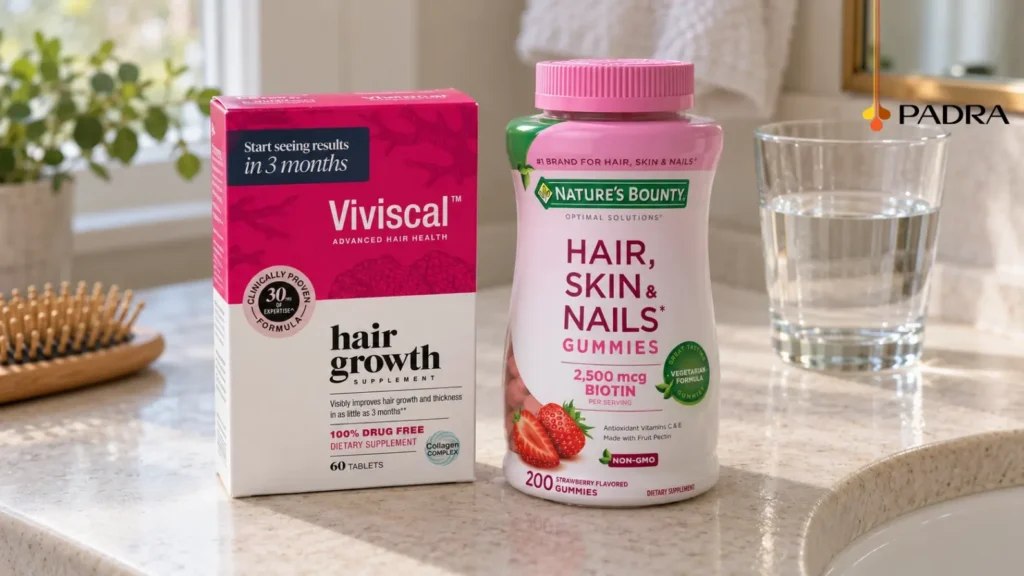
Nutrafol, Viviscal, Priorin, Perfectil and Nature’s Bounty are among the Best Hair Growth Supplements readers frequently compare. Their ingredients, formats and precautions differ, so the right choice depends on your diet, diagnosis and the exact product available to you.
This guide compares five options first, then explains nutritional deficiencies, scientific evidence and safety. Supplements may help selected people, particularly when correcting a relevant nutritional problem, but they do not replace diagnosis or treatment for progressive hair loss.
Five Hair Growth Supplements to Compare
Choose by formulation, dietary needs and clinical suitability. Product names, ingredients and label instructions can vary between countries. The daily routines below describe manufacturer labels, not personalised dosing advice.
| Product | Main ingredients | Label routine | Main check |
| Nutrafol Women | Ashwagandha, saw palmetto and curcumin in a plant-based blend | 4 capsules daily | Current formula differs from older versions; review botanical ingredients and medications. |
| Viviscal Hair Growth Supplement for Women | Marine complex, biotin, vitamin C, iron and zinc | 2 tablets daily | Contains marine ingredients including oyster extract; check allergies and total iron intake. |
| Priorin N Capsules | Millet extract, wheat germ oil, L-cystine and vitamin B5 | 2–3 capsules daily | Priorin N and Priorin Extra are different products; follow the local leaflet. |
| Perfectil Hair | Biotin, zinc, selenium, iron, amino acids and marine collagen | 2 tablets daily | Contains fish-derived collagen and multiple nutrients; avoid duplicating other multivitamins. |
| Nature’s Bounty Hair Skin and Nails Pectin Gummies | Biotin with vitamins C and E | 2 gummies per serving | 2,500 mcg biotin and 3 g added sugar per serving; biotin can interfere with blood tests. |
1 Nutrafol Women
Nutrafol Women’s current plant-based formula combines ashwagandha, saw palmetto, curcumin and other ingredients. It is an option to compare if you prefer vegan capsules rather than a marine formula. Check the exact version, because older Nutrafol Women products contain different ingredients and their study results should not automatically be applied to the newer formula.

2 Viviscal Hair Growth Supplement for Women
Viviscal combines a marine complex with biotin, vitamin C, iron and zinc in a tablet formula. It is worth comparing if you are considering a marine-based option, but the listed oyster extract makes allergy checks important. Consider its iron content alongside other supplements, and match any research claims to the formulation you are buying.
3 Priorin N Capsules
Priorin N combines golden millet extract, wheat germ oil, L-cystine and vitamin B5. This focused formulation offers a different approach from broad multivitamins or biotin-heavy gummies. Check the regional product name and leaflet carefully: Priorin N, Priorin Extra and other versions are not interchangeable, and their classification and instructions can differ between markets.
4 Perfectil Hair
Perfectil Hair provides a wider combination of vitamins and minerals, including biotin, zinc, selenium and iron, alongside amino acids and marine collagen. It may suit readers comparing broader nutritional support rather than a single nutrient. Because it already supplies multiple micronutrients, check for overlap with your usual multivitamin and review the fish-derived ingredients.
5 Nature’s Bounty Hair Skin and Nails Pectin Gummies
These pectin gummies offer a chewable alternative to tablets, with biotin and vitamins C and E. The reviewed label lists 2,500 mcg of biotin and 3 g of added sugar per two-gummy serving. Convenience does not make them more effective, and their high biotin content should be disclosed before laboratory testing.
A product’s ingredients and a clinical trial’s findings are not the same thing. Check whether the exact formulation was studied, who took it and what improved. Manufacturer-sponsored studies and results from older formulas need particular care when comparing claims.
Vitamins and Nutrients for Hair Growth
No nutrient is universally the best supplement for hair growth. The relevant nutrient is the one that corrects an actual deficiency or dietary gap.
| Nutrient | Role in hair health | When supplementation may help | Important caution |
|---|---|---|---|
| Iron | Supports oxygen transport and normal cellular activity | Confirmed deficiency or iron-deficiency anaemia | Excess iron can be toxic |
| Vitamin D | Involved in follicle and immune function | Low vitamin D identified through assessment | High doses should not be self-prescribed |
| Zinc | Supports cell growth and tissue repair | Confirmed zinc deficiency | Excess may disturb copper balance |
| Vitamin B12 | Supports blood-cell production and cellular function | Low B12 or absorption-related deficiency | Hair loss alone does not prove deficiency |
| Biotin | Supports metabolic and keratin-related processes | True biotin deficiency | High doses can interfere with laboratory tests |
| Protein | Provides amino acids required for hair production | Restrictive diets, low intake or rapid weight loss | Extra protein does not automatically accelerate growth |
| Vitamin C | Supports collagen formation and iron absorption | Poor diet or deficiency-related need | Not a standalone hair-loss treatment |
| Omega-3 | May support general skin and inflammatory balance | Evidence remains developing | Does not replace medical treatment |
| Collagen | Supplies amino acids and may support hair-shaft quality | General nutritional support in selected users | Evidence for follicle regrowth is limited |
Do Hair Growth Supplements Actually Work?
Hair growth supplements may help when they correct a nutritional deficiency contributing to shedding. Without a confirmed deficiency, benefits are less predictable, and improved hair quality does not necessarily mean the underlying cause has been treated.
A 2023 systematic review found potential benefits for selected products, but evidence varied. A 2026 meta-analysis reported improvements in some growth-cycle measurements without a statistically significant increase in total hair count. These findings do not establish that all supplements work equally well.
Before choosing a supplement:
- Document the changes: Note the pattern, duration and progression of shedding or thinning.
- Review possible triggers: Consider diet, weight loss, symptoms, medications and medical history.
- Assess deficiency risk: Arrange targeted testing when clinically indicated.
- Correct identified deficiencies: Follow an appropriate nutrient, dose and monitoring plan.
- Reassess persistent hair loss: If no relevant deficiency is found or thinning continues, investigate genetic, hormonal, inflammatory or scarring causes.
| Approach | Primary goal | Examples | Best use |
|---|---|---|---|
| Healthy hair support | Supply nutrients needed for normal hair production | Protein, balanced diet, essential vitamins and minerals | General hair and scalp health |
| Deficiency correction | Restore a nutrient that is too low | Iron, vitamin D, zinc or B12 when clinically indicated | Deficiency-related shedding |
| Medical treatment | Address hormonal or biological hair-loss mechanisms | Topical medication, finasteride and diagnosis-specific treatment | Pattern or progressive hair loss |
| Procedural support | Support active follicles in selected cases | PRP and mesotherapy | Diagnosis-dependent thinning |
| Structural restoration | Improve coverage where follicles are inactive | Hair transplant | Suitable candidates with established loss |
Improving nutrition may strengthen hair production when the body lacks essential nutrients. It cannot directly treat every genetic, autoimmune, inflammatory, or scarring condition.
Which Vitamin Deficiencies Can Contribute to Hair Loss?
Low iron, vitamin D, zinc, vitamin B12 or folate may be associated with shedding or poor hair quality. Inadequate protein and severe calorie restriction can also contribute, while true biotin deficiency is uncommon.
Hair loss alone does not confirm a deficiency. Testing should be guided by medical history, diet, symptoms, medications and the pattern of hair loss. The American Academy of Dermatology recommends checking for deficiencies before taking hair-growth supplements.
Biotin for Hair Growth: Helpful or Overhyped?
Biotin is frequently marketed as the most important vitamin for hair growth, but true deficiency is uncommon in people eating a varied diet.
Biotin deficiency can cause thinning and other skin or neurological symptoms. However, the evidence supporting high-dose supplementation in people with adequate biotin levels is limited mainly to small studies and case reports.
The NIH Office of Dietary Supplements biotin guidance states that claims about hair, nail and skin benefits have limited scientific support. It also warns that high-dose biotin can interfere with laboratory tests, including tests used to assess thyroid hormones, vitamin D and cardiac markers.
Users should tell their doctor and laboratory staff about any biotin-containing supplements before undergoing blood tests.
Biotin Reality Check
Biotin is not a universal hair-growth treatment and should not automatically be recommended without evidence of deficiency or a clear clinical need.
Iron Deficiency and Hair Loss
Iron deficiency and iron-deficiency anaemia may contribute to shedding in some people. Risk may be higher in individuals with heavy menstrual bleeding, pregnancy-related nutritional demands, restrictive diets, digestive disorders or impaired absorption.
When considering supplements for hair loss in females, iron should not be taken simply because someone notices increased shedding. Blood tests and clinical interpretation are important because hair loss has many possible causes.
The NIH iron fact sheet explains that high-dose iron supplements may cause nausea, constipation, abdominal pain, vomiting and diarrhoea. Severe excessive intake can cause serious organ damage.
There is no single ferritin target or iron dose that should be applied to every person experiencing hair loss.
Vitamin D, Zinc and B12 for Thinning Hair
Vitamin D
Low vitamin D levels have been observed in several hair-loss conditions, but an association does not prove that vitamin D supplementation will reverse every type of thinning.
Supplementation is most rational when deficiency has been identified. Excessive vitamin D can also cause adverse effects, so high doses should not be selected without appropriate guidance.
NIH vitamin D guidance recommends evaluating vitamin D status within the broader clinical context rather than assuming that more is always better.
Zinc
Zinc is involved in cell growth, protein production and tissue repair. Deficiency may affect hair and skin health, but long-term excessive zinc intake can interfere with other minerals, particularly copper.
Vitamin B12
Vitamin B12 supports blood-cell formation and normal cellular function, making it an important nutrient to consider when exploring vitamins for hair growth and thickness, particularly when a deficiency is present. Low B12 levels may occur in people following restrictive diets, those with digestive or absorption disorders, and users of certain medications.
None of these nutrients should be presented as a cure for androgenetic alopecia.
Protein, Collagen and Omega-3 for Hair Health
Hair is made largely of keratin, a protein. Inadequate protein intake, severe calorie restriction and rapid weight loss can trigger telogen effluvium, with shedding appearing after the nutritional stress. Meeting protein needs through food should generally come before supplements; extra protein does not automatically produce thicker hair.
Evidence that collagen or omega-3 supplements independently treat baldness remains limited. Benefits reported with combination products cannot necessarily be attributed to one ingredient. Neither replaces treatment for diagnosed hair loss.
Choosing Hair Supplements and Avoiding Excess
Ingredients and doses matter more than whether a product comes as gummies, capsules or a multivitamin:
- Gummies: Convenient, but may contain added sugar and high-dose biotin.
- Single-nutrient capsules: May help correct an identified deficiency.
- Multivitamins: May address dietary gaps, but do not automatically treat hair loss.
Products labelled “for men” or “for women” should still be selected according to individual needs. Compare Supplement Facts labels across hair products, multivitamins and fitness supplements to avoid duplicate ingredients.
The American Academy of Dermatology links excessive vitamin A, vitamin E and selenium intake to hair loss. Unnecessary iron supplementation can also cause harm. More nutrients do not mean faster growth.
Blood Tests and Individual Assessment
Testing should follow medical and dietary assessment rather than a standard panel for everyone. Relevant factors include restrictive diets, heavy periods, pregnancy or postpartum changes, rapid weight loss, digestive problems, thyroid concerns, medications and existing supplements.
Depending on the findings, a doctor may check blood count, iron status, thyroid function or selected nutrients such as vitamin D and B12. A 2017 review supports targeted testing and highlights limited evidence for supplementation without a documented deficiency. One abnormal result may not explain the entire cause of hair loss.
Expected Results and When Supplements Are Not Enough
When a deficiency contributes to shedding, improvement may take several months after it is corrected. Shedding may decrease before density visibly improves. If progress remains limited, reassess the diagnosis rather than continuing supplements indefinitely.
Vitamins alone are unlikely to adequately treat pattern hair loss, alopecia areata, scarring or inflammatory scalp conditions, or unresolved hormonal problems. Sudden, severe, patchy or symptomatic hair loss needs medical assessment.
For progressive thinning, hair loss treatment should address the diagnosis, with nutritional support included when appropriate.
Unsure Whether Your Hair Loss Is Nutritional?
If you are unsure whether your shedding is related to a nutritional deficiency or a progressive hair-loss condition, our consultants can guide you towards an appropriate professional assessment based on your symptoms, diet and hair-loss pattern.
Medical Treatments for Hair Loss
Medical and procedural treatments address different causes and cannot be replaced by a general vitamin supplement.
Topical minoxidil may support growth in suitable cases of pattern hair loss. Rogaine is one brand of topical minoxidil. Users considering it should also understand the possible minoxidil side effects.
Finasteride may be considered for selected male patients and has a separate safety profile requiring appropriate clinical discussion.
PRP hair treatment may support active or miniaturised follicles in selected patients.
Hair mesotherapy may be considered as supportive treatment depending on the diagnosis, ingredients and protocol.
When follicles in the target area are no longer active, evaluating hair transplant options may be more appropriate than continuing to change supplements.
How to Choose a Hair Growth Supplement Safely
Look for:
- A clear Supplement Facts label
- Transparent ingredient quantities
- No unexplained proprietary blend
- Independent third-party quality testing
- Doses that do not unnecessarily exceed safe levels
- No duplication with current supplements
- Evidence relevant to the actual ingredient
- Guidance from a doctor or registered dietitian when needed
Avoid choosing a product only because of:
- Influencer endorsements
- Dramatic before-and-after photographs
- “Clinically proven” wording without study details
- Extremely high biotin content
- Claims to cure alopecia or baldness
The FDA does not approve dietary supplements for safety and effectiveness before they are sold. Manufacturers are responsible for product safety and compliant labelling, while much of the FDA’s oversight occurs after products enter the market.
Choosing the Right Hair Growth Supplement
Nutrafol, Viviscal, Priorin, Perfectil and Nature’s Bounty offer different formulations and formats. Choose according to the exact label, dietary needs, medical history and evidence relevant to that product. For a confirmed deficiency, a targeted nutrient may be more appropriate than a multi-ingredient hair supplement.
Persistent or progressive thinning needs assessment. Supplements cannot create new follicles, and better hair-shaft quality does not necessarily mean the underlying cause of hair loss has been treated.