





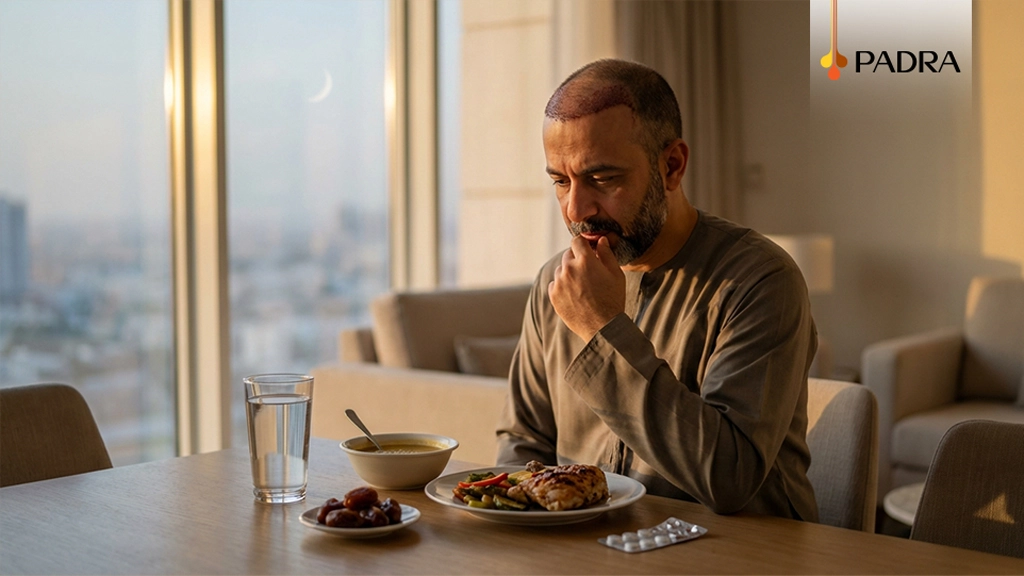
Fasting After Hair Transplant: Is It Safe and When Can You Resume?
Fasting after hair transplant can feel like a tightrope: the scalp is healing, grafts are settling, and hydration suddenly becomes more than a wellness habit. At the same time, fasting may carry deep personal and seasonal meaning, especially when a procedure lands close to Ramadan. The safest path is rarely a dramatic yes-or-no. In most cases, fasting can be possible, but the timing and the body’s baseline health matter more than willpower.
Early recovery is a short window where small stresses—poor fluid intake, missed doses, lightheadedness—can make the first week harder than it needs to be. The reassuring part: fasting does not automatically “ruin” grafts. The practical part: dehydration and low energy can interfere with comfort, medication schedules, and the quality of healing.
Can You Fast After Hair Transplant?
The short answer in n many cases is yes, but timing matters.
The first 24–48 hours after a transplant are the most sensitive for basic recovery needs. During this period, the scalp can feel tight and tender, and the body is managing tiny wounds, mild swelling, and the start of graft stabilization. Hydration supports circulation and helps the body handle anesthesia after-effects and post-op medications.
Health status also plays a role. Someone with stable blood pressure, good hydration habits, and a smooth procedure may tolerate an earlier return to fasting better than someone prone to dizziness, migraines, or dehydration. Medication timing can be the deciding factor as well—especially if antibiotics or pain relief are prescribed on a schedule that doesn’t fit fasting hours.
Religious guidance can be important for peace of mind, but medical safety should lead. When religious questions arise, many patients choose to speak with a trusted scholar while also checking with the surgical team to align decisions with recovery needs.
Why the First Few Days After Hair Transplant Matter
The first days are not magical, but they are biologically busy.
Graft stabilization phase
New grafts sit in tiny sites created in the scalp. In the earliest stage, they rely on the surrounding tissue environment while the body begins the “anchoring” process. Gentle swelling, small scabs, and redness are expected. The goal is not perfection; it’s steady healing without avoidable stress.
Blood supply establishment
Within days, the body increases micro-circulation around the grafts. This is not a single switch; it’s a gradual process. Hydration supports blood volume and circulation, which can improve overall comfort and reduce headache and fatigue.
Role of hydration and nutrition
Fasting itself does not “kill grafts.” However, dehydration can increase dryness, itching, and lightheadedness. Low calorie intake can also worsen fatigue and make rest less restorative. Healing is an energy-demanding process, even when the wounds are small.
Medication adherence
Some post-op plans include antibiotics, anti-inflammatory medications, or mild pain control. Skipped doses or squeezed schedules can raise infection risk or increase discomfort. When fasting makes the medication plan messy, postponing fasting is often the cleanest medical choice.
For broader context on healing phases, see the Hair Transplant Recovery Timeline guide, which outlines what tends to happen week by week.
Post-Hair Transplant Fasting Guidelines
These Post-Hair Transplant Fasting Guidelines are general, not a substitute for a surgeon’s plan. They aim to reduce anxiety while respecting that recovery varies.
Day 0–2 (first 48 hours)
Hydration is the priority. The body is adjusting, swelling is most likely, and medication schedules are usually tight.
- Fluids support comfort, blood pressure stability, and headache control
- Missed daytime medications can create avoidable setbacks
- Postponing fasting during this short window is commonly advised in clinical practice
A helpful comparison point is the Post-Op Care Guide, which details early aftercare basics like washing timing and sleeping position.
Day 3–7
This is often the “settling week.” Many patients feel better, but tiredness can still appear.
- Light fasting may be tolerated in otherwise healthy patients
- Dizziness, weakness, or worsening headache should be treated as a stop-sign
- Fluids during non-fasting hours become crucial, not optional
After 1 week
Most healthy patients can resume fasting more normally, assuming medication schedules allow it and recovery has been smooth.
- Aftercare should still be followed (gentle washing, no picking, sun protection)
- Ongoing dryness or itching is common and can be managed
- If the procedure was large or swelling was significant, a longer delay may be sensible
Recovery Check-In
Short, focused review of fasting timing, hydration, and medication schedules.
[Schedule a Post-Op Review]
Does Fasting Affect Hair Transplant Results?
The evidence base is limited, but the overall picture is reassuring: there is no strong direct evidence that fasting alone harms graft survival. Hair transplant outcomes depend more on surgical technique, graft handling, scalp care, and avoiding trauma to the recipient area.
Where fasting can matter is indirectly:
- Dehydration: may worsen headache, itch, and fatigue; can also make the first week feel harder
- Fatigue and sleep disruption: can reduce recovery quality and raise stress
- Delayed wound healing in vulnerable patients: those with medical conditions or poor baseline nutrition may heal more slowly when intake is restricted
For patients worried about unexpected shedding, the Shock Loss After Hair Transplant explains why some shedding can happen even with perfect care—and why it usually improves with time.
Who Should Avoid Fasting Immediately After a Hair Transplant?
Fasting in the first week may not be suitable for everyone. Individuals with diabetes or unstable blood sugar, low blood pressure, frequent fainting, kidney concerns, or a history of dehydration may face higher risk. Those taking antibiotics that require daytime doses can also disrupt treatment if medication timing is altered. Larger transplant sessions, where swelling and tenderness are more pronounced, may require extra caution.
This is a matter of physiology, not endurance. Early healing requires stable hydration and proper medication use. When in doubt, medical evaluation provides the safest direction. The guide on Hair Transplant Candidates explains how overall health influences recovery.
Tips for Fasting Safely After Hair Transplant
When fasting resumes, hydration becomes the priority. Fluid intake between iftar and suhoor should be steady and sufficient. Caffeine is best limited, as it may increase fluid loss and disturb sleep. Adequate protein supports tissue repair and recovery.
Water should be consumed gradually through the evening, meals should include protein-rich foods, and excessive sun exposure should be avoided. Medication timing should only be adjusted with clinical approval. For symptom clarity during recovery, the Hair Transplant Side Effects guide outlines what is normal and what requires attention.
Ramadan-Friendly Planning
Timing support for procedures near Ramadan, plus recovery pacing.
[Explore Hair Transplant During Ramadan]
When to Contact Your Surgeon
Some symptoms deserve prompt contact, especially when fasting is involved:
- Persistent dizziness or near-fainting
- Severe weakness or inability to hydrate well during non-fasting hours
- Increasing redness, warmth, pus, or worsening pain (possible infection)
- Fever
- Unexpected swelling that progresses rather than improves
- Wounds that appear unusually slow to settle
Clinical teams prefer early messages over late emergencies. A fast check can prevent a small issue from becoming a larger one.
Planning Fasting Around Your Recovery
Fasting after hair transplant is often possible once the early stabilization period has passed, especially after the first week in healthy patients with smooth healing. The first days remain the most important window to protect hydration, maintain medication schedules, and keep recovery predictable.
Fasting does not automatically damage grafts, but dehydration can make healing harder and can amplify discomfort. Decisions should reflect personal health status, procedure size, and the surgeon’s aftercare plan. When Ramadan timing is involved, thoughtful planning often reduces stress more than any single rule.
For a bigger-picture overview of timing and preparation around Ramadan, the Hair Transplant During Ramadan guide offers season-specific considerations.
Aftercare Guidance Pack
Clear, clinic-style steps for washing, sleep, swelling control, and safe fasting timing.
[Get the Post-Op Care Guide]