
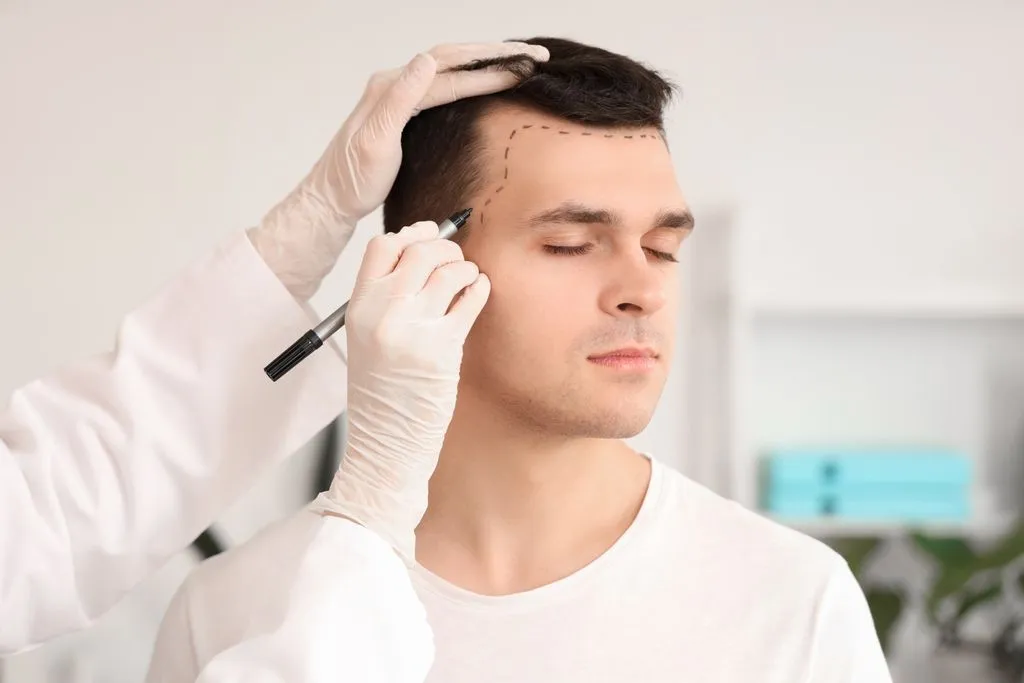
Why Turkey? Affordable procedures, high-volume clinics, and convenient all-inclusive packages.
Cost Advantage: Lower operational costs make treatments cheaper than in the US or UK.
Experience: High procedure volume — but quality varies significantly between clinics.
Key Consideration: Choosing the right clinic and doctor matters more than location — and local options are increasingly competitive.
If you have spent any time on social media or in a major airport lately, you have probably seen them: groups of men with black headbands and tiny red dots on their hairlines. It has become so common that people now jokingly call the national airline “Turkish Hairlines.”
But behind the humor, there is a real global trend. Every month, thousands of patients travel to Istanbul for hair transplant surgery. So, why do people go to Turkey for hair transplants in such large numbers? Is it only about price, or is there more behind the decision?
Whether you are just exploring your options or seriously considering treatment, it’s important to understand not just why Turkey became so popular — but also what alternatives exist today.
When Did Turkey Become Famous for Hair Transplants?
Turkey’s position as a hair transplant hub didn’t happen overnight. Around 15 to 20 years ago, the government began investing heavily in medical tourism, offering incentives to clinics and supporting private healthcare development.
As a result, Istanbul quickly became a global center for hair restoration. Clinics didn’t just offer surgery — they built a full experience around it, combining treatment with travel, accommodation, and convenience.
Through aggressive marketing and social media visibility, the idea of flying abroad for a hair transplant became normalized.

The Big Question: Why Is It So Much Cheaper?
One of the main reasons people consider Turkey is cost.
In countries like the US or UK, hair transplant procedures can range from $10,000 to $25,000. In Turkey, similar procedures are often offered at significantly lower prices.
How is this possible?
- Lower operating costs: Rent, staff wages, and clinic expenses are lower
- Currency advantage: Exchange rates make treatments more affordable for international patients
- High competition: Hundreds of clinics competing in one city
However, lower cost does not always reflect the full picture — especially when long-term results and aftercare are considered.
High Volume: The “Practice Makes Perfect” Effect
Turkey’s clinics handle a very high number of procedures daily. This creates experienced teams who are efficient and skilled in routine processes.
But this also introduces a potential downside.
In some clinics, known as “hair mills,” the focus shifts toward volume and speed rather than precision and personalization. In these environments, technicians may perform most of the procedure with limited doctor involvement.
For a treatment that directly affects your appearance long-term, this distinction matters.
All-Inclusive Packages: The Appeal of Convenience
Another reason people travel to Turkey is convenience.
Many clinics offer packages that include:
- The procedure
- Hotel accommodation
- Airport transfers
- Translators
This creates a streamlined experience — especially for international patients.
However, convenience during a short trip does not always translate into long-term support after you return home.
Why Do Men Especially Travel to Turkey for Hair Transplants?
The majority of patients traveling for hair transplants are men.
Several factors explain this:
- Normalization: Influencers and public figures openly share their experiences
- Privacy: Traveling abroad allows patients to undergo treatment discreetly
- Shared experience: Seeing others go through the same process makes it feel more accessible
At the same time, access to local clinics has improved significantly, making it easier for patients to achieve similar privacy and comfort without leaving their region.
Why Does It Feel Like Everyone Goes to Turkey?
The perception that “everyone” goes to Turkey is largely influenced by visibility.
Patients recovering in hotels and walking around cities are highly visible, and social media algorithms amplify this trend. As a result, Turkey appears to dominate the space — even though many patients choose alternative options closer to home.
Is the Reputation Based on Quality or Accessibility?
Turkey has some highly skilled surgeons with international recognition. At the same time, the ease of entering the market means that not all clinics maintain the same standards.
This creates a mixed landscape:
- High-quality clinics: Doctor-led procedures, advanced techniques, strong safety protocols
- Lower-quality clinics: High-volume operations with limited supervision
The challenge for patients is knowing how to differentiate between the two.
What Should You Consider Before Traveling?
Before booking a flight, it’s important to think beyond the procedure itself.
- Who performs the surgery?
- What happens after you return home?
- How accessible is follow-up care?
- What are your options if something goes wrong?
Hair transplantation is not just a one-day procedure — it requires follow-up, monitoring, and sometimes adjustments over time.
Turkey vs Local Options: A More Balanced Perspective
| Feature | Turkey | Regional Clinics (Dubai, Doha, Riyadh, Kuwait) |
| Cost | Lower upfront | Structured treatment planning |
| Experience | High volume | Controlled, doctor-led approach |
| Follow-up | Mostly remote | In-person access |
| Convenience | Requires travel | Local accessibility |
| Regulation | Variable | Consistent medical standards |
While Turkey offers affordability and accessibility, clinics across the region now provide a more continuous and supervised treatment experience.
A Shift in Patient Decisions
Today, many patients are rethinking whether traveling abroad is still necessary.
Over the past few years, access to advanced hair restoration has expanded significantly across the region. Clinics with international standards are now available in cities like Dubai, Doha, Riyadh, and Kuwait, giving patients more flexibility in how and where they choose to proceed.
Groups like Padra, for example, operate across these locations — making it possible for patients to go through consultation, treatment, and follow-up within a more connected and accessible system.
For many patients, this means:
- Easier communication before and after treatment
- In-person follow-ups instead of relying on remote support
- A more consistent and controlled experience overall
Final Thoughts: Look for Quality, Not Just a Deal
Choosing a hair transplant clinic should never be based on price alone.
While Turkey continues to attract patients due to lower costs, it is no longer the only option for accessing experienced teams and modern techniques.
With clinics now established across cities like Dubai, Doha, Riyadh, and Kuwait, many patients are finding that they can achieve comparable results without the added complexity of international travel.
Hair restoration is a long-term decision. Beyond the procedure itself, factors like follow-up care, accessibility, and ongoing support play a critical role in the final outcome.
The most important question is no longer “Where is it cheaper?”
—but rather, “Where can I receive consistent, medically guided results I can rely on?”