







If you’re reading this because you had a hair transplant years ago — or you’re thinking ahead — this page explains what usually happens to hair transplant after 10 years. It covers the steady years (like hair transplant 3 years later), the long view (hair transplant after 20 years), and the common changes people see. The goal is simple: give clear, realistic answers so you know what to expect and when to ask for a check-up.
What Happens to Transplanted Hair Over Time?
Transplanted hair comes from the donor area (usually the back and sides of the scalp). Those follicles keep their basic traits after they move: they tend to resist the hormones that cause male pattern hair loss. That’s why many grafts keep growing for many years.
But “keep growing” doesn’t mean nothing changes. Over time hair can get finer, the surrounding native hair can thin, and hair texture can shift. These changes are a mix of natural aging and how your own hair loss pattern progresses.
Send recent photos for a free assessment
Difference between transplanted hair and native hair
- Transplanted hair: Usually more resistant to the main type of hair loss and often retains thickness longer.
- Native hair around grafts: May keep thinning with age. When native hair gets thinner, the overall look can appear less dense even though the grafts themselves are still alive.
Hair Transplant 3 Years Later: What’s Usually Stable by Then
Density and growth maturity
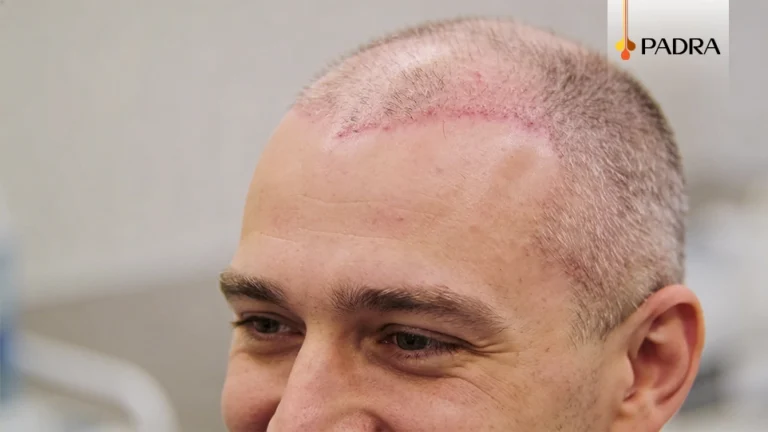
By the 12–18 month mark most grafts have grown in, but some changes can continue up to 2–3 years. At hair transplant 3 years later, many patients feel the result is “settled.” Density is usually close to steady, and hair texture has largely normalized.
Early aging effects
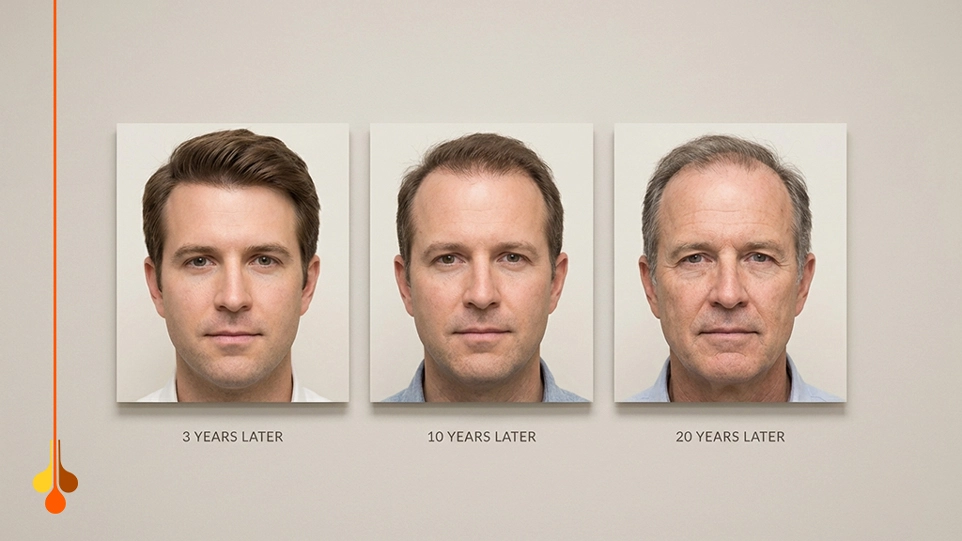
At three years you may notice small changes: slight thinning at the edges, a softer hairline, or minor differences in shine and texture. These are normal and often gradual.
Why many patients feel “settled” at this stage
Three years is when the new hair blends naturally with the rest of your scalp. That’s why photos at this point are commonly used to show a procedure’s success.
Hair Transplant After 10 Years: What to Expect
Hair quality and thickness
At the ten-year mark you’ll see the real long-term picture. Many transplanted follicles remain healthy and produce good hair. However, slight thinning or miniaturization can occur — both to transplanted grafts (rare) and, more commonly, to nearby native hair.
Hairline appearance over time
A hairline placed too low or too aggressive can look dated a decade later. Conservative, natural designs tend to age better. If your hairline was designed with long-term changes in mind, it usually stays natural-looking even as you age.
Common changes patients notice
- Slight reduction in overall perceived density if native hair thins.
- Softening of the frontal hairline (natural aging).
- Need for different styling to adapt to texture or length changes.
- Some people report more greying in transplanted hair, which follows general aging.

Can Transplanted Hair Thin or Change After 10 Years?
Natural aging vs. transplant failure
Transplanted hair thinning years later is usually not transplant “failure.” True graft failure is uncommon when surgery was done well. More often, what you see is natural aging of hair or progressive loss of the non-transplanted hair around the grafts.
Surrounding native hair loss
If the native hair continues to fall out, the contrast between grafted and non-grafted areas grows. That can make the transplant look thinner overall even if the grafts are fine.
Lifestyle and genetic factors
Smoking, poor nutrition, certain illnesses, and family history play a role. Medications like topical minoxidil or oral finasteride (talk to a doctor) can slow or reduce thinning of native hair and help maintain a balanced look.
Hair Transplant After 20 Years: Long-Term Perspective
At hair transplant after 20 years, most people will see the full effects of aging and genetics. Good donor hair can last, but overall scalp appearance depends on ongoing hair loss, how conservative the original plan was, and follow-up care.
A hairline built with the long term in mind — slightly higher, softer, and following natural contours — will usually look better two decades later. Aggressive, overly low hairlines are the ones that tend to look less natural with time.
Planning for future loss means fewer surgeries later and a more natural look as you age. Surgeons who design with decades in mind tend to produce results patients are happy with long-term.
Does a Hair Transplant Last Forever?
This is a common search: “Does hair transplant last 20 years?” or “does hair transplant last forever?” The clear, honest answer: a hair transplant gives long-lasting results for many grafts, but absolute permanence for every follicle is not a medical guarantee. Expect durability, not an absolute promise.
What “long-lasting” means medically:
- Most transplanted follicles are durable because they come from resistant donor areas.
- How long and how the transplant looks depends on your ongoing pattern of hair loss, age, and care.
Avoid any clinic that promises a single, permanent fix with no chance of later change. That’s not realistic.
What Affects Long-Term Hair Transplant Results?
The health and density of the donor region are the foundation. More and better donor hair gives more options and longer-term reserves. Modern follicular unit extraction (FUE) and follicular unit transplantation (FUT) done properly give high graft survival and natural-looking placement. The skill of the surgeon matters a great deal.
If you continue to lose your native hair, the transplant may need future touch-ups or medication to keep a balanced look. Simple steps can extend a good outcome:
- Regular check-ins with a hair specialist.
- Medical treatments where appropriate (discuss with your physician).
- Healthy habits: balanced diet, controlled stress, no smoking.
When Do Patients Consider a Second Procedure?
Density changes
If perceived density falls enough that styling options shrink, patients often consider a second session to add grafts.
Expanding hair loss
When loss advances beyond the area covered by the first transplant, an additional procedure can expand the treated zone.
Aesthetic refinement
Sometimes it’s about small fixes: softening a hairline, adding density to the crown, or fine-tuning graft angle for better texture.
Before booking a second procedure, many clinicians recommend a long-term assessment — photos, maybe a scalp exam — to plan the best approach.