
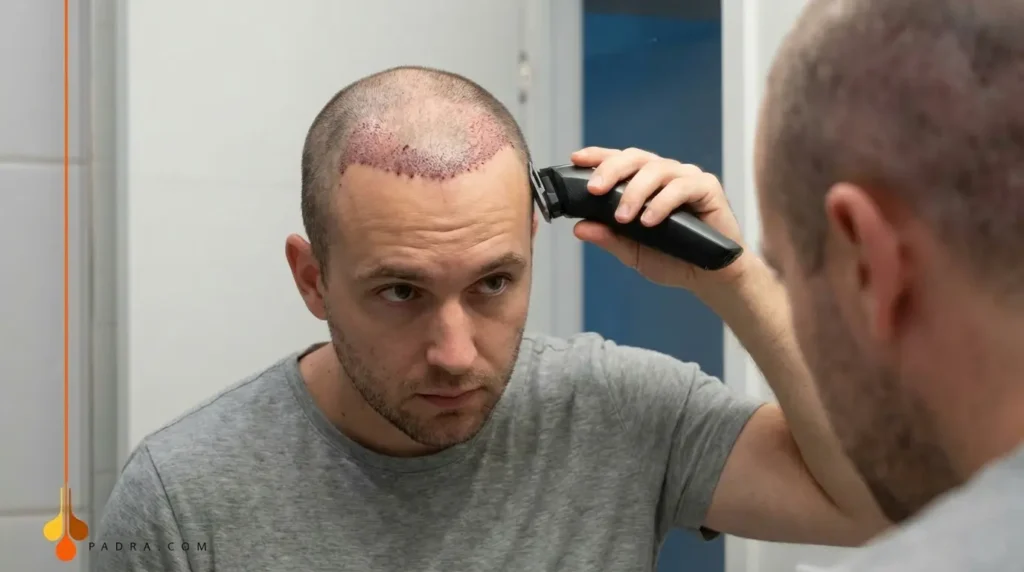
Shaving after a hair transplant is one of the most common concerns during recovery. Many patients want to know exactly when they can safely shave their head or face without risking damage to the transplanted grafts.
The answer depends mainly on your healing stage, the area being shaved, and the method you use.
This guide provides a clear, step-by-step explanation of when shaving becomes safe, what to avoid, and how to protect your results.
Can You Shave Your Hair After a Hair Transplant?
The answer always depends on the timeline. Shaving should be avoided during the early healing phase, as the grafts are still fragile.
Here is a general timeline most patients can follow:
- Days 0–14: Do not shave at all, especially in the recipient area
- After 2 weeks: You may carefully trim with scissors (no skin contact)
- After 1 month: Electric trimmers can usually be used gently
- After 3 months: Most patients can return to normal shaving routines
- 4 to 6 months: Hair becomes more stable, and most grooming methods are generally safe with gentle handling.
- After 6 months: The scalp is usually fully healed, and normal shaving routines, including closer trims or razors, can be resumed.
Healing speed varies, so always prioritize your clinic’s specific instructions.
Haircut After Hair Transplant is a vital part of your journey.
What Happens If You Shave Too Early?
Shaving too early does not always lead to permanent damage, but it can affect your progress.
Possible outcomes include:
- Reduced survival of some grafts
- Temporary irritation or redness
- Delayed visible results
If you are unsure, a professional evaluation can help assess the situation.
Noticing more hair fall after shaving? It may not be temporary.Explore how mesotherapy can help strengthen your hair before the problem progresses.
Close Shaving Methods After Hair Transplant
Zero shave and wet shaving involve very close contact with the scalp and carry a higher risk if done too early. These methods should only be considered after full healing, as they can increase irritation and affect sensitive areas if the scalp is not fully recovered.

Clippers With Guard After Hair Transplant
Using clippers with a guard is generally considered the safest option in the early stages after a hair transplant.
A guard creates a small distance between the blades and the scalp, reducing direct contact and lowering the risk of irritation or graft damage.
Key points to consider:
- Suitable after the initial healing phase (usually after 2–4 weeks)
- Minimizes pressure on the scalp
- Helps maintain an even trim without cutting too close
- Lower risk of pulling or damaging sensitive areas
For most patients, this is the recommended method when returning to grooming routines.
Zero Shave After Hair Transplant
Zero shaving refers to cutting hair extremely short using clippers without a guard, bringing the blades very close to the scalp.
This method involves more direct contact and should be approached with caution.
Important considerations:
- Not recommended in the early recovery phase
- Can increase friction and irritation on sensitive skin
- Higher risk if the scalp is not fully healed
- Typically safer after several months, once the skin has fully recovered
Patients should only consider zero shaving once healing is complete and there is no sensitivity or discomfort.
Wet Shaving After Hair Transplant
Wet shaving involves using a razor directly on the scalp, often with shaving cream or gel.
This method creates the closest shave but also carries the highest level of risk if done too early.
Things to keep in mind:
- Should be avoided during the early months after a transplant
- Direct blade contact can cause micro-cuts or irritation
- Requires fully healed skin before being considered
- Generally safer after around 3 months or later, depending on individual healing
Even when it becomes safe, wet shaving should be done gently, using clean tools and proper technique.
Donor Area vs Recipient Area: What You Need to Know
After a hair transplant, not every part of your scalp heals at the same pace—and that directly affects when and how you can shave.
Donor Area (Back and Sides)
The back and sides of your head usually recover faster. Since no new grafts are placed here, the focus is mainly on surface healing rather than protecting newly implanted hair.
- It typically heals sooner than the transplanted area
- Light trimming may be possible earlier in the process
- Scissors are the safest option in the beginning
- Clippers with a guard are often okay after about 3–4 weeks
- Even if it looks healed, it still needs gentle handling
Recipient Area (Top and Hairline)
The top of your scalp and hairline require much more care. This is where the grafts are placed, and they need time to settle and grow.
- This area is more sensitive and vulnerable in the early weeks
- Redness or slight numbness can last for some time
- It needs more time before shaving is considered safe
- Shaving too early here carries a higher risk of damaging grafts
One of the most common mistakes is treating this area like the rest of the scalp too soon.
Even if everything looks fine on the surface, deeper layers of the skin may still be healing. That’s why it’s important to be a bit more patient—especially with the transplanted area.
How to Shave Safely After a Hair Transplant
Once your doctor confirms it’s safe to shave, technique becomes important.
- Make sure your scalp is clean and dry
- Use slow, gentle movements
- Avoid applying pressure
- Do not go over the same area repeatedly
- Keep tools clean to reduce infection risk
- Stop immediately if you feel discomfort
A careful approach helps protect both graft survival and final results.
Why Shaving Too Early Can Be Risky
Shaving too soon can interfere with the success of the transplant.
Possible risks include:
- Dislodging newly implanted grafts
- Causing irritation or inflammation
- Increasing the risk of infection
- Slowing down the healing process
Patience during this stage is essential for protecting your results.
Book your consultation today
Will Shaving Affect Growth or Cause Hair Loss?
There are many myths floating around the internet. Let’s clear them up.
- Myth: Shaving makes hair grow back thicker.
- Truth: It doesn’t. It just gives the hair a blunt tip, which feels coarser.
- Myth: Shaving pulls out the root.
- Truth: If you wait the recommended time (usually 1 month for scissors, 3 months for clippers), the root is anchored deep in the fat layer of the scalp. Shaving the hair shaft above the skin won’t kill the root.
- The “Shedding” Phase: Remember, it is normal for transplanted hair to fall out around weeks 3 to 6. Shaving doesn’t cause this; it’s a biological reaction to the surgery. The root stays, and a new hair will grow in its place.
Understanding the full hair transplant timeline can help you know what to expect during recovery. You can also explore hair transplant before and after results to see how transplanted hair develops and improves over the months following the procedure.
When Should You Avoid Shaving Completely?
Even after the initial healing period, shaving should be delayed if you notice:
- Redness or swelling
- Scabs that have not fully healed
- Sensitivity or discomfort
- Signs of infection
In these situations, waiting longer is the safest option.
Final Thoughts
Shaving after a hair transplant requires patience and proper timing. While it may be tempting to return to your usual routine quickly, giving your scalp enough time to heal is essential.
Following the right approach helps ensure that transplanted hair grows naturally and consistently over time.