







In a hair transplant procedure, the donor area plays a critical role in determining the quality, density, and long-term success of the results.
Many patients focus on the hairline or final appearance, but the outcome of the procedure largely depends on how well the donor area is selected and managed.
This guide explains what the FUE donor area is, why it matters, and how it affects both the results and the future of your hair.
What Is the Donor Area in FUE Hair Transplant?
In FUE (Follicular Unit Extraction), the donor area refers to the part of the scalp where hair follicles are extracted for transplantation.
This area is usually located at:
- The back of the head
- The sides of the scalp
These regions are chosen because the hair is typically more resistant to hair loss.
Once extracted, these follicles are transplanted into areas experiencing thinning or baldness.
Does Hair Grow Back in the Donor Area?
This is one of the most common questions patients ask before an FUE hair transplant.
In FUE, the extracted follicles do not grow back in the exact same spot because they have been permanently moved to another area of the scalp. However, this does not usually mean the donor area will look empty or noticeably thin.
When the extraction is done properly, the surrounding hair continues to provide natural coverage, helping the donor area maintain a balanced appearance. Experienced specialists carefully distribute the extractions to avoid overharvesting and preserve overall density.
In most cases, once the area heals and the hair grows back around it, the donor region continues to look natural and blends well with the surrounding scalp.
Why Is the Donor Area So Important?
The donor area is the foundation of the entire procedure.
Its importance lies in:
- Hair quality: Stronger follicles lead to better results
- Density availability: Determines how much coverage can be achieved
- Long-term stability: Donor hair is usually more resistant to hair loss
A well-managed donor area ensures natural-looking and long-lasting outcomes.
Book Your Donor Area Recovery Consultation Today
Worried About Donor Area Healing?
How Is the Donor Area Evaluated Before a Hair Transplant?
Before the procedure, the donor area is carefully assessed.
Key factors include:
- Hair density
- Hair thickness
- Scalp condition
- Overall donor capacity
This evaluation helps determine how many grafts can be safely extracted.
Donor area recovery timeline
Knowing milestones helps set expectations for hair transplant donor area recovery and answers “what happens to the donor area after hair transplant.”
- First 48–72 hours: Tiny scabs form around extraction points. Mild soreness is normal.
- After 1 week: Many scabs fall off. Redness fades for most people.
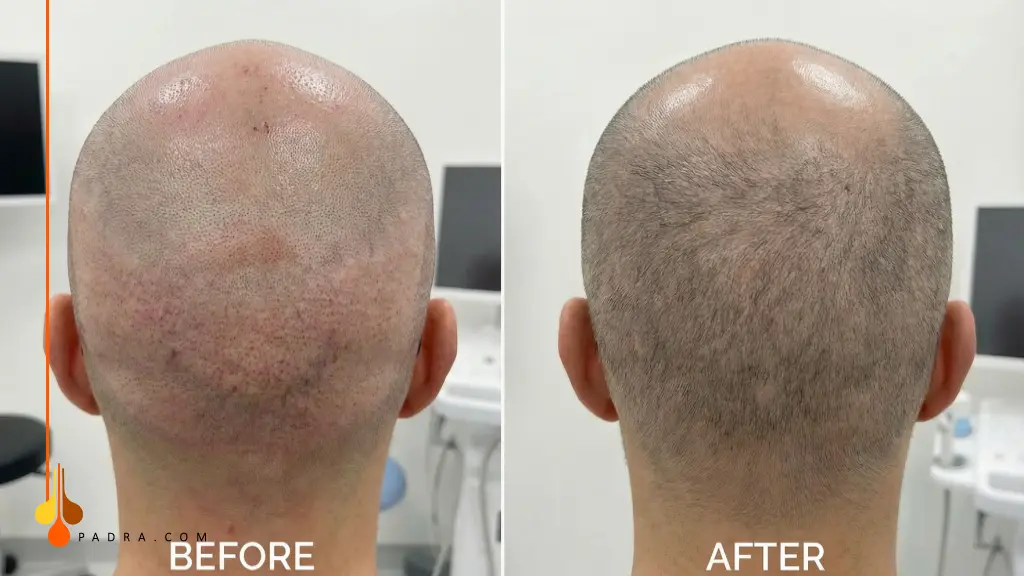
- FUE donor area after 2 weeks: Scabs are usually gone and the area looks much better. You may still see faint dot marks when hair is very short.
- 3–4 months: Skin and hair settle; tiny dots are less noticeable.
- Donor area after 1 year: Most patients report a natural, balanced look. Final texture and concealment of extraction points are clear by this time.

This timeline shows why FUE often wins on quick recovery and discrete healing compared to FUT.
How to improve healing in the donor area
If you search “how to improve hair donor area,” these practical steps work:
- Follow the surgeon’s aftercare instructions exactly.
- Don’t pick or scratch scabs — that raises the risk of extra scarring.
- Eat protein-rich foods and drink water; good nutrition aids skin repair.
- Use gentle shampoo once your clinic says it’s safe.
- Avoid heavy exercise and sweating for the first week or as advised.
- Avoid smoking and limit alcohol while healing.
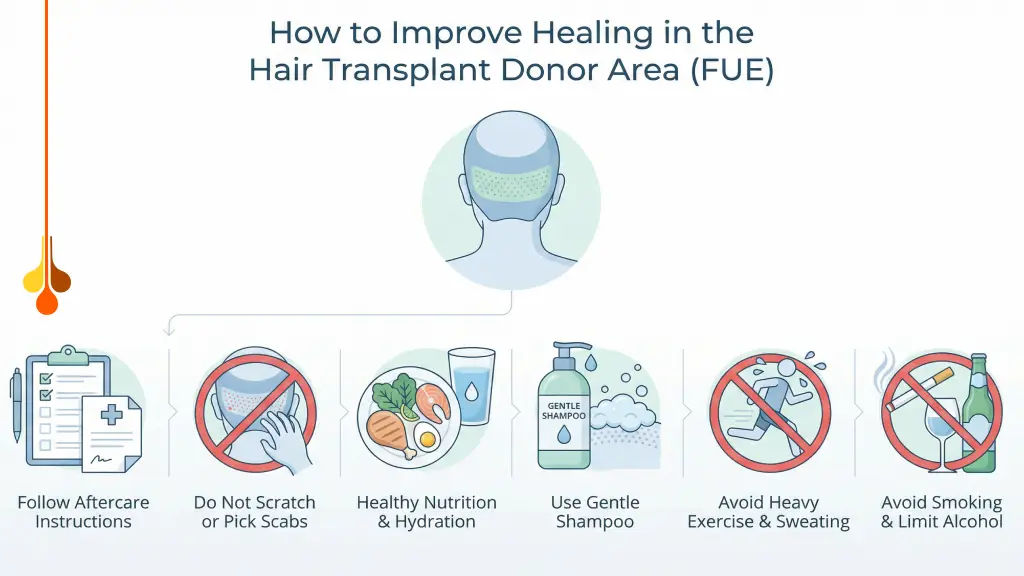
These steps support hair transplant donor area regrowth in appearance and reduce complications.
Why Is Donor Hair Resistant to Hair Loss?
Hair in the donor area is often genetically resistant to pattern hair loss.
This means:
- It is less affected by hormones like DHT
- It tends to remain stable over time
- It retains its growth characteristics even after transplantation
This is why donor hair is used to restore thinning area
Benefits and limits of the FUE donor area
Understanding the benefits and limitations of the FUE donor area helps you set realistic expectations and make informed decisions before choosing this hair transplant method.
Benefits
- Tiny, dot-like scars are created during FUE, and they are usually so small that most people cannot notice them, even with short hair.
- Recovery is faster and less painful compared to FUT, so you can return to normal activities sooner.
- FUE allows flexibility for multiple small sessions if more grafts are needed later, without leaving a large scar.
- When performed by an experienced surgeon, the donor area heals naturally and blends in with surrounding hair.
Limitations
- The hair follicles that are removed do not grow back, so surgeons must plan carefully to avoid over-extraction.
- Taking too many follicles from one area (over-harvesting) can make the donor site look thinner permanently.
- People with advanced hair loss may have a limited supply of donor hair, which can restrict how much can be transplanted.
- The final results depend heavily on the skill and experience of the surgeon performing the procedure.
If you worry about future work, ask your surgeon how many grafts can be safely taken now and later.
Contact our clinic today for personalized advice
What Should the Donor Area Look Like After FUE?
The donor area gradually improves as the scalp heals after FUE. In the first few days, it’s normal to notice small extraction points and mild sensitivity as part of the recovery process.
Within the first couple of weeks, the area usually starts to look much cleaner as healing progresses. Over time, the scalp continues to settle and blend naturally with the surrounding hair.
In most cases, the donor area looks well-recovered and natural within the following months, especially when proper techniques and aftercare are followed.
How to Protect the Donor Area After FUE
Post-procedure care is essential to maintain donor health.
Recommended practices include:
- Following the washing instructions carefully
- Avoiding physical trauma to the area
- Allowing proper healing time
- Following medical advice for recovery
Good aftercare supports both healing and long-term appearance.
Donor Area vs Safe Donor Zone: What’s the Difference?
Although the terms are often used together, the “donor area” and the “safe donor zone” are not exactly the same.
The donor area generally refers to the back and sides of the scalp where hair follicles are extracted during a hair transplant. The safe donor zone, however, is the specific part of that area where hair is considered more genetically stable and less likely to thin over time.
Choosing grafts from the safe donor zone is important for achieving more stable and natural-looking long-term results.
What Happens If the Donor Area Is Overharvested?
Overharvesting is one of the most important risks to understand.
It occurs when too many follicles are extracted from the donor area.
Possible consequences include:
- Visible thinning in the donor region
- Patchy or uneven appearance
- Limited options for future procedures
Proper planning is essential to preserve the donor area for both current and future needs.
Can the Donor Area Be Used Again?
In some cases, the donor area can be used for future procedures.
This depends on:
- Remaining density
- Previous extraction patterns
- Overall scalp health
This is why preserving donor resources during the first procedure is critical.
Results & realistic expectations
Expect tiny scabs to vanish within days and steady improvement over weeks. The final appearance of the donor area often becomes clear by 8–12 months. If you ask, will the density look thinner after extraction? — if the surgeon is conservative, density stays natural. If too many follicles are removed, thinning can be permanent.
| Feature | FUE donor area | FUT donor area |
| Scar type | Tiny dot scars | Single linear scar |
| Recovery speed | Faster | Slower |
| Visibility with short hair | Low | Higher |
| Best for | Discreet scarring, staged sessions | Large graft needs in one session |
| Reuse for future | Better if conservative | Depends on strip scar |
Why Understanding Your Donor Area Matters
The FUE donor area is one of the most important factors in a successful hair transplant. While the focus is often on visible results, the long-term outcome depends heavily on how well the donor area is preserved and utilized.
A careful and balanced approach ensures both natural results and future flexibility.
Curious If Donor Hairs Grow Back?
Get Expert Advice on FUE Donor Area