




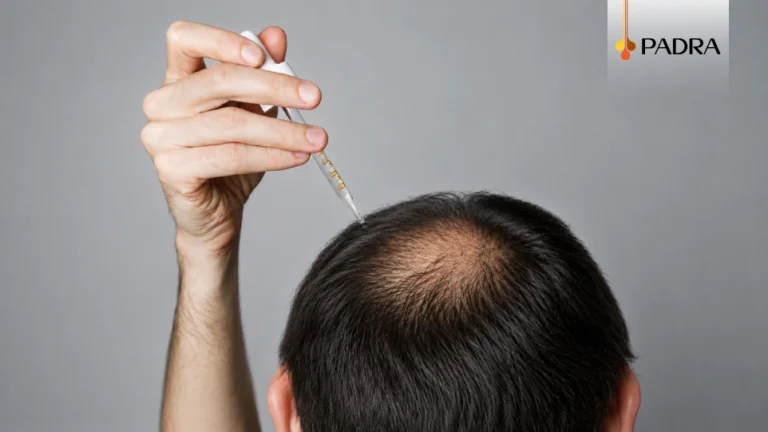



Finasteride is one of the most discussed treatments for male pattern baldness, but many men still ask the same question: does finasteride regrow hair, or does it only slow down hair loss? The answer depends on follicle activity, hair loss stage, consistency, and whether the treatment is medically suitable for you.
Finasteride, a 5-alpha reductase inhibitor, can help men with androgenetic alopecia maintain and regrow hair by reducing DHT levels that shrink hair follicles. Results usually appear within 3-6 months, with full effect around 12 months. Side effects can include libido changes, erectile dysfunction, and mood changes. Women should consult a doctor before use.
Does Finasteride Actually Regrow Hair?
Finasteride may help regrow hair in some men with male pattern baldness, especially in areas where follicles are still active or miniaturized. It is often more effective at slowing hair loss, reducing shedding, and maintaining existing hair than at restoring completely bald areas.
Advanced bald spots may not respond well because follicles may no longer be active. Age, genetics, hair loss stage, daily consistency, and medical suitability can all affect the outcome.
The key point is simple: finasteride can support regrowth in selected cases, but maintenance is often its biggest benefit.
How Does Finasteride Work for Hair Loss?
Finasteride is a prescription-only oral hair treatment. It works as a 5-alpha reductase inhibitor, which means it reduces the conversion of testosterone into dihydrotestosterone, or DHT.
DHT is strongly linked to follicle miniaturization in androgenetic alopecia. When follicles are sensitive to DHT, they can gradually shrink and produce thinner, weaker hair. By lowering DHT activity, finasteride may help protect responsive follicles from further miniaturization.
This is why finasteride is mainly used as a DHT-focused hair loss treatment plan for male pattern hair loss.
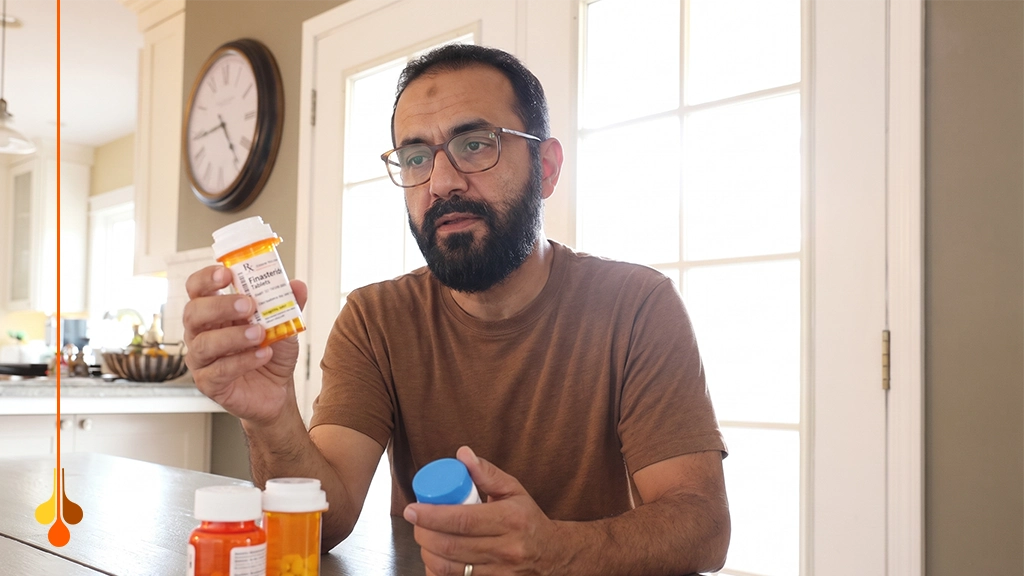
Finasteride for Hair Regrowth vs Hair Maintenance
When people search for finasteride for hair regrowth, they often expect visible new hair. That can happen for some users, but it is not the only goal of treatment.
Hair maintenance means preserving existing hair and slowing further thinning. This is often where finasteride performs best.
Hair regrowth means improved density or thicker-looking hair in areas where follicles are still active. This is more likely when treatment begins before hair loss becomes advanced.
Finasteride is not only a regrowth treatment; it is mainly a long-term maintenance therapy for DHT-related hair loss.
Finasteride Results: What Can You Expect?
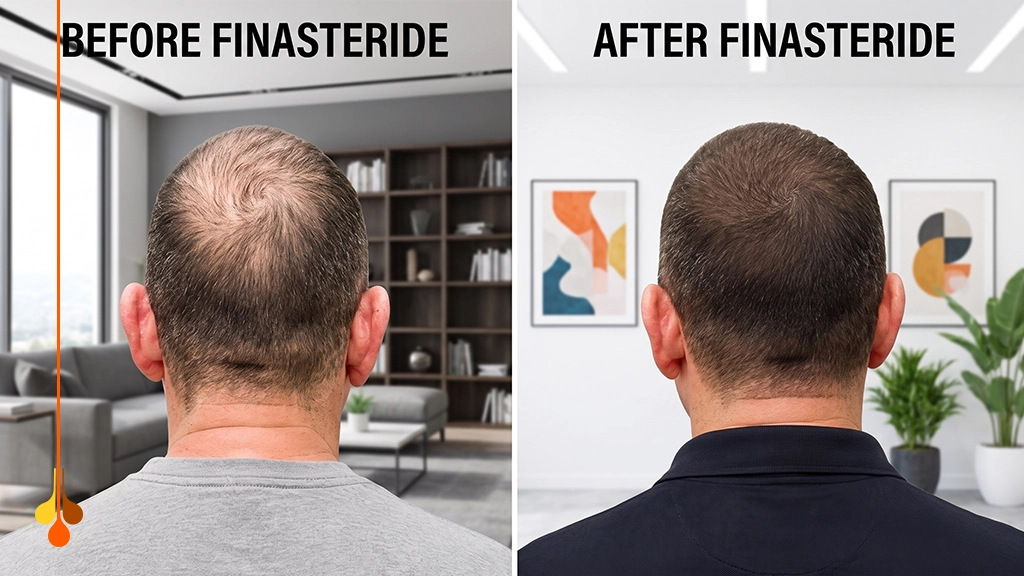
Realistic finasteride results hair regrowth may include shedding reduction, slower progression of male pattern baldness, improved density in responsive areas, and stronger long-term hair maintenance.
Some men notice their hair looks thicker because miniaturized hairs become stronger. Others may mainly see stabilization, meaning hair loss slows rather than dramatically reverses.
Response varies. Finasteride daily use may be more effective when started early, used consistently, and monitored as part of a wider plan.
How Long Does Finasteride Take to Work?
Finasteride results are not instant. Some users may notice early shedding reduction around 3 months, but visible improvement often takes longer.
Early changes may appear between 3 and 6 months. Clearer results are usually assessed between 6 and 12 months, and around 12 months is commonly used to evaluate the full effect.
Stopping too early may prevent a fair evaluation. Hair growth cycles are slow, so patience and consistency matter.
What Happens If You Stop Finasteride?
Finasteride benefits depend on continued use. If treatment is stopped, the DHT-lowering effect gradually reduces, and the original hair loss pattern may continue.
Hair maintained by finasteride may slowly thin again, and shedding may increase over time. This does not mean finasteride damaged the hair. It usually means the treatment was helping control a DHT-driven process.
Finasteride is maintenance-based, so stopping treatment can allow male pattern hair loss to progress again.
Finasteride Side Effects: What Should Users Know?
Finasteride can be helpful for selected men, but it should not be treated as risk-free. Possible side effects include libido changes, erectile dysfunction, mood changes, breast tenderness, headache, dizziness, and reduced semen volume.
Some users also report sexual or mental health symptoms that continue after stopping treatment, although this topic is complex and still medically debated.
Anyone experiencing sexual, breast-related, or mood-related symptoms should speak with a doctor. If you are comparing benefits and risks, reading more about finasteride side effects can help you prepare better questions before starting treatment.
Worried About Finasteride Side Effects?
If you are concerned about finasteride side effects or unsure whether it is suitable for your hair loss, our consultants can help you understand your options and discuss alternatives such as PRP, mesotherapy, or hair transplant evaluation.
Post-Finasteride Syndrome: What to Know
Post-finasteride syndrome is a term used by some patients to describe persistent symptoms after stopping finasteride. Reported concerns may include sexual symptoms, mood changes, cognitive complaints, or reduced quality of life.
This topic should be handled carefully. It is medically debated, and not every symptom after treatment is automatically caused by finasteride. Still, patient concerns should not be ignored.
If you are worried about post-finasteride syndrome, discuss your personal risk factors, mental health history, and treatment goals with a qualified doctor before starting.
Can Women Use Finasteride for Hair Loss?
Finasteride is mainly used for male pattern hair loss. In women, use may be off-label depending on the country, clinical judgment, and individual diagnosis.
Women should not use finasteride without medical supervision. Pregnancy-related safety concerns are especially important because finasteride can affect male fetal development.
Women with hair loss should first receive a proper diagnosis before considering any hormone-related treatment.
Finasteride vs PRP, Mesotherapy, and Hair Transplant
Finasteride, PRP, mesotherapy, and hair transplant are not interchangeable treatments.
Finasteride is an oral DHT-focused treatment used mainly for male pattern hair loss maintenance.
PRP hair treatment may support weak follicles and hair quality in selected patients.
Hair mesotherapy may be used as a supportive scalp treatment depending on diagnosis and clinic protocol.
Hair transplant options may be considered when follicles are no longer active and donor hair is suitable.
The best plan depends on diagnosis, hair loss stage, side effect concerns, and treatment goals.
Who May Be a Good Candidate for Finasteride?
Finasteride may be suitable for men with male pattern baldness, early-to-moderate androgenetic alopecia, active or miniaturized follicles, and realistic expectations.
It may also suit users who understand that daily finasteride use is usually long-term and maintenance-based.
It may not be ideal without medical review for women, people with unexplained hair loss, users with severe anxiety about side effects, men with breast tenderness or mood concerns, or anyone expecting instant or guaranteed hair regrowth.
When Finasteride May Not Be Enough
Finasteride may not be enough if bald areas are advanced, follicles are no longer active, hairline or crown loss is severe, or hair loss has causes unrelated to DHT.
It may also be unsuitable if side effects are not tolerated or cosmetic density goals require structural restoration.
Depending on diagnosis, options such as minoxidil, low-level laser therapy, PRP, mesotherapy, SMP, or transplant evaluation may be discussed as part of a broader approach to long-term hair maintenance.
Final Thoughts: Does Finasteride Regrow Hair?
So, does finasteride regrow hair? It may help some men regrow hair and reduce shedding, especially when follicles are still active or miniaturized. However, its strongest role is often long-term maintenance of male pattern hair loss.
Finasteride requires consistency, medical suitability, and realistic expectations. If stopped, benefits may gradually reduce, and side effects should always be discussed with a medical professional.