





- Finasteride helps slow hair loss by reducing DHT, but it can cause side effects in some users.
- Most common risks include sexual changes and mood symptoms; these usually improve after stopping.
- Persistent side effects are reported by a small group and require medical follow-up.
- Medical guidance, proper formulation, and monitoring are essential for safe use.
- Topical finasteride sprays often lower systemic exposure compared to oral pills.
Clear, calm, and practical — this article explains finasteride side effects, how oral and spray forms differ, and how finasteride compares with minoxidil. I use simple words and honest wording so you can talk confidently with your clinician. You’ll also learn which side effects are more common, which are less likely, and when it’s important to seek medical advice. The goal is to help you make a balanced, informed decision without fear or confusion.
What is finasteride and why people use it for hair loss
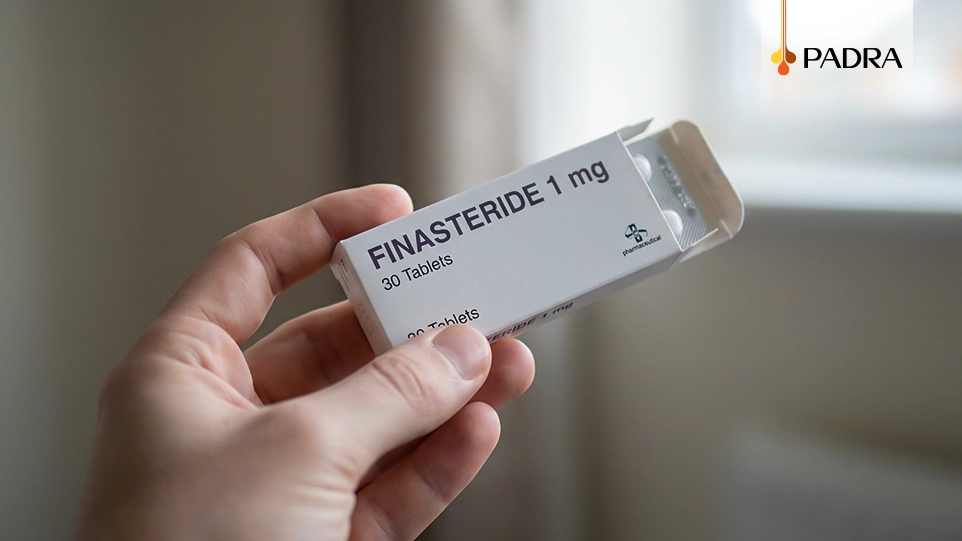
Finasteride blocks an enzyme (5-alpha reductase) that turns testosterone into DHT — the hormone that shrinks hair follicles in androgenetic alopecia. Lowering DHT often slows hair loss and helps regrow hair on the crown. Finasteride comes as an oral pill (commonly 1 mg for hair loss) and as topical formulations (sprays) designed to act mainly on the scalp. Clinical use is best when guided by a doctor.
For individuals exploring broader medical solutions beyond medication, finasteride is often discussed as part of a comprehensive Hair Loss Treatment plan that may include non-surgical therapies tailored to the stage and cause of thinning.
Commonly reported finasteride side effects
Not everyone will get side effects. When they happen, the commonly reported ones are:
- Sexual changes: lower sex drive, weaker erections, or changes in ejaculation. These are the most frequently discussed issues.
- Mood and mental health: some users report low mood, anxiety, or cognitive fuzziness. Regulators now highlight that mood changes and suicidal thoughts have been reported and should be taken seriously.
- Physical symptoms: occasional breast tenderness, testicular discomfort, or fatigue — less common but worth noting.
Frequency estimates vary between studies. Most trials show side effects occur in a minority of users, but individual experience differs.
Are finasteride side effects permanent?
Most side effects improve after stopping finasteride. However, some people report symptoms that last for months or longer after stopping; this collection of long-term complaints is often called post-finasteride syndrome (PFS). Scientific debate continues about how common persistent symptoms are and why they occur. If symptoms remain after stopping the drug, seek specialist assessment.
Oral finasteride vs finasteride spray side effects
Topical finasteride (spray) was developed to reduce whole-body exposure while treating the scalp. Key points:
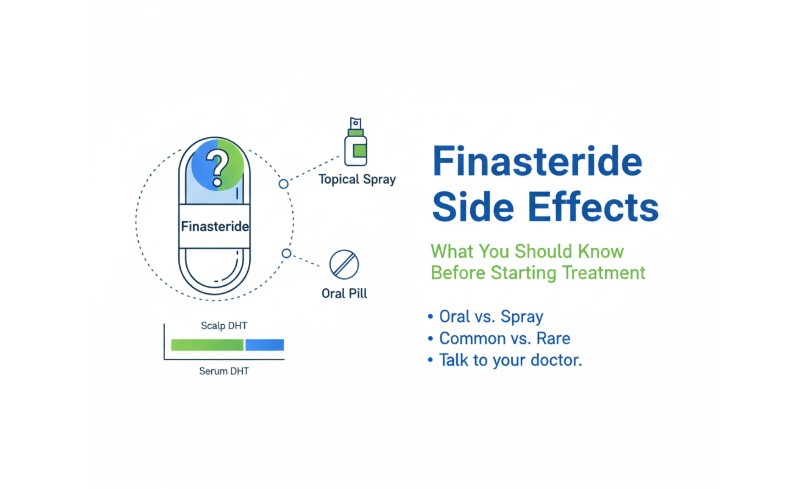
Absorption and systemic exposure: Clinical studies show topical finasteride generally leads to much lower blood levels of the drug and less reduction in serum DHT compared with oral finasteride. That often translates to fewer systemic side effects, though local scalp irritation can occur.
Product quality matters: Some topical versions are clinically studied and formulation-controlled; others (compounded products sold via telehealth) lack rigorous approval and have prompted regulatory concern. Use only licensed or well-studied products prescribed by a trusted clinician.
In short: topical spray formulations can lower the chance of systemic side effects, but they are not risk-free and depend on formulation and dose.
Finasteride and minoxidil side effects — how they differ
- Finasteride works through hormonal change and can cause systemic effects (sexual, mood).
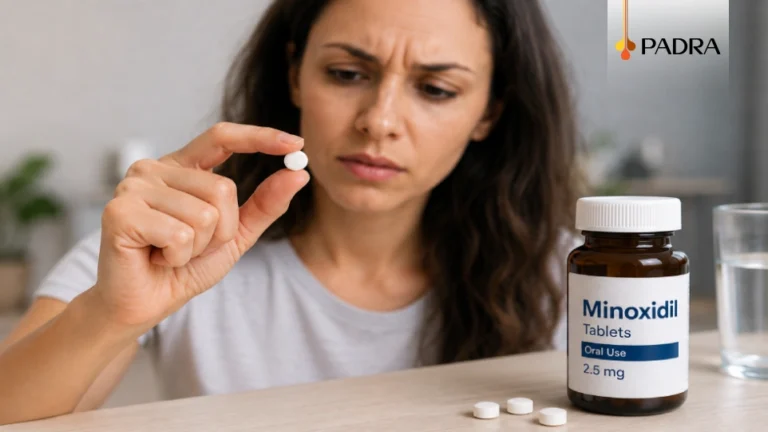
- Minoxidil (topical) acts locally to lengthen the hair growth phase; common issues are local — itching, flaking, or irritation. Systemic effects from topical minoxidil are rare unless large amounts are absorbed.
Clinicians often prescribe both because they act differently and can be complementary. When people search “finasteride and minoxidil side effects” they usually want to know which risks apply to each drug — this comparison helps.
Who may be more sensitive to finasteride side effects?
Consider extra caution if you have:
- A history of depression, anxiety or other mental-health issues.
- Past sexual dysfunction or conditions that affect sexual health.
- Use of other medicines that affect mood or sexual function.
Your clinician will weigh these against the expected benefits and may suggest monitoring or alternatives.
When to contact your doctor
Tell your clinician promptly about New or worsening depression, extreme anxiety, or suicidal thoughts — seek urgent help if you have them. Persistent sexual problems that don’t improve after stopping finasteride. At the end, unusual breast changes, severe testicular pain, or other unexplained symptoms.
Don’t stop medication without discussing it — abrupt changes can complicate the situation and your doctor can help plan safe steps.
How to weigh benefits and risks
Finasteride helps many people keep and restore hair while improving self-confidence. For many, the benefits outweigh the risks — for others, even a small chance of sexual or mood effects is unacceptable. A good decision starts with a straightforward discussion with a clinician who knows your health history, explains alternatives (topical finasteride spray, minoxidil, or non-drug options), and sets up monitoring. Recent regulatory updates underscore the need for clear informed consent.
Comparison: Finasteride vs. Minoxidil Side Effects
| Aspect | Finasteride | Minoxidil |
|---|---|---|
|
Main effects on body |
Hormonal regulation (DHT reduction) |
Local vasodilation (scalp blood flow) |
|
Common side effects |
Sexual changes, mood changes, breast tenderness |
Scalp irritation, redness, itching |
|
Systemic effects |
Possible with oral form |
Rare (even with topical use) |
|
Persistent issues? |
Rare, may continue after stopping for some users |
Very uncommon once stopped |
This table helps patients understand that each medication works differently and carries its own risk profile.
Final Considerations for Finasteride
Finasteride has a known side-effect profile. Most people tolerate it well, but sexual and mood changes are the most important risks to watch. Newer topical sprays reduce systemic exposure and may lower side effects for some people, but product quality and accurate prescribing matter. If you’re thinking about starting, stopping, or switching finasteride, talk openly with a clinician and use symptom tracking to guide decisions.