




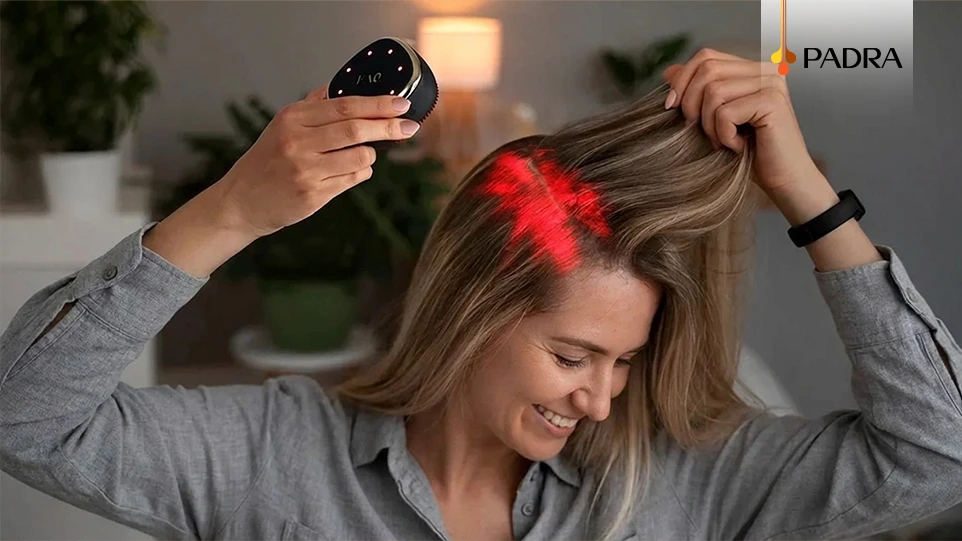
Red light therapy has become a popular option for people looking for non-surgical hair growth support. It is often used through laser caps, LED devices, combs, helmets, or clinic-based treatments. But many people still ask whether red light therapy for hair growth actually stimulates follicles or only makes hair look healthier.
The answer depends on the cause of hair loss, device quality, consistency, and whether the hair follicles are still active. Red light therapy may support hair growth in selected cases, especially early thinning or pattern hair loss, but it is not an instant fix or guaranteed cure.
Red light therapy, also known as low-level laser therapy (LLLT), may help stimulate hair follicles and improve hair density in cases of thinning hair or pattern hair loss. Results vary by individual, and therapy is more effective when used consistently over several months. Mild scalp irritation or temporary shedding may occur.
What Is Red Light Therapy for Hair Growth?
Red light therapy is a non-surgical, light-based treatment used to support scalp and follicle health. It is also known as low-level laser therapy, LLLT, or photobiomodulation.
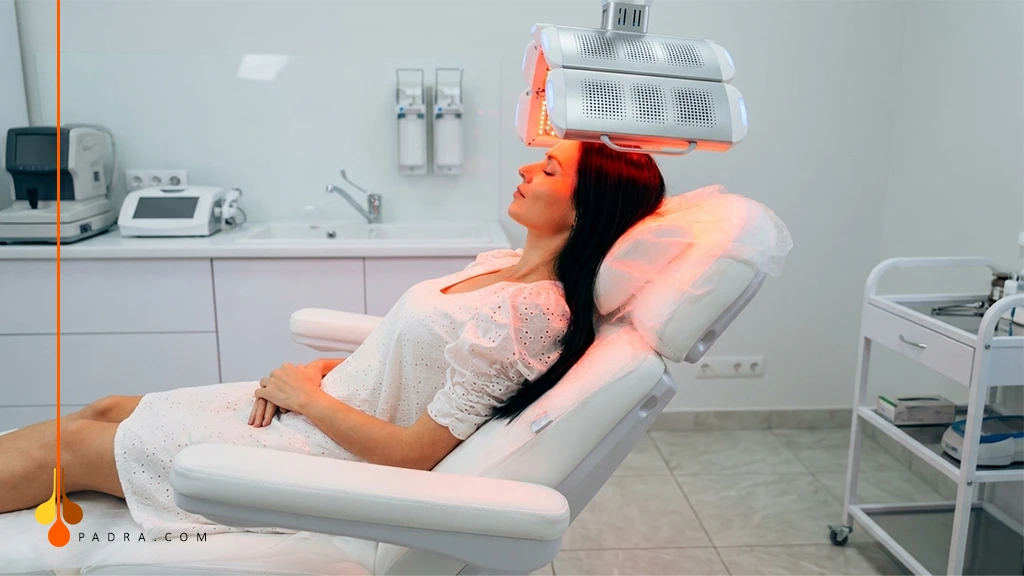
The treatment uses specific light wavelengths to target the scalp. It may be delivered through home red light therapy devices, laser caps, helmets, combs, panels, or professional clinic devices.
For hair loss, it is mainly discussed in relation to thinning hair, pattern hair loss, reduced density, and follicle miniaturization. It is not the same as surgical hair restoration and should not be presented as a replacement for all hair loss treatments.
How Does Red Light Therapy Work for Hair?
Low-level laser therapy for hair growth is thought to work by supporting cellular activity around active or weakened follicles. In simple terms, light energy may affect cell metabolism and help improve the environment around the follicle.
Photobiomodulation is often discussed in relation to ATP production in cells, scalp circulation, and hair follicle stimulation. The goal is not to create brand-new follicles from nothing. Instead, red light therapy may support follicles that are still active or miniaturized.
This is why diagnosis matters. If follicles are no longer active, red light hair regrowth is less likely to produce meaningful change.
Temporary Appearance Improvement vs Actual Follicle Stimulation
Not every visible improvement means new biological hair growth. Sometimes hair looks fuller because the scalp is healthier, the hair is styled better, or breakage is reduced.
Temporary appearance improvement may include better shine, less scalp dryness, improved texture, or fuller-looking styling.
Actual follicle stimulation means the treatment may support follicles that are still biologically active. In selected cases, this may help improve hair density or hair quality over time.
Red light therapy should not be judged by instant changes. Real follicle-level improvement usually requires consistency, time, and the right candidate profile.
Red Light Therapy Benefits for Hair
The main red light therapy benefits for hair are supportive rather than guaranteed. In suitable cases, it may help with hair follicle stimulation, scalp circulation, and improved hair density.
It may be useful for early-stage thinning, mild to moderate pattern hair loss, and for people who want a non-invasive treatment option. It is also generally well tolerated when used properly.
Red light therapy may be combined with other treatments depending on diagnosis. However, it should not be described as a miracle cure or a complete replacement for medical hair loss treatment.
Is Red Light Therapy Scientifically Proven for Hair Growth?
Research suggests that low-level laser therapy may improve hair density in some patients with androgenetic alopecia or pattern hair loss. However, results are not identical for every patient, device, or type of hair loss.
Effectiveness can depend on wavelength, power, scalp coverage, treatment frequency, and consistency. Home devices may vary widely in quality, while professional clinic devices may allow better protocol control and assessment.
The evidence is promising, but red light therapy should still be framed as a supportive treatment. More long-term comparative studies are useful, and users should avoid products that promise guaranteed or instant hair regrowth.
Who Is a Good Candidate for Red Light Therapy?
Red light therapy may be suitable for people with early thinning, pattern hair loss with active follicles, or mild to moderate density loss. It may also be helpful for people who want non-invasive support and can commit to regular sessions.
It may be less suitable for completely bald areas where follicles are no longer active, advanced hair loss without viable follicles, or suspected scarring alopecia without medical evaluation.
People with photosensitivity concerns, certain medications, eye safety concerns, or scalp conditions should speak with a doctor or hair restoration specialist before treatment.
Home Red Light Therapy Devices vs Professional Clinic Devices
| Option | Pros | Limitations | Best For |
| Home red light therapy device | Convenient, flexible, useful for long-term use | Quality varies, requires consistency, may have lower power | Maintenance and mild thinning support |
| Laser cap / helmet | Covers larger scalp areas and is easy to use | Can be expensive and requires months of use | Pattern thinning and ongoing support |
| Professional clinic devices | Better supervision, protocol control, and assessment | Requires appointments and may cost more | Diagnosis-based treatment plans |
| Combined plan | Can be paired with PRP, mesotherapy, or other treatments | Should be medically guided | Progressive or mixed-pattern thinning |
Choosing between home and clinic treatment depends on hair loss severity, budget, diagnosis, and how consistent you can be.
How Long Does Red Light Therapy Take to Work?
Results are not immediate. Visible improvement may require several months of consistent use, and treatment frequency depends on the device or clinic protocol.
Inconsistent use may reduce effectiveness. Progress should be tracked with photos, scalp assessments, and follow-up visits rather than daily mirror checks.
If hair loss continues to progress despite regular use, the treatment plan may need to be reassessed.
Professional Red Light Therapy for Hair
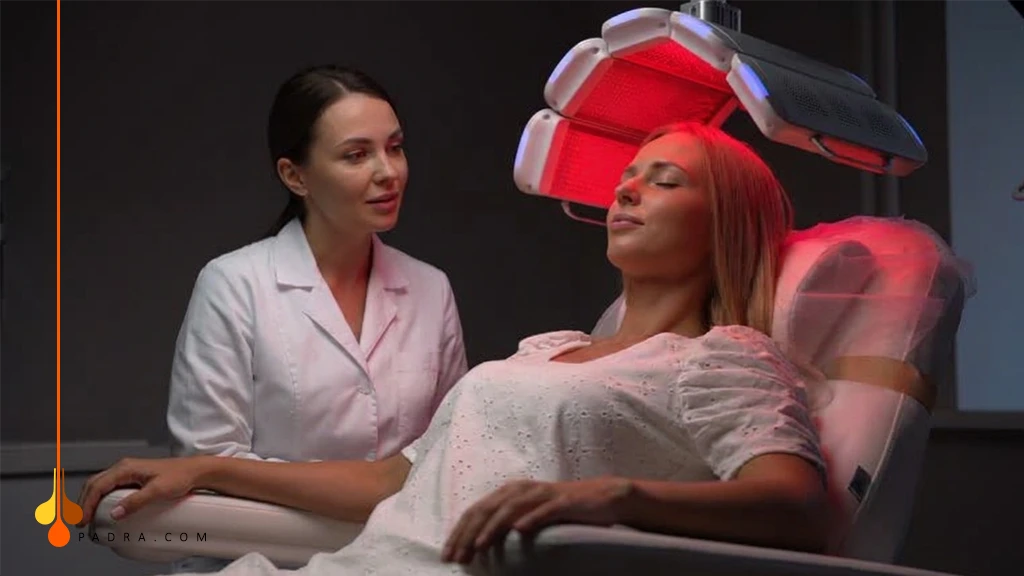
Professional red light therapy hair treatments may offer better supervision than unsupervised home use. A specialist can evaluate whether the scalp and follicles are suitable before recommending a plan.
Clinic-based care may also help with device settings, scalp coverage, session frequency, and combination treatments. In some cases, professional red light therapy may be discussed alongside Fotona laser for hair loss, PRP hair treatment, or hair mesotherapy.
This does not mean every patient needs multiple treatments. It means the plan should match the diagnosis and hair loss stage.
Red Light Therapy Side Effects and Safety
Red light therapy is generally considered low-risk when used properly, but it is not completely risk-free. Possible side effects may include mild scalp irritation, dryness, itching, temporary shedding, or discomfort from poor device use.
Eye protection is important, especially with laser-based devices. People with photosensitivity, scalp inflammation, or certain medical conditions should ask a specialist before starting.
Following device instructions or clinic guidance helps reduce unnecessary irritation and overuse.
Limitations: When Red Light Therapy May Not Be Enough
Red light therapy may not be enough if hair loss is advanced, follicles are no longer active, bald areas are smooth or long-standing, or shedding is rapid and severe.
It may also be insufficient if scalp inflammation is present, androgenetic alopecia is progressing quickly, or scarring alopecia is suspected.
In these cases, a dermatologist or hair restoration specialist should evaluate the scalp before relying on red light therapy alone.
Unsure If Red Light Therapy Is Enough?
If you are unsure whether red light therapy is the right option for your hair loss, our consultants can help evaluate your scalp condition and recommend suitable treatments such as Fotona laser, PRP hair treatment, or hair mesotherapy.
Red Light Therapy vs PRP, Mesotherapy, and Fotona Laser
These treatments are not identical, and the best option depends on diagnosis.
Red Light Therapy: A non-invasive light-based option that may support follicle stimulation in selected cases.
PRP Hair Treatment: Uses platelet-rich plasma from the patient’s own blood to support weak follicles and hair quality.
Hair Mesotherapy: May deliver supportive ingredients to the scalp depending on diagnosis and clinic protocol.
Fotona Laser for Hair Loss: A clinic-based laser approach that may be discussed for scalp and follicle support depending on patient needs.
The right choice depends on hair loss severity, follicle activity, treatment goals, and whether the condition is still progressing.
Final Thoughts: Does Red Light Therapy Really Help Hair Growth?
Red light therapy may support hair growth in selected cases, especially early thinning or pattern hair loss. It can be a useful non-invasive option when follicles are still active and the treatment is used consistently.
However, red light therapy for hair growth is not an instant fix, a guaranteed cure, or a replacement for diagnosis. For serious, sudden, or progressive hair loss, identifying the cause is the first step toward choosing the right treatment plan.