





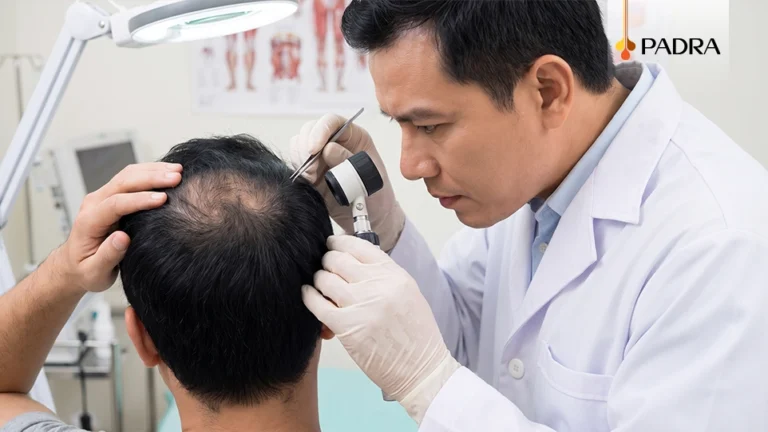

Most people know minoxidil as a liquid or foam applied to the scalp. Oral minoxidil is different. It is a prescription blood-pressure medication that doctors may use at lower doses, off-label, for selected people with hair loss.
The tablet can be easier to use than a topical product, but convenience comes with greater systemic exposure. That means a person’s blood pressure, heart health, current medications, and risk of fluid retention must be considered before treatment.
Oral minoxidil may support hair growth by helping active follicles remain in the growth phase for longer. Low-dose oral minoxidil is sometimes considered when topical minoxidil causes irritation or is difficult to use consistently. Because it can affect blood pressure, heart rate, and fluid balance, it should only be taken under medical supervision.
What Is Oral Minoxidil for Hair Loss?
Minoxidil was originally developed as an oral vasodilator for severe hypertension. Increased hair growth was later noticed in people taking the medication, which eventually led to the development of topical minoxidil.
Doctors now sometimes prescribe lower oral doses for hair loss. This is generally an off-label use, meaning hair growth is not included in the medication’s officially approved oral indication.
Oral minoxidil is therefore not a supplement or a simple tablet version of an over-the-counter hair product. It remains a systemic prescription medication.
How Does Oral Minoxidil Support Hair Growth?
Minoxidil is a vasodilator and potassium-channel opener, but its effect on hair cannot be explained by blood flow alone.
It may influence follicle activity, shorten the resting phase of the hair cycle, and help responsive follicles remain in the anagen or growth phase for longer. This can allow some miniaturized follicles to produce thicker or longer-growing hairs.
The exact mechanism is still not fully understood, which is one reason results differ between patients.
Oral minoxidil may support active or weakened follicles. It cannot create new follicles in smooth, scarred, or long-standing bald areas.
Does Oral Minoxidil Actually Work?
Research suggests that low-dose oral minoxidil may improve shedding, density, and scalp coverage in selected patients with male or female pattern hair loss.
However, the evidence is not as uniform as online discussions sometimes suggest. Studies have used different doses, treatment durations, and patient groups. Many are also observational rather than large randomized trials.
The most balanced answer is:
Oral minoxidil is a promising and increasingly used option, but it does not work for every patient or every type of hair loss.
Response depends on the diagnosis, follicle activity, consistency, treatment duration, and individual sensitivity.
What Results Can Patients Expect?
Possible results may include:
- Less daily shedding
- Better hair density
- Improved scalp coverage
- Thicker-looking miniaturized hairs
- Longer growth in responsive follicles
- Easier adherence than daily scalp application
Some patients see visible regrowth, while others mainly experience stabilization. Long-standing frontal baldness usually responds less predictably than areas containing active, miniaturized follicles.
Oral minoxidil may also increase facial or body hair. For some people, this side effect is more noticeable than the scalp improvement.
Before-and-after photographs should use the same lighting, angle, distance, and hairstyle. Any other treatments used at the same time should also be disclosed.
How Long Does Oral Minoxidil Take to Work?
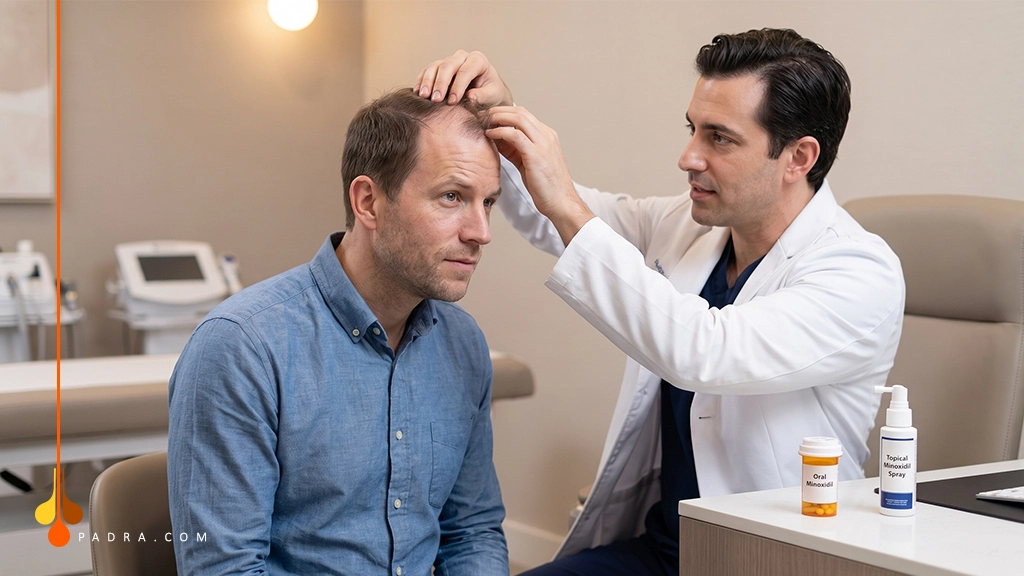
Hair growth is slow, so oral minoxidil should not be judged after a few weeks.
| Treatment stage | What may happen |
| Early weeks | No visible change or temporary shedding |
| Around 3–6 months | Early reduction in shedding or initial growth changes |
| Around 6–12 months | Clearer density and photographic comparison |
| Long-term treatment | Maintenance depends on response, safety, and continued use |
Some patients respond sooner, some later, and others do not improve enough to justify continuing treatment.
Can Oral Minoxidil Cause Initial Shedding?
Temporary shedding may occur when treatment begins. This may happen as follicles move from the resting phase into a new growth cycle.
Early shedding does not automatically mean the medication is failing. However, severe, patchy, inflammatory, or prolonged hair loss should not be dismissed as a normal treatment response.
Medical evaluation may be needed to rule out:
- Progressive androgenetic alopecia
- Telogen effluvium
- Alopecia areata
- Scarring or inflammatory hair loss
- Nutritional, hormonal, or medical causes
Oral Minoxidil vs Topical Minoxidil
Oral and topical minoxidil contain the same active medication, but they are not interchangeable treatments.
| Factor | Oral minoxidil | Topical minoxidil |
| Administration | Prescription tablet | Applied to the scalp |
| Hair-loss approval | Generally off-label | Approved for certain pattern hair-loss uses |
| Exposure | Systemic | Primarily local |
| Convenience | Often easier to use consistently | Requires regular scalp application |
| Scalp irritation | Avoids direct product contact | May cause irritation, dryness, or residue |
| Unwanted body hair | More likely | Possible but usually less systemic |
| Cardiovascular concerns | More relevant | Lower systemic exposure, but not zero |
| Best suited to | Selected, medically screened patients | Often a first-line option |
A randomized clinical trial comparing oral and topical minoxidil in men did not establish oral treatment as generally superior.
Oral minoxidil should not automatically be described as stronger or better. The more suitable route depends on scalp tolerance, adherence, cardiovascular history, pregnancy status, diagnosis, and personal preference.
When May Oral Minoxidil Be Considered?
A doctor may consider oral treatment when:
- Topical minoxidil causes irritation or contact dermatitis
- Residue affects styling or hair texture
- Daily application is difficult to maintain
- Thinning is widespread
- Adherence to topical treatment is poor
- The diagnosis and medical history support systemic treatment
An inadequate response to topical minoxidil does not automatically make someone a suitable candidate for oral treatment. The diagnosis, application method, and treatment duration should first be reviewed.
What Does Low Dose Oral Minoxidil Mean?
“Low dose” means a dose below the amounts traditionally used to treat severe hypertension. It does not refer to one fixed dose that is suitable for everyone.
The prescribing decision may depend on:
- Age and sex
- Blood pressure and resting heart rate
- Cardiovascular history
- Kidney and fluid-balance concerns
- Other medications
- Hair-loss diagnosis
- Treatment response
- Side effects
A low dose does not mean no risk. Patients should not divide tablets, increase treatment, or copy another person’s prescription based on online advice.
Oral Minoxidil for Women
Oral minoxidil may be considered for selected women with female pattern hair loss or diffuse thinning, particularly when topical treatment is difficult to tolerate.
Facial hypertrichosis can be an important concern for women. The cause of thinning should also be investigated before treatment. Postpartum shedding, PCOS, thyroid disorders, iron deficiency, and hormonal changes may require a different plan.
A diagnosis-led female hair loss treatment approach is therefore essential.
Pregnancy and breastfeeding require particular caution. Women who are pregnant, planning pregnancy, or breastfeeding should discuss the risks directly with a qualified physician.
Oral Minoxidil for Men
Oral minoxidil may be considered for selected men with androgenetic alopecia. Crown thinning and diffuse miniaturization may respond differently from smooth, long-standing frontal baldness.
Minoxidil does not directly reduce DHT. Finasteride works through a different mechanism, and concerns about [possible finasteride side effects] should be evaluated separately from oral minoxidil’s cardiovascular effects.
Selected patients may use more than one treatment, but combination therapy must be medically planned.
Common Oral Minoxidil Side Effects
Not everyone experiences side effects. Possible effects include:
- Unwanted facial or body hair
- Ankle or lower-leg swelling
- Fluid retention
- Dizziness or lightheadedness
- Headache
- Palpitations
- Increased heart rate
- Low blood pressure
- Temporary shedding
- Weight gain related to fluid retention
Hypertrichosis is one of the most frequently reported effects in low-dose studies. Cardiovascular symptoms appear less often, but they matter more clinically and should not be ignored.
Serious Warning Signs
Contact a doctor promptly for persistent palpitations, unusual swelling, rapid weight gain, significant dizziness, new shortness of breath, or an irregular heartbeat.
Seek urgent medical care for:
- Chest pain
- Fainting
- Severe breathing difficulty
- Sudden facial or limb swelling
- Signs of a serious allergic reaction
The official oral minoxidil label includes strong cardiovascular warnings because the drug was approved for severe hypertension. Hair-loss doses are generally lower, but the medication still acts throughout the body.
What Should Be Checked Before Treatment?
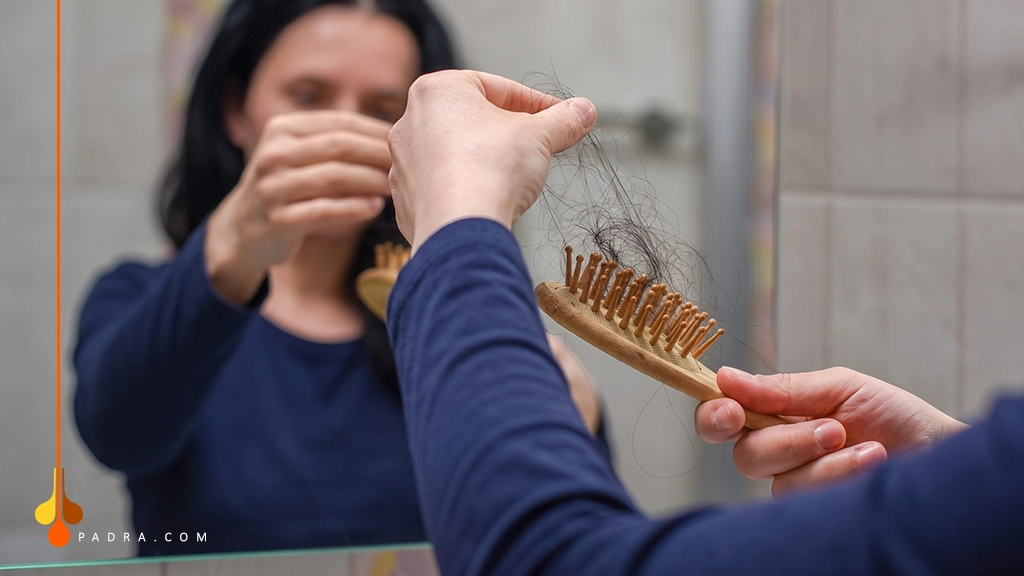
Before prescribing oral minoxidil, a clinician may review:
- The type and cause of hair loss
- Speed and pattern of progression
- Blood-pressure history
- Resting heart rate
- Cardiovascular symptoms
- Kidney and swelling history
- Current medications
- Pregnancy or breastfeeding status
- Previous topical-minoxidil response
- Baseline scalp photographs
There is no single test panel required for every patient. Monitoring should reflect the individual’s medical history and symptoms.
Unsure Which Form of Minoxidil Fits Your Needs?
If you are comparing oral and topical minoxidil, our consultants can explain the differences and guide you toward an appropriate professional assessment based on your scalp condition, previous treatment, and medical needs.
What Happens After Stopping Oral Minoxidil?
Minoxidil is generally a maintenance-based treatment. If it has been supporting hair growth, some of that benefit may gradually reduce after discontinuation.
Treatment-supported hairs may shed over time, allowing the original hair-loss pattern to become visible again. This does not mean minoxidil permanently damaged the follicles.
Stopping, restarting, or changing treatment should be discussed with the prescribing physician.
Can Oral Minoxidil Be Combined With Other Treatments?
Combination treatment may address different causes of hair loss, but it can also make side effects and results harder to interpret.
Finasteride targets DHT related miniaturization.
PRP hair treatment may support active or weakened follicles in selected patients.
Hair mesotherapy may be considered as a supportive treatment depending on diagnosis and protocol.
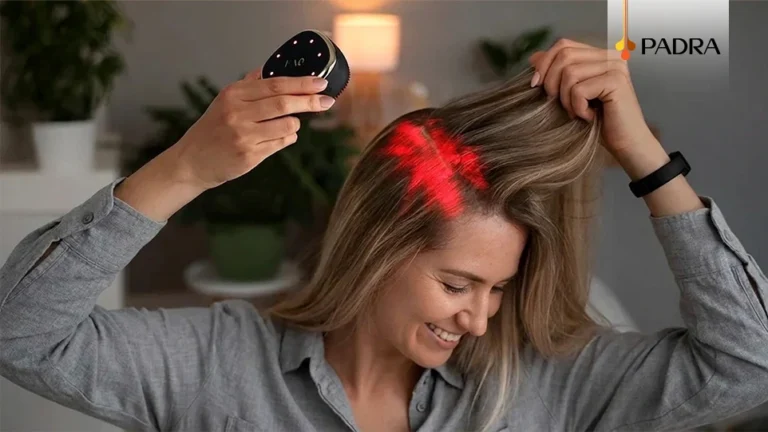
Low level laser therapy may offer non-invasive follicle support.
Hair transplant options may be considered when follicles are no longer active and donor hair is suitable.
No combination is appropriate for every patient.
When Oral Minoxidil May Not Be Enough
Oral minoxidil may have limited value when:
- Bald areas are smooth and long-standing
- Follicles are no longer active
- Scarring alopecia is present
- Inflammatory scalp disease remains untreated
- Hair loss is caused by an unresolved medical condition
- Frontal recession is advanced
- Systemic side effects prevent continued use
In these cases, further diagnosis or other treatments for advanced hair loss may be needed. Hair transplant may offer long-term structural improvement in suitable candidates, but it is not a guaranteed cure for ongoing hair loss.
Benefits and Limitations
| Potential benefits | Limitations and risks |
| Convenient tablet format | Systemic exposure |
| Avoids scalp residue | Prescription and monitoring required |
| May reduce shedding and improve density | Unwanted facial or body hair |
| Useful when topical application is unsuitable | Swelling, dizziness, or palpitations may occur |
| Can be part of a combined plan | Not suitable for every diagnosis |
| May improve adherence | Benefits usually require continued treatment |
Final Answer: Does Oral Minoxidil Work?
Oral minoxidil may improve shedding, hair density, and growth in selected men and women, especially when topical minoxidil is difficult to tolerate or use consistently.
However, it is generally an off-label systemic treatment. It is not a risk-free hair-growth pill and has not been proven universally better than topical minoxidil.
A correct diagnosis, cardiovascular assessment, individualized prescription, and medical follow-up are necessary before deciding whether its potential benefits outweigh the risks.