
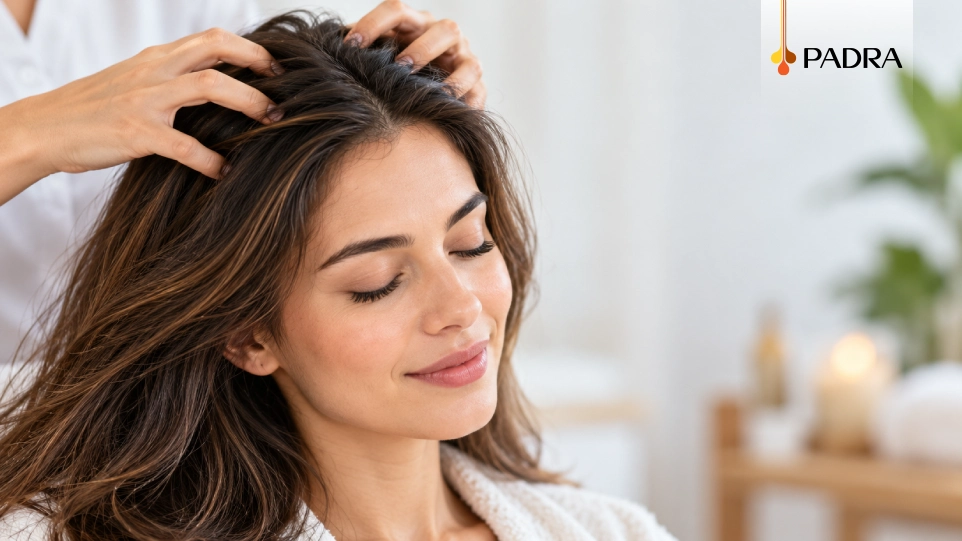
Does Scalp Massage Help Hair Growth?
The short answer is: maybe, but not in the way many people expect.
Many people assume scalp massage can create new hair growth or reverse baldness. Current research does not support that claim. However, some evidence suggests that regular scalp massage may improve hair thickness and support overall scalp health.
One of the most frequently cited studies followed nine healthy men who performed a standardized scalp massage for four minutes per day over 24 weeks. At the end of the study, researchers observed an increase in hair thickness. However, the study did not demonstrate a significant increase in hair growth rate or the creation of new hair follicles.
This distinction matters. Thicker hair shafts can make hair appear fuller, but thicker hair is not the same as growing more hair.
How Could Scalp Massage Affect Hair Follicles?
Researchers believe scalp massage may influence the tissues surrounding hair follicles through mechanical stimulation.
When the scalp is gently stretched and moved during a massage, small forces are transferred to the skin and underlying tissue. These forces may affect Dermal Papilla Cells, which play an important role in the hair growth cycle
Scientists have suggested several possible mechanisms:
- Increased blood circulation to the scalp
- Improved nutrient delivery to hair follicles
- Mechanical stimulation of follicle-related cells
- Reduced tension in scalp tissues
- Support for a healthier scalp environment
While these theories are promising, they do not prove that scalp massage can regrow lost hair. More large-scale clinical studies are needed before stronger conclusions can be made.
Does Scalp Massage Stimulate Hair Follicles?
Yes, scalp massage appears to provide some level of hair follicle stimulation.The gentle pressure and movement may encourage activity in tissues surrounding the follicle. Some laboratory research has suggested that stretching forces can influence cellular behavior related to hair growth.
However, stimulation does not automatically mean new hair production.
The ability of damaged or dormant hair follicles to produce hair depends on why the follicle has become inactive and whether permanent damage has occurred.
Can Scalp Massage Regrow Thinning Hair?
For people experiencing thinning hair, scalp massage may offer supportive benefits, but expectations should remain realistic.
If thinning is caused by temporary factors such as stress, poor scalp condition, or lifestyle-related issues, scalp massage may help create a healthier environment for existing hair.
However, if hair loss is caused by Androgenetic Alopecia (male or female pattern hair loss), scalp massage alone is unlikely to reverse the condition.
Pattern hair loss is driven largely by genetic and hormonal factors. While scalp massage may complement a broader hair care routine, it should not be viewed as a standalone solution.
People with progressive thinning hair may benefit from speaking with a dermatologist to identify the underlying cause and discuss evidence-based treatment options.
Hair Thickness vs Hair Density: Understanding the Difference
One reason scalp massage generates confusion is that people often use the terms “thicker hair” and “more hair” interchangeably. They are not the same.
Hair Thickness
Hair thickness refers to the diameter of individual hair shafts. Thicker strands can create the appearance of fuller hair even if the number of hairs remains unchanged.
Hair Density
Hair density refers to the number of hair follicles or hairs present in a specific area of the scalp. Current research on scalp massage has shown potential improvements in hair thickness, but evidence for increased hair density remains limited.

In practical terms, scalp massage may help existing hair look fuller without necessarily increasing the total number of hairs.
How Long Should You Massage Your Scalp?
There is no universally accepted protocol, but most studies and anecdotal reports use short, consistent sessions.
A practical approach is:
- 4 to 10 minutes per session
- Once or twice daily
- Consistently for several months
Hair grows slowly, and any potential benefits are unlikely to appear after a few days or weeks.
People who report positive results from scalp massage typically follow the habit for several months before noticing changes.
How Often Should You Massage Your Scalp?
Consistency appears to matter more than intensity. Daily scalp massage is the most commonly recommended approach. Gentle, regular stimulation is likely more beneficial than occasional aggressive massage.
Overly vigorous rubbing can irritate the scalp, increase inflammation, or even contribute to hair breakage. A gentle daily routine is generally the safest strategy.
Do Scalp Massagers Help With Hair Growth?
Scalp massagers can make massage easier and more consistent, but they are not necessarily more effective than using your fingers.
Both methods create scalp stimulation, and there is currently no strong evidence showing that a scalp massager produces superior hair growth results.
Using Your Fingers
Advantages include:
- Easy to control pressure
- No additional cost
- Can target specific areas
Using a Scalp Massager
Advantages include:
- More convenient for some users
- Can improve consistency
- May reduce hand fatigue
The best option is usually the one you can use regularly and comfortably.
How to Perform a Scalp Massage for Hair Growth
A simple manual scalp massage routine can be done at home. Place your fingertips on the scalp.
- Apply gentle pressure.
- Move your fingers in small circular motions.
- Cover the entire scalp, including the crown, temples, and hairline.
- Continue for 5–10 minutes.
- Avoid using your fingernails, excessive force, or aggressive rubbing.
The goal is scalp stimulation, not friction.
Can Scalp Massage Replace Hair Loss Treatments?
No.Scalp massage should be viewed as a supportive habit rather than a proven medical treatment.
If you are dealing with significant hair loss, especially Androgenetic Alopecia, established treatments have considerably stronger scientific evidence behind them.
These may include:
- Minoxidil
- Prescription medications recommended by a dermatologist
- Hair restoration procedures when appropriate
Scalp massage can be combined with these approaches, but it should not replace professional diagnosis or treatment.
Potential Benefits Beyond Hair Growth
Even if scalp massage does not dramatically increase hair growth, it may still offer valuable benefits.
Many people report:
- Improved scalp health
- Reduced scalp tension
- Better relaxation
- Stress relief
- A more enjoyable hair care routine
Since stress can contribute to certain forms of hair shedding, these indirect benefits may also support healthier hair over time.
Final Verdict
So, will scalp massage help hair growth?
Current evidence suggests that scalp massage may improve hair thickness and support scalp health, but it is not a proven method for regrowing hair or significantly increasing hair density. Regular scalp stimulation may benefit existing hair follicles and contribute to fuller-looking hair, yet it should not be considered a cure for hair loss.
For people with thinning hair, scalp massage can be a useful addition to a broader hair care routine. However, those experiencing ongoing hair loss should seek guidance from a dermatologist and consider evidence-based treatments when appropriate.