
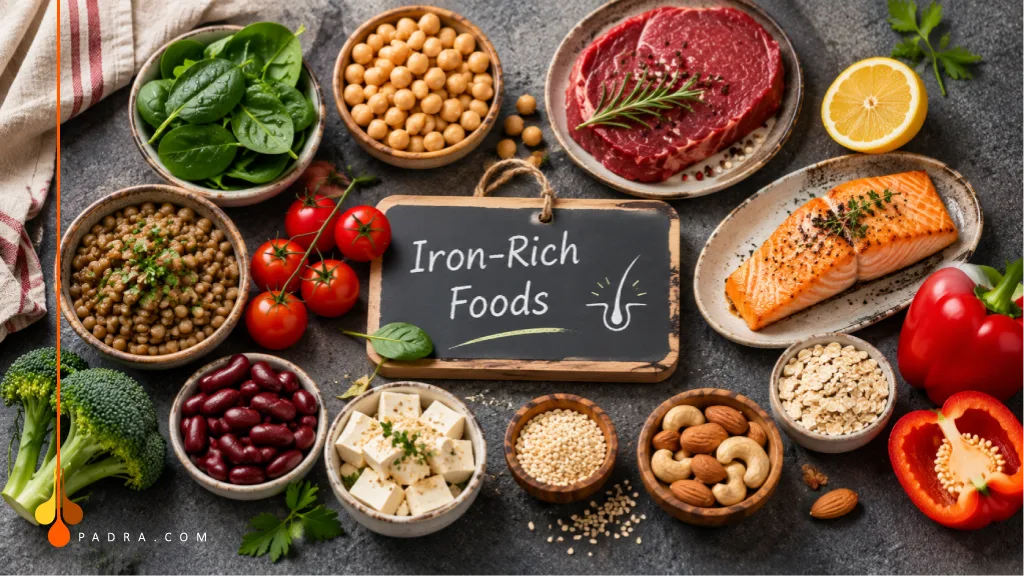
Iron-rich foods for hair loss include lentils, beans, tofu, fortified cereals, lean beef and seafood. Correcting a deficiency may help related shedding, but extra iron does not automatically thicken hair. Compare realistic portions and pair plant-based iron with vitamin C. Persistent hair loss still needs assessment.
How Does Iron Support Hair Health?
Iron helps make haemoglobin, which carries oxygen to tissues. Iron deficiency means iron stores or availability are inadequate; iron-deficiency anaemia develops when this affects haemoglobin production.
A review of 36 studies involving 10,029 women found lower average ferritin levels in women with nonscarring hair loss. That association does not prove that iron deficiency causes every case. Understanding the different types of hair loss prevents nutrition from becoming a substitute for diagnosis.
Best Iron-Rich Foods for Hair Health
When comparing iron-rich foods for hair growth, consider your usual portions. These are approximate iron amounts in food, not amounts absorbed. “Both” means heme and non-heme iron.
| Food | Iron type | Serving | Iron | Useful pairing |
|---|---|---|---|---|
| White beans, canned | Non-heme | 1 cup | 8 mg | Tomato salad |
| Lentils, boiled, drained | Non-heme | ½ cup | 3 mg | Raw bell peppers |
| Spinach, boiled, drained | Non-heme | ½ cup | 3 mg | Peppers and lemon |
| Firm tofu | Non-heme | ½ cup | 3 mg | Broccoli |
| Kidney beans, canned | Non-heme | ½ cup | 2 mg | Tomato salsa |
| Chickpeas, boiled, drained | Non-heme | ½ cup | 2 mg | Pepper salad |
| Soybeans, cooked | Non-heme | ½ cup | 4.4 mg | Cabbage and peppers |
| Sesame seeds | Non-heme | ½ oz (14 g) | 2.1 mg | Sprinkle over salad |
| Cashews | Non-heme | 1 oz (28 g) | 1.9 mg | Fresh fruit |
| Cereal fortified with 100% US Daily Value for iron | Non-heme | 1 labelled serving | 18 mg | Strawberries |
| Eastern oysters, cooked with moist heat | Both | 3 oz (85 g) | 8 mg | Pepper salad |
| Beef liver, pan-fried | Both | 3 oz (85 g) | 5 mg | Mixed vegetables |
| Lean bottom-round beef, braised | Both | 3 oz (85 g) | 2 mg | Beans and tomatoes |
| Atlantic sardines, canned in oil, drained, with bones | Both | 3 oz (85 g) | 2 mg | Tomato salad |
| Chicken, roasted, meat and skin | Both | 3 oz (85 g) | 1 mg | Chickpeas and peppers |
Sources: NIH Table 2, with soybean, sesame and cashew values from USDA-based tables. Values vary by product and preparation.
Top 10 Iron-Rich Vegetarian Foods
The table’s first ten foods are vegetarian choices, not a universal ranking:
- Lentils and beans: Cooked lentils provide about 3 mg per half-cup; canned white beans offer 8 mg per cup. Kidney beans and chickpeas supply around 2 mg per half-cup. Use them in soups, curries or salads for protein and fibre too.
- Tofu and soybeans: Half a cup of firm tofu supplies about 3 mg, versus 4.4 mg for cooked mature soybeans. Roast tofu with peppers or add soybeans to rice bowls. Green edamame has different values.
- Cooked spinach: Half a cup provides around 3 mg, but absorption is limited. Stir it into lentils. Cooked spinach is more concentrated than the same volume of raw leaves.
- Sesame seeds and cashews: About 14 g of sesame seeds supplies 2.1 mg; 28 g of cashews supplies 1.9 mg. Use sesame as a topping and cashews as a snack alongside varied protein sources.
- Iron-fortified cereal: A cereal fortified to 100% of the US Daily Value contains 18 mg per labelled serving. Many contain less. Compare iron content, serving size and added sugar.
For iron and protein-rich foods that support hair health, start with lentils, tofu and beans. Seeds and nuts also contribute zinc.

Animal-Based Sources
Meat, seafood and poultry contain both iron forms:
- Oysters: The cooked eastern variety provides about 8 mg per 85 g. Species and preparation matter; choose cooked shellfish and account for allergies.
- Beef and chicken: The listed lean beef provides about 2 mg per 85 g, versus 1 mg for roasted chicken. Pair modest portions with beans or vegetables.
- Sardines: The listed canned variety provides about 2 mg per 85 g, plus protein and omega-3 fats. Try tomato toast.
- Liver: Pan-fried beef liver provides about 5 mg per 85 g, but is not an everyday recommendation. The NHS advises avoiding liver during pregnancy because of its vitamin A content.
Iron-Rich Fruits and Vegetables: 10 Fruit Options in Context
Most fruit contains less iron than beans, fortified cereals or meat. A top 10 iron-rich fruits list should distinguish iron contributors from vitamin C partners:
- Dried apricots: contribute non-heme iron.
- Raisins: about 1 mg per quarter-cup, using NIH’s rounded value.
- Prunes: another dried-fruit option.
- Dried figs: contribute some iron and fibre.
- Dates: contain some iron, but are not an anaemia treatment.
- Guava: useful primarily for vitamin C.
- Kiwi: a vitamin C partner for meals.
- Strawberries: pair well with fortified cereal.
- Oranges: complement beans or lentils.
- Papaya: adds vitamin C to a varied diet.
Drying concentrates nutrients and sugars into smaller portions. Avoid eating large quantities just to chase iron. Among vegetables, cooked spinach, peas and baked potatoes contribute iron; peppers and broccoli are particularly useful meal partners. NIH’s vitamin C guide explains the absorption benefit.
Eating Better, Still Losing Hair?
Your diet is part of the picture. Let Padra help assess your hair concerns and understand what may be behind the shedding.
Iron-Rich Foods for Females and Healthy Blood Formation
Menstrual blood loss and pregnancy can increase iron requirements. US reference intakes are 18 mg daily for women aged 19–50 and 27 mg during pregnancy; needs differ after menopause and with individual circumstances.
“Iron-rich foods for blood increase” is better understood as supporting normal haemoglobin production when iron is insufficient. Food does not simply increase blood volume. Heavy periods, significant deficiency or anaemia may require treatment beyond diet, especially with fatigue, weakness or breathlessness.
Iron-Rich Vegetarian Indian Foods
Build familiar meals around masoor or moong dal, chana, rajma, soybeans and cooked leafy greens. Add tomato, capsicum, lemon or guava alongside the meal. A dal-and-rice bowl with pepper salad or rajma with tomato kachumber makes the advice practical.
Soaking and cooking pulses can reduce phytates. Dal portions vary with consistency. Jaggery, beetroot and dates cannot replace reliable iron sources or anaemia treatment.
Heme vs Non-Heme Iron and Better Absorption
Heme iron is generally absorbed more efficiently. Non-heme iron, found in plants, fortified foods and animal foods, responds more to meal composition. A well-planned vegetarian diet can still provide iron.
Melissa Piliang, MD, dermatologist
“Vitamin C helps your body absorb the iron you consume in food or supplements.”
Source: Cleveland Clinic
Pair lentils with peppers, tofu with broccoli, or beans with tomatoes. Vitamin C helps non-heme absorption, but there is no fixed multiplier for everyone. Tea and coffee polyphenols can reduce absorption; if iron is low, have these drinks between meals. Calcium and phytates can also affect meal-level absorption. You do not need to eliminate dairy, legumes or wholegrains.
Beyond Iron: Other Foods That Support Hair Nutrition
Iron is one part of the broader food pattern covered in Healthline’s food guide. Other useful choices include:
- Eggs: provide protein, biotin and a modest amount of iron; one large hard-boiled egg contains about 1 mg. Extra biotin is not automatically beneficial without deficiency.
- Fatty fish: salmon, sardines and mackerel contribute protein and omega-3 fats. Salmon adds nutritional variety, but is not a leading iron source. Include beans alongside it when iron is the focus.
- Berries and sweet peppers: vitamin C helps support normal collagen formation and non-heme iron absorption.
- Sweet potatoes: provide beta-carotene, which the body can convert to vitamin A. Roast them with chickpeas for a more substantial meal.
- Avocados and nuts: contribute unsaturated fats and vitamin E. Their role complements iron-containing foods; avocado alone will not correct low iron.
- Seeds: different types contribute nutrients such as zinc, vitamin E and plant omega-3s.
Spinach, oysters, beans, soybeans and meat complete the broader selection. Spermidine supplement research does not prove that eating soybeans regrows hair. These foods support nutrition, not guaranteed regrowth.
A Seven-Day Iron-Rich Meal Plan
This adult menu combines familiar Indian dishes with simple bowls and traybakes. Bold numbers show approximate iron from the specified ingredients only, not the whole meal or daily intake.
| Day | Breakfast | Lunch | Dinner |
|---|---|---|---|
| Monday | Strawberry cereal bowl Fortified cereal and strawberries; check the label. | Lemon lentil bowl ½ cup cooked lentils (3 mg), rice, cucumber and raw peppers. | Sesame tofu traybake ½ cup firm tofu (3 mg), broccoli and sweet potato; finish with sesame. |
| Tuesday | Egg and avocado toast One hard-boiled egg (1 mg), toast and orange. | Chana chaat ½ cup chickpeas (2 mg), tomato, capsicum, lemon and flatbread. | Rajma rice bowl ½ cup canned kidney beans (2 mg), tomato sauce, rice and peppers. |
| Wednesday | Cashew and kiwi porridge Oats with 28 g cashews (1.9 mg) and sliced kiwi. | White-bean tomato soup ½ cup canned white beans (4 mg), tomatoes, herbs and toast. | Salmon and lemon rice Cooked salmon, rice, broccoli and tomatoes; add beans for iron. |
| Thursday | Tofu breakfast wrap ½ cup firm tofu (3 mg), scrambled with peppers; wrap in flatbread. | Masoor dal and rice Dal made with ½ cup cooked lentils (3 mg); add tomato-capsicum kachumber. | Chickpea-spinach curry ½ cup chickpeas plus ½ cup cooked spinach (5 mg combined), rice and peppers. |
| Friday | Berry cereal bowl Fortified cereal and strawberries; use the labelled serving. | Soybean crunch bowl ½ cup cooked mature soybeans (4.4 mg), rice, cabbage and peppers. | Beef and bean stew 85 g lean beef plus ½ cup canned kidney beans (4 mg combined) and tomatoes. |
| Saturday | Eggs with tomato toast Two hard-boiled eggs (2 mg), toast and fresh tomato. | Roasted pepper lentil salad ½ cup cooked lentils (3 mg), peppers, cucumber and lemon dressing. | Sardine tomato toast 85 g canned sardines (2 mg), wholegrain toast and fresh pepper salad. |
| Sunday | Sesame fruit porridge Oats, 14 g sesame seeds (2.1 mg) and strawberries. | Warm chickpea rice bowl ½ cup cooked chickpeas (2 mg), rice and tomato-capsicum salad. | White-bean vegetable stew ½ cup canned white beans (4 mg), carrots, tomatoes, bread and peppers. |
Discuss your hair concerns with Padra and get personalized guidance on the care that may suit you.
Values use the comparison table; recipes and brands vary. Adjust portions to your needs.
This is not a complete diet for pregnancy or treatment for anaemia.
Make it easier: Batch-cook lentils and keep canned beans ready. Add fresh produce when serving; move tea and coffee between meals if iron is low.
Adapt it: Replace meat or fish with tofu or beans, and eggs with tofu for vegan meals. Iron content changes with swaps. Account for food allergies.
Dietary changes work gradually within the hair growth cycle. Persistent shedding needs assessment; nutrition and hair loss treatment options address different needs.