
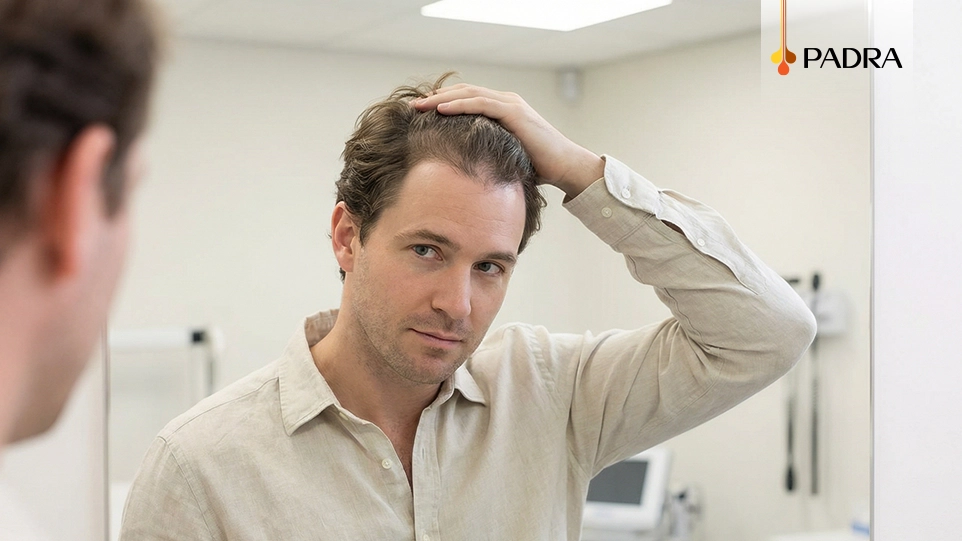
At 7 months after a hair transplant, most patients begin to see a noticeable transformation in their appearance. Hair growth becomes more visible, density improves, and the overall result starts to look more natural.
However, it’s also a stage where many people start comparing their results with others and may feel uncertain about whether their progress is normal.
In this guide, we’ll explain exactly what to expect at 7 months after a hair transplant, how the growth process works, and what you should (and shouldn’t) be concerned about.
What Happens 7 Months After a Hair Transplant?
By the 7th month, transplanted hair follicles have entered the active growth phase (anagen phase), which means the hair is now growing more consistently.
At this stage:
- Hair strands are thicker and stronger compared to earlier months
- The hairline becomes more defined and natural-looking
- Coverage in the transplanted area improves significantly
Most patients typically see around 60% to 70% of their final results at this point, although this can vary based on individual factors such as genetics, donor area quality, and overall health.
To better understand how hair transplant results develop over time, you can explore hair transplant before and after results and see real examples of growth progression from the early stages to the final outcome.
Hair Growth Timeline: Month 1 to Month 7
Understanding the timeline helps you evaluate your results more realistically:
- Month 1–2: Shedding phase (shock loss), which is completely normal
- Month 3–4: Early regrowth begins, usually thin and uneven
- Month 5–6: Noticeable improvement in thickness and hair transplant density
- Month 7: Stronger, more consistent growth with better coverage
Hair growth is not linear, and each follicle may grow at a slightly different pace.

Is Hair Density Normal at 7 Months?
One of the most common concerns at this stage is density.
At 7 months:
- Some areas may appear denser than others
- The crown often develops more slowly than the front hairline
- Hair texture may still feel slightly coarse or uneven
This is completely normal. Full density usually develops between 9 and 12 months, and in some cases even later.
7 Months After Hair Transplant No Density: Is It Normal?
Some patients feel that they have “no density” at 7 months, especially when the scalp is still visible in certain areas.
In most cases, this does not mean the transplant has failed.
Here’s how to understand it:
- Visible scalp does not always mean no growth: Hair may still be thin, light, or not fully matured
- Growth is not synchronized: Some grafts enter the growth phase later than others
- Crown area grows slower: The crown typically takes longer to show density compared to the hairline
It’s also important to distinguish between:
- Low density: Hair is growing but still thin or spaced out (common at 7 months)
- No density: No visible growth at all, which is less common and may need evaluation
At this stage, most patients are still in the development phase, not the final density phase.
Why Your Hair May Still Look Uneven
Uneven growth is a common and expected part of the process.
This can happen because:
- Hair follicles enter the growth phase at different times
- Blood supply varies across different areas of the scalp
- The natural hair cycle is not synchronized
- Crown areas tend to grow more slowly than the frontal region
Instead of focusing on specific patches, it’s better to evaluate overall progress.
Care Tips at 7 Months After Hair Transplant
Although the recovery phase is mostly complete, proper care still plays an important role in achieving optimal results.
- Continue using prescribed medications if recommended
- Maintain a balanced diet rich in protein and essential vitamins
- Manage stress levels, as stress can affect hair growth cycles
- Use mild and suitable hair care products
Still unsure if your progress is normal?
At 7 months, differences in density and growth patterns are common—but if you’re noticing slower progress or uneven results, a professional evaluation can help you understand exactly where you stand.
When Should You Be Concerned?
While variations in growth are normal, you should consider consulting a specialist if you notice:
- No visible growth at all by month 7
- Persistent redness, irritation, or discomfort
- Sudden hair loss after initial regrowth
- Signs of infection or unusual scalp sensitivity
A professional evaluation can help determine if any additional support or treatment is needed.
Get Professional Guidance for Your Hair Growth Progress
If you’re unsure whether your results are progressing normally or you have concerns about density, getting a professional evaluation can provide clarity.
A personalized assessment helps determine your current growth stage and whether any additional care or treatment is recommended.
What to Expect in the Coming Months
Hair growth continues to improve beyond the 7-month mark.
In the following months, you can expect:
- Increased density and volume
- Improved texture and thickness
- More natural blending with existing hair
Most patients achieve their near-final results between 9 and 12 months, with gradual improvements continuing afterward.
Final Thoughts
At 7 months after a hair transplant, the results are well underway, and visible improvements should already be noticeable. While the outcome is still developing, this stage is a strong indicator that the process is progressing as expected.
Patience, consistency, and proper care are key to achieving the best possible results.