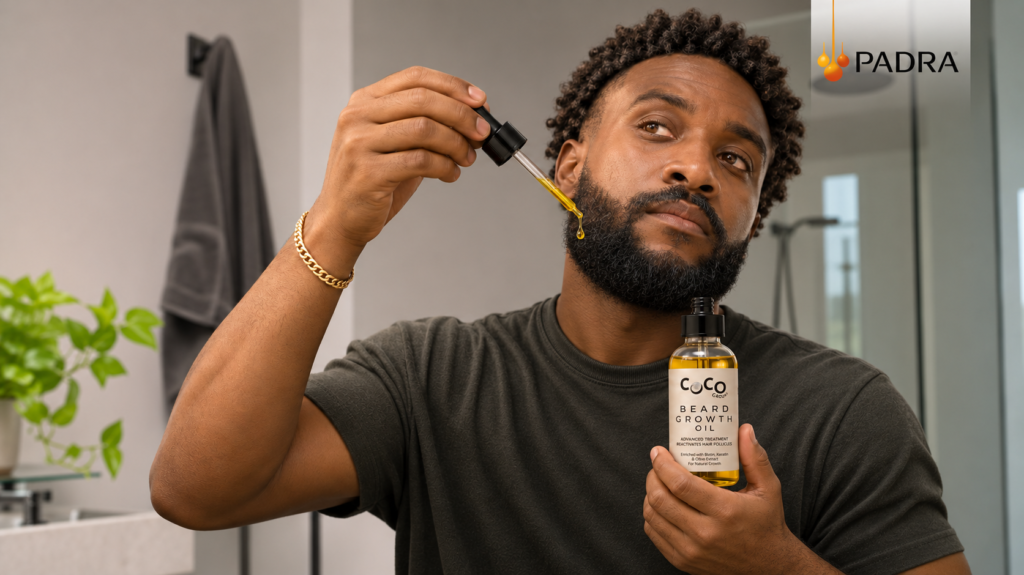
Coconut oil for beard growth may soften existing hairs and make them easier to manage, but it has not been shown to create new follicles or increase true beard density. Its clearest role is conditioning. A smoother, fuller-looking beard after oiling does not necessarily mean more hair is growing.
If your beard feels wiry or looks untidy despite regular grooming, the useful question is whether coconut oil can improve its condition without upsetting the skin underneath.

Does Coconut Oil Help Beard Growth?
Evidence for coconut oil for beard hair growth is insufficient. Conditioning affects existing strands; faster growth depends on activity inside the follicle. Keeping hairs from breaking may help retain length, but it does not establish increased growth speed.
In a 2003 study by Rele and Mohile, coconut oil reduced hair protein loss in damaged and undamaged scalp hair. The authors linked this to its lauric acid-rich composition and ability to penetrate the hair shaft. They did not demonstrate new beard growth or increased facial-hair density.
Phong and colleagues, Journal of Drugs in Dermatology, 2022.
“limited evidence regarding its impact on hair growth.”
Source: 2022 systematic review
That distinction matters when a beard oil promises to fill empty patches.
Benefits of Coconut Oil for Beard and Mustache
The most realistic benefits of coconut oil for beard care concern comfort and appearance. For a dry beard, it may help with:
- Softness: Coarse strands may feel smoother and less wiry.
- Manageability: Added slip can make gentle combing and styling easier.
- Shine and reduced friction: A light coating can improve surface smoothness and may reduce mechanical wear during grooming.
- Dry skin: Some people find it helps reduce the dry feeling beneath facial hair.
Evidence for skin moisturising comes partly from a small clinical trial involving 34 people with dry skin. Coconut oil and mineral oil both improved hydration when applied to the legs. This supports a possible moisturising role, without proving the same outcome under every beard.
Similar conditioning may help mustache hair. Separate clinical evidence showing faster mustache growth is lacking.
How to Use Coconut Oil on Your Beard
If you are researching how to use coconut oil for beard growth, approach it as a conditioning step in your beard care routine.
First, do a small-area tolerance check, often called a home patch test. The American Academy of Dermatology recommends testing a new product on a small area of the arm twice daily for seven to ten days. Stop if a reaction develops. This check cannot guarantee that your face will tolerate repeated use.
- Clean your beard and mustache. Use a gentle cleanser and rinse thoroughly, then blot away excess water.
- Start with very little oil. A drop or two, or a small dab of solid oil, may be enough for a short beard.
- Warm it between your palms. Let solid coconut oil soften naturally; avoid applying hot oil.
- Distribute through the strands. Work gently from the mid-lengths towards the ends, then comb if needed.
- Check the skin underneath. Avoid heavy rubbing or coating. Blot away excess and stop if itching or breakouts develop.
To make beard oil with coconut oil, blend equal small amounts of coconut and jojoba oil in a clean, dry container. This is a texture preference, not a tested growth formula. Regular coconut oil may solidify again. Make a small batch, keep water out and skip essential oils: added fragrance can irritate sensitive skin.
Which Coconut Oil Is Best for Beard Care?
Choose according to texture, scent and skin tolerance. A label claiming the best coconut oil for beard growth does not establish clinical effectiveness. Processing changes the oil’s properties, including its coconut aroma.
| Type | Texture and use | Skin considerations |
|---|---|---|
| Virgin coconut oil | Usually retains a coconut scent; solid in cooler conditions. Suits those who prefer richer conditioning. | Can feel heavy. Natural and unrefined does not mean irritation-free. |
| Refined coconut oil | Similar rich texture, generally with less coconut scent after deodorising. | Less scent does not guarantee better tolerance or fewer breakouts. |
| Fractionated coconut oil | Stays liquid and often feels lighter, making small amounts easier to distribute. | Still needs testing; liquid does not mean non-comedogenic. |
Fractionated coconut oil usually contains little or no lauric acid, so findings about regular coconut oil should not automatically be transferred to it. None of these types is clinically proven to grow beards faster.
Coconut Oil for Beard Growth: Before and After
The changes worth looking for are softer texture, less roughness, easier styling and increased shine. Some conditioning may be noticeable after application; comfort and appearance can be reassessed over repeated uses.
Photos labelled “coconut oil for beard growth before and after” cannot establish new follicles or increased density. Longer hairs, brushing, lighting and oil itself can change how much skin shows through.
Compare your beard at a similar length, with the same lighting and angle, once clean and dry. Judge whether grooming feels easier and your skin stays comfortable. There is no established coconut-oil beard-growth timeline.
Side Effects and Beard Dandruff
Coconut oil can leave a greasy coating, weigh down fine hairs or contribute to breakouts in acne-prone skin. Irritation or sensitivity is also possible. The AAD’s beard-care guidance favours beard conditioner for acne-prone skin and a fragrance-free, non-comedogenic moisturiser for sensitive skin.
Using coconut oil for beard dandruff requires caution. Simple dryness differs from beardruff caused by seborrhoeic dermatitis, which can involve itchy, inflamed skin and greasy scale. Coconut oil is not a proven treatment for this yeast-associated condition.
If beard flakes persist or become painful, or you develop redness or broken skin, seek assessment. Dermatologist-recommended treatment may include an appropriate medicated wash. Adding more oil can delay getting the right care.
Coconut Oil vs Other Beard Oils
Jojoba oil is often chosen for a lighter feel and easy distribution. Argan oil is popular for surface softness and shine, although clinical evidence remains limited. Coconut oil can suit people who prefer richer conditioning. The amount applied and the full formulation influence how each feels.
No oil has established superiority for increasing beard density. Our guide to the best hair growth oils for men explains the wider evidence without making scalp findings a promise for facial hair.
For persistent gaps, Padra can assess the pattern, skin condition and suitability for treatment. A beard transplant may be considered in selected cases. Sudden patches or inflamed skin need diagnosis before cosmetic treatment.