
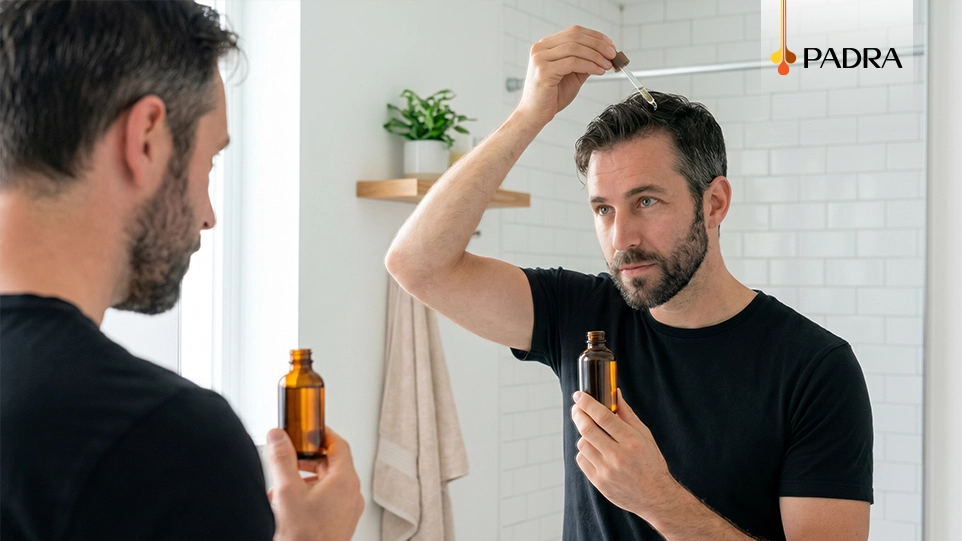
Men usually start looking for the best hair growth oil for men when they notice early thinning, increased shedding, or weaker strands that no longer look as dense as before. At this stage, the main goal is often to find a natural solution that can slow down hair loss and improve thickness without medical intervention.
However, it’s important to understand the limitations. Early hair oils can support scalp and hair quality, but they do not treat genetic hair loss or reverse male pattern baldness.
The best hair growth oil for men depends on the cause of thinning, scalp type, and hair condition. Rosemary oil is one of the most discussed options for early thinning, while castor, pumpkin seed, peppermint, jojoba, and coconut oils may support scalp health, reduce breakage, and make hair look thicker.
Hair oils can support scalp health, but they may not address the root cause of hair loss. If you’re noticing a receding hairline, thinning crown, or increased shedding, a professional assessment can help identify the most effective treatment options for your situation.
Best Hair Growth Oils for Men Compared
| Oil | Best For | Main Benefit | Typical Use Case |
| Rosemary oil | Early thinning | Supports scalp environment | Hair thinning and shedding |
| Castor oil | Weak or dry hair | Reduces breakage, improves the density appearance | Fuller-looking hair |
| Pumpkin seed oil | Early hair loss support | May support hair density | Men’s hair loss routines |
| Peppermint oil | Oily scalp | Cooling and stimulating effect | Scalp refreshment |
| Jojoba oil | Sensitive or oily scalp | Balances natural sebum | Lightweight hydration |
| Coconut oil | Dry or damaged hair | Reduces protein loss | Pre-wash protection |
Which Oil Is Best for Men’s Hair Growth?
There is no single answer for every case of hair oil for men hair growth, because thinning hair can be caused by dryness, breakage, genetics, or hormonal factors.
Rosemary oil is commonly chosen for early thinning because it is associated with scalp stimulation and improved hair environment over time. Castor oil is often used when the goal is to make hair appear thicker and stronger by reducing breakage. Pumpkin seed oil is another supportive option that is frequently included in natural routines for men experiencing early-stage hair loss.
For scalp-specific concerns, peppermint oil may help refresh an oily scalp, while jojoba oil is useful for balancing sebum without heaviness. Coconut oil, on the other hand, is typically used as a pre-wash treatment to protect hair from dryness and protein loss.
If you’re considering medical options, learn more about PRP hair treatment and how it compares with topical solutions for long-term hair loss management.
Rosemary Oil for Men’s Hair Growth
Rosemary oil is one of the most widely discussed natural options in the context of hair oil for men thinning hair.
Its popularity comes from its potential role in supporting scalp health and improving circulation around hair follicles. Some studies suggest it may have effects comparable to certain mild medical treatments in early-stage hair thinning, although results are not guaranteed and vary significantly between individuals.
It must always be diluted with a carrier oil such as jojoba or coconut oil before application. Using it undiluted can irritate the scalp, especially in sensitive skin types.
Most importantly, rosemary oil works gradually. It typically requires consistent use over several months, and it is not a replacement for medical treatment in cases of genetic hair loss.

Hair Strengthening Oil for Men: What Does It Actually Do?
A hair-strengthening oil for men does not create new hair follicles. Instead, it focuses on improving the quality of existing hair.
These oils primarily work by coating the hair shaft, reducing moisture loss, and minimizing breakage. As a result, hair may look fuller, smoother, and healthier. This effect can be visually significant, especially for men dealing with dryness or weak strands.
However, once follicles become inactive due to genetic hair loss, oils cannot reactivate them.
Best Oils for Different Hair and Scalp Types
Choosing the right hair growth oil for men depends heavily on scalp condition and hair behavior.
Men with oily scalps usually tolerate lightweight oils like jojoba or diluted rosemary blends better because they do not clog pores or feel heavy. Those with dry scalps may benefit more from coconut oil or oil blends that provide deeper hydration.
For weak strands, castor oil is commonly used because it helps reduce breakage and makes hair appear thicker. In early thinning cases, rosemary and pumpkin seed oil are often preferred as supportive options rather than standalone solutions.
How to Use Hair Growth Oil Safely
Hair oils are generally safe when used correctly, but improper use can lead to irritation or buildup. Essential oils like rosemary and peppermint should always be diluted before application. It is also important to avoid applying oil on an inflamed or irritated scalp.
Over oiling is a common mistake, especially for men with naturally oily scalps, and it can worsen buildup rather than improve hair health. Regular cleansing is necessary to maintain scalp balance, and any signs of burning, redness, or persistent itching should be taken seriously and addressed immediately.
When Hair Growth Oil Is Not Enough for Men
Hair oils have a supportive role, but they are not sufficient in cases of progressive men’s hair loss, especially when driven by genetics.
If you notice a receding hairline, thinning at the crown, visible scalp exposure or ongoing shedding, it may indicate that follicles are miniaturizing over time. In such cases, relying only on oils may delay effective treatment.
This is where evidence-based medical options become more relevant. Treatments such as Minoxidil and Finasteride are commonly used to slow progression and preserve existing hair. Regenerative approaches like PRP and hair Mesotherapy
Mesotherapy may support weak follicles, while a hair transplant is considered when follicles are no longer active.
Hair Oil vs Clinical Hair Loss Treatments
Hair oils and clinical treatments serve fundamentally different purposes.
Hair oils focus on improving scalp condition, reducing dryness, and enhancing the appearance of hair. In contrast, treatments like minoxidil and finasteride target the biological mechanisms behind hair loss, particularly hormone-related follicle miniaturization.
Regenerative therapies such as PRP and mesotherapy aim to support weakened follicles, while hair transplant procedures restore density in areas where hair no longer grows.
Understanding this difference is essential because it determines whether a cosmetic approach is enough or whether medical intervention is required.
When Should Men See a Hair Specialist?
A professional evaluation becomes important when hair loss shows signs of progression rather than temporary shedding. This includes a receding hairline gradual crown thinning, increased scalp visibility, or persistent hair fall over several months. A strong family history of baldness also increases the likelihood of genetic hair loss.
In such cases, early assessment can help preserve existing hair and expand treatment options before follicles become inactive.
Final Thoughts: What Is the Best Hair Growth Oil for Men?
The best hair growth oil for men depends on scalp condition, hair type, and the underlying cause of thinning. Rosemary oil is often the most discussed option for early thinning, while castor, coconut, pumpkin seed, jojoba, and peppermint oils each provide targeted support for specific scalp and hair needs.
While these oils can improve scalp health and make hair appear thicker and healthier, they do not stop or reverse genetic hair loss. For progressive cases, combining proper diagnosis with evidence-based treatments usually leads to more reliable long-term results.