
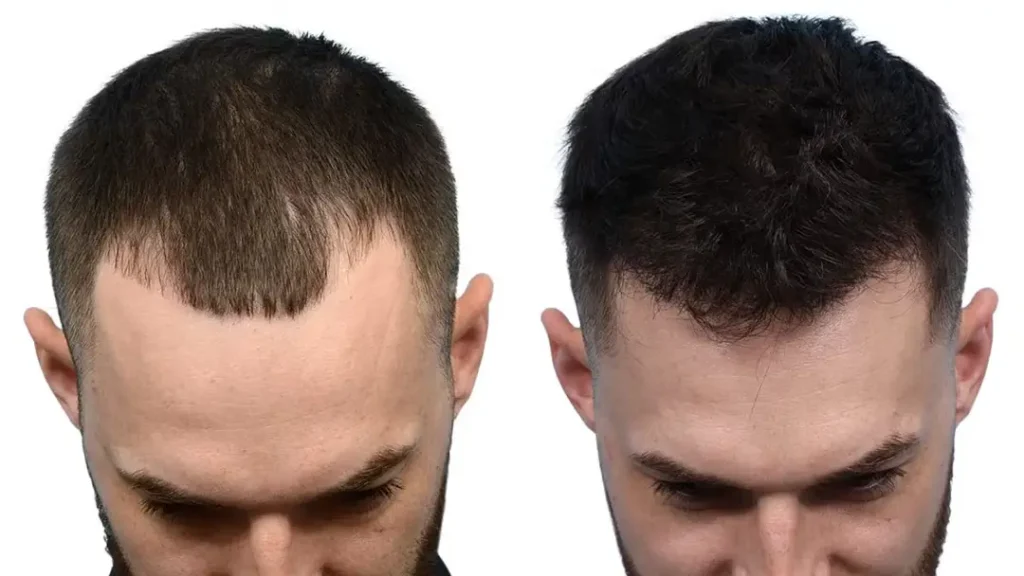
Many people worry about how their hair will look after a transplant. They want to be sure their hair will seem natural once the surgery is done. It’s normal to feel this way when you are putting money and hope into fixing your hair.
Are hair transplants able to look natural? The answer is yes, if you take the right steps. A hair transplant can look natural if done properly. The key is choosing a skilled surgeon who understands how to match your hair’s natural pattern.
The technique used also makes a difference. A good surgeon plans carefully to make sure the new hair blends well with your existing hair.
Can Hair Transplants Look Natural at All?
A well-done modern hair transplant can look incredibly natural if it’s done by an experienced surgeon with modern techniques. Today’s methods like the Follicular Unit Extraction (FUE) and Follicular Unit Transplantation (FUT) are about precision and aesthetics.
Whereas in the past, more primitive tactics resulted in grotesque scarring or an unnatural appearance with a “pluggy” look. Such results would never happen in Padra clinics. This is because safety rules are strictly followed, and most technicians are well-trained and qualified.

Natural Hair Transplant Results
Hair follicles grow and mix with existing hair smoothly. Successful blending depends on the angle, density, and direction of the new hair, especially at the crown.
To see how these factors influence real outcomes, you can explore hair transplant before and after results and compare natural hairline design, density, and overall transformation.
These factors help make the results look natural. When these details are carefully handled, a realistic and effective outcome is guaranteed.
How to Achieve a Natural-Looking Hair Transplant
You can expect a natural-looking hair transplant by knowing these facts:
Choosing the right Surgeon
Finding a skilled and qualified hair transplant surgeon who has experience of working on your hair type is the best way to be confident of a natural result.
Hair transplants are more than just taking hair grafts from one spot and planting them elsewhere. Surgeons need to understand how your hair naturally grows and carefully manage the number of hair follicles in the donor area.
They also must extract the follicles safely. Doing this well requires skill and experience, which you usually won’t find with a cheap overseas procedure.
Opting for a low-cost hair transplant from an inexperienced or unlicensed surgeon carries high risks. That’s one reason why many poor results come from clinics in Turkey. In those clinics, untrained technicians can often bypass safety rules more easily. And it can be hard to complain or get help afterward.
How to assess a skilled surgeon
- Professionalism and Experiences: Your ideal surgeon has to be one who specializes in hair restoration surgery coupled with experience. Confirm their credentials regarding registration with the General Medical Council (GMC) and membership in the International Society of Hair Restoration Surgery (ISHRS).
- Portfolio of Results Achieved: Such surgeons with expertise and considerable experience have to document their work and share before and after photos with prospective patients to showcase the authenticity of the work.
- Patient Reviews: A lot of surgeons have their own website where past patients share their experience but it is wise to explore other independent websites to verify if the doctor and clinic have a good reputation.
- During the first consultation: A good clinic covers all necessary components during the surgery which is a great sign of seriousness. The patient’s hair situation should be examined, and a description of the aims and a guideline explaining each step detailed information given prior to the operation needs to be covered.
A Natural Hairline, Designed for You
At Padra Clinic, our licensed doctors design hairlines based on your age, facial structure, and hair characteristics. Digital imaging previews help you visualize a potential result before your procedure. We follow established safety protocols and personalized planning principles to support natural-looking results.
Know more about your Hairline Design
Your surgeon will help you create a hairline that matches your face shape and age.You can share your preferences, but your surgeon has the final say.
When creating a hairline, focus on the small details. It should stand out but still match the person’s age, face shape, and current hair.
What makes a natural hairline
- Age-Appropriate Design: A hairline that is younger may be too low and unnatural as you age. Moreover, for older patients, a receded hairline is more realistic.
- Irregular Patterns: Hairlines are not entirely straight; they have some irregularities and the transitions from fine wispy hair to thicker hair are also qualitatively denser and flow more smoothly as well.
- Facial Symmetry: Your proportionate body structure including your facial structure should also be taken into account as they determine the balance the hairline strives for.
How our surgeon does it based on your looks
- Facial symmetry principles – Aligns with your face shape for balance.
- Aesthetic judgment – Tailored to your age, gender, and natural look.
- Anatomical landmarks – Follows natural contours like temples and brow line.
- Modern digital tools – Uses imaging to preview and refine the design.
✔️ All planned and performed by a qualified doctor.
The goal: a natural, personalized result that fits you.
Your Role vs. the Surgeon’s Expertise
You can bring photos and share what you want, like the shape or height of your hairline.But the final decision relies on your surgeon’s:
- Knowledge of hair growth patterns
- Understanding of what looks natural long-term
- Ability to balance aesthetic goals with medical safety
Your input is valuable, but the surgeon’s training and experience ultimately guide the design that gives the most natural, lasting result.
A natural-looking hairline is usually not perfectly symmetrical. It should have a smooth change from thin hair at the front to thicker hair toward the middle. It is not made up of a solid block of hair or a straight horizontal line.
It’s important that your surgeon guides the design to ensure the best results. Your input is valued, but the surgeon’s expertise determines the final look.
Limits of your Donor Area
Taking the step to plan the hairline design is crucial for making your new hair look natural, and it also affects the donor area where the hair is taken from.
Tips on the Donor area
1- Donor Hair Density:
In case the area from which hair is to be taken is of low density, the areas from which the grafts need to be taken will determine how naturally the hair transplant will look.
Overharvesting damages the donor site’s natural look and reduces options for future treatments. An experienced surgeon carefully balances the amount taken, coverage needed, and tissue preservation. This approach helps ensure a natural appearance now and keeps options open for the future.
2- Hair Characteristics
The nature or attributes of the donor hair such as their color and texture should blend in well and be uniform with the recipient area.
Hair Color
- Lighter hair colors like blonde or gray tend to blend more smoothly with the scalp. This makes it easier to give the look of thicker hair, even with fewer grafts.
- Darker hair contrasts more with the scalp, so it may require more density to avoid a see-through look.
- If there’s a color mismatch between donor and recipient hair (e.g. body hair used on scalp), it can look unnatural.
Hair Texture
- Coarse or curly hair gives more volume and coverage with fewer grafts because it stands up and covers more area.
- Fine or straight hair lays flatter and may require more grafts to achieve the same visual density.
- Texture should match or complement the native hair in the recipient area—especially at the hairline, where mismatched texture is most noticeable.
3-Future Hair Loss
Continuing to lose hair may mean that some additional procedures will need to be done later on to improve the look of the hair. The surgeon has to take care to design the procedure in such a way that there is adequate hair left for other potential sessions.
Experienced surgeons know what results they can achieve based on the hair available in your donor area. Be cautious of surgeons who promise too much, as they might remove too much hair. This can cause uneven thinning or patches at the back or sides of your scalp. Such patches do not look natural.
Find what technique suits you best
Hair transplantation has two main methods to help restore normal hair growth. These are Follicular Unit Extraction (FUE) and Follicular Unit Transplantation (FUT).
An experienced surgeon guarantees a natural looking hair transplant with both procedures. However, a key difference is the scarring from hair transplants.
FUE method involves removing single follicular units from the donor area. It is less invasive and allows for faster healing. This technique can produce a high number of grafts in just one session.
FUT usually leaves a visible scar on the back of the head. If you wear long hair, the scar might not be visible. That’s why many women choose FUT for their hair transplant. But if you cut your hair very short or get a buzzcut later, the scar can become noticeable.This method usually has a quicker recovery time and less discomfort.
Getting a FUT transplant doesn’t mean your hair will look fake or unnatural. In fact, it has some advantages. The grafts tend to survive at a slightly higher rate, and you might be able to take out more grafts for better coverage.This method can cover larger areas in fewer sessions.
However, there is a downside. You could end up with a thin scar that shows you had a hair transplant.
Selecting the best method to conduct a hair transplant works best only when all factors including the patient’s level of baldness, donor hair, and aesthetic vision are available. Your doctor best determines the optimal technique for you during your hair transplant consultation.
When choosing between FUE and FUT hair transplant techniques, it’s important to consider factors such as scarring, recovery time, hair length preferences, and long-term aesthetic goals—especially for women. While FUE is minimally invasive and ideal for faster healing, FUT can offer higher graft survival and better coverage for larger areas, making it a popular option among women who prefer longer hairstyles. To better understand how these techniques differ and which option aligns with female hair loss patterns and expectations, you can explore Guide to Hair Transplant for Women, which explains the methods, benefits, and key considerations in detail.
Take care of your hair transplant
Following proper care during hair transplant recovery is very important for natural-looking results. Make sure to follow all your doctor’s instructions after the procedure. Take any medications you are given to help prevent problems like infections. A hair transplant infection can harm your new grafts and spoil your results.
Tips on Aftercare
- Avoid Touching the Scalp: Do not touch or rub the transplanted section to prevent the harming of dislodged grafts.
- Gentle Washing: Adhere to the protocol provided by the clinic to instill cleanliness to the scalp using mild shampoo while upholding the grafts.
- Don’t Expose the Scalp to The Sun: Avoid contact with the healing tissue for some weeks in order not to spoil it.
- Follow the Recommended Treatment: Be sure to adhere to all steps provided by the physician so as not to disrupt recovery as this leads to inflammation together with a high chance of infection.
- Changes in Daily Habits: Stop smoking and consuming alcohol for a few weeks as well as any heavy tasks to be able to recover faster.
It’s also worth considering ongoing hair loss treatments like Finasteride after the procedure.This medicine helps stop more hair from falling out and keeps the hair around your new grafts thick.
Taking care of your scalp, following your doctor’s advice, and using the right treatments will give you the best chance for a smooth recovery. It also helps make sure your results look natural and healthy.
How Long Does It Take for Hair Transplant Results to Look Natural?
The entire procedure makes use of the pre-existing hair follicles and the time it takes for hair transplant results to look natural depends on your hair growth cycle. People with shorter cycles see changes sooner. Others may need more time.
Usually, clear and steady results appear between six and twelve months after the treatment.
- Weeks 1–4: The first two to four weeks after the surgery tend to be the healing period. During this period the scalp heals while the skin in the transplanted area is red and the initial hair transplant would naturally fall off.
- Months 3–6: Thinning hair starts to emerge, this indicates that new hair is starting to grow from the transplanted roots.
- Months 6–12: Further increase in hair growth occurs, coarsening it and enabling incorporation with nearby hair. Furthermore, this manifest marks the most noticeable transition of hair volume, texture, and overall appearance to the patient within the time range defined.
- Months 12–18: During this period, a truly remarkable appearance is achieved as all the pre-existing hair attributes have full coverage.
Does Hair Transplant Grow Like Normal Hair?
One common question is, “Does a hair transplant grow like normal hair?” The answer is yes. Hair follicles for the transplant are taken from areas unlikely to lose hair, like the back or sides of the head. These hairs keep their original look and qualities.
After placement in the new spot, the follicles grow hair just like natural ones. They require regular hair care, including washing, trimming, and styling.
The hair from the transplant is permanent and will grow naturally. It will look just like your own hair and be hard to tell apart.
Conclusion
A good hair transplant can look very natural if it is carefully planned and done right. A skilled surgeon and proper aftercare are key to blending the transplanted hair naturally.
When an expert creates natural-looking hairlines, the results are almost invisible. Knowing how much donor hair is available helps set clear expectations. Following a simple recovery routine ensures healthy growth and builds confidence.
Scars from previous injuries can be hidden, offering a fresh appearance and boosting self-esteem. New hair stays for a long time, giving you confidence for many years.
If you’re thinking about a hair transplant, contact a good clinic to start.