






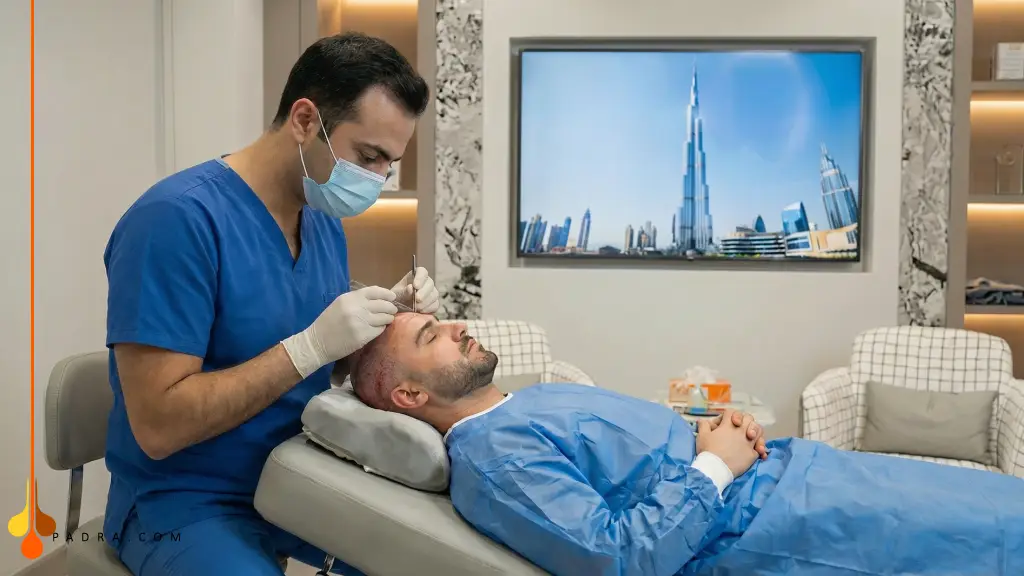
Losing hair can seriously affect your confidence, and if you’re exploring solutions, you’ve likely come across the FUT hair transplant method. FUT, which stands for Follicular Unit Transplantation, is a surgical procedure where a thin strip of skin is taken from the back of the scalp and separated into tiny follicular grafts that are then implanted into thinning or balding areas. It’s one of the oldest, most reliable techniques—especially effective when a high number of grafts are needed in a single session—and is commonly used to treat male pattern baldness as well as other forms of hair loss. Put simply, FUT offers a proven, medically backed way to restore fuller, natural-looking hair.
What Is FUT Hair Transplant?
It means Follicular Unit Transplantation. In simple terms, the doctor takes a thin strip of skin from the back of your head where hair grows strong, cuts that strip into tiny pieces (each piece has 1–4 hairs), and plants those pieces where you’re bald.
This is called strip harvesting. It lets the team get thousands of hairs quickly. Then they look at the strip under a microscope and separate the hairs carefully so nothing gets damaged. That’s why results from FUT hair transplant surgery look so natural.
A lot of people ask how it’s different from FUE. With FUE, doctors pick hairs one by one. FUT hair surgery uses the strip method instead. Both works great, but they fit different needs.
How the FUT Procedure Works Step by Step
What happens during FUT – simple and stress-free:
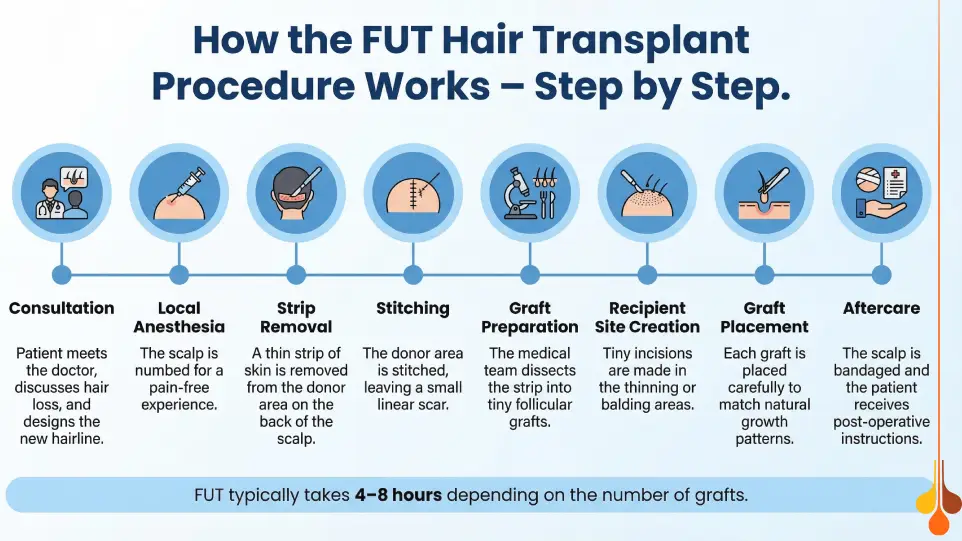
- You meet your doctor, talk about your hair loss, and design your new hairline together.
- Local anesthesia is applied, so you feel no pain.
- The doctor removes a thin strip of skin from the back of your scalp (the donor area).
- The area is stitched, leaving a small linear scar, which is normal.
- The medical team cuts the strip into tiny grafts.
- Tiny incisions are made in the thinning or bald areas.
- Each graft is placed carefully to match your natural hair direction and density.
- Your scalp is bandaged, and you get clear instructions for aftercare.
The whole FUT method usually takes 4–8 hours, depending on how many grafts you need.
Benefits of FUT Hair Transplant
There are some really good reasons people still choose FUT:
- You can move a huge number of grafts in one go — perfect for big bald spots.
- It costs less per graft than other methods.
- Great for advanced hair loss when you want thick coverage fast.
- The harvesting part is quicker.
- It saves healthy hairs around the donor area in case you want FUE later.
While FUT offers several advantages, the biggest reason many patients choose it is its lower cost per graft — it’s simply the most affordable way to move a large number of hairs in one session. However, it’s important to understand that FUE is still the superior technique for most people. Why? Because FUE leaves no visible linear scar, the healing is faster, and the results look incredibly natural with soft, seamless blending. There’s no “pluggy” or artificial look, which is why FUE remains the gold standard in modern hair restoration.
Book your free assessment today.
Downsides You Should Know
Nothing is perfect. Here are the honest cons:
- You get a linear scar at the back (thin, but visible if you shave your head short).
- Recovery takes longer than newer methods — a couple of weeks to feel normal.
- Not the best choice if you love very short haircuts.
- Some people feel tightness in the donor area for a while.
FUT vs FUE Quick Comparison
| Feature | FUT | FUE |
| How hair is taken | Strip | One by one |
| Scar | Linear scar | Tiny dots |
| Grafts per session | Lots (2000–4000+) | Fewer |
| Price | Cheaper per graft | More expensive |
| Healing time | Longer | Faster |
| Best for | Maximum coverage & density | No visible scar |
Recovery and Hair Growth Timeline
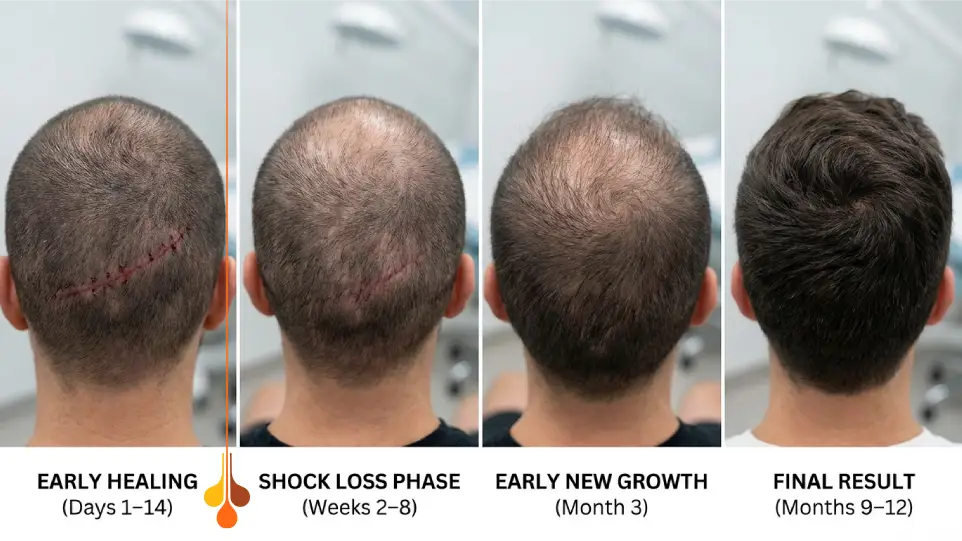
After FUT hair transplant surgery, stitches come out in 10–14 days. The back feels tight at first — totally normal. Swelling and redness go away in a few days. Some transplanted hairs fall out at first (shock loss), but don’t worry — they grow back.
New growth appears around month 3rd, and by months 9rd to 12rd, your full, final look comes in.
Schedule your free consultation now.
Who Is a Good Candidate?
FUT may be the perfect choice for you if you:
- Have larger areas of thinning or hair loss and want fuller coverage
- Have strong, healthy donor hair at the back of your scalp
- Prefer a natural look and don’t plan to keep your hair extremely short
- Want maximum grafts—and maximum results—for the best value
Is FUT Still Used Today?
Yes, absolutely! A lot of people think FUT hair surgery is old news, but it’s not. When someone needs thousands of grafts to cover a large bald area, FUT is still the smartest and most affordable way. Plus, it leaves the door open for FUE in the future if you ever want it.
Top clinics still do FUT transplant every day because the results are proven and reliable.
Common Questions About FUT Hair Transplant
Final Thoughts
FUT hair transplant is still an excellent choice in 2025, especially for anyone who wants thick, full hair without spending a fortune. This method has been used for decades because it works reliably, giving long-lasting and natural-looking results. Thousands of patients around the world have regained their confidence and enjoy a full head of hair thanks to FUT hair surgery.
It is especially effective for people with advanced hair loss or large bald areas who want the maximum number of grafts in a single session. While it leaves a thin linear scar and requires a little more recovery time than some newer methods, the benefits in density, coverage, and cost-effectiveness make it worth considering.
If you are tired of covering your head with hats or feeling self-conscious about thinning hair, FUT hair transplant could be the solution you’ve been looking for. Speak with a specialist to learn if this method fits your needs and discover how it can help restore your hair naturally.
Not sure if FUT or FUE is right for you? Start your personalized plan today — it’s free.