






Many women are searching and want to know whether it can treat thinning hair when minoxidil or other options have not provided enough improvement. Finasteride may be considered for selected women, but its use for female hair loss is off-label, evidence is limited and variable, and strict medical supervision is essential.
Finasteride is FDA-approved for male pattern hair loss, not female pattern hair loss. It reduces dihydrotestosterone, or DHT, a hormone involved in follicle miniaturization. Some women may benefit when androgen activity contributes to their hair loss, but it is not suitable for everyone.
Finasteride is FDA-approved only for men, and its use in women is considered off-label. Women who are pregnant or may become pregnant should never take finasteride due to potential birth defects. Some women may benefit under strict medical supervision, but results are variable, and side effects can include hormonal changes, breast tenderness, or mood alterations.
Is Finasteride Approved for Female Hair Loss?
Finasteride is not FDA-approved as a treatment for female pattern hair loss. A specialist may sometimes prescribe it off-label, which means using an approved medication for a condition or patient group not included in its official indication.
Medical quote FDA prescribing information
Off-label use does not automatically mean a treatment is inappropriate. It means the prescribing doctor must assess the available evidence, pregnancy risk, medical history, hormonal status, and possible alternatives before deciding whether it is suitable.
The NHS also notes that finasteride is generally not recommended for women and may only be prescribed by a specialist in rare cases.
How Does Finasteride Work in Women?
Finasteride is a 5 alpha reductase inhibitor. It reduces the conversion of testosterone into DHT, an androgen associated with follicle miniaturization in androgenetic alopecia.
If a woman’s hair thinning is partly driven by androgen sensitivity, reducing DHT activity may help protect follicles that are still active. This may slow further miniaturization and, in selected cases, improve hair shaft thickness or density.
However, female pattern hair loss is not always driven by DHT alone. Hormonal imbalance, menopause, PCOS, thyroid disorders, iron deficiency, stress, postpartum shedding, and telogen effluvium may produce similar symptoms. Diagnosis must come before treatment.

How Effective Is Finasteride for Female Hair Loss?
The effectiveness of finasteride for female hair loss is limited and variable. Research includes small trials and observational studies using different patient groups, doses, and treatment durations.
Some women, particularly selected postmenopausal patients or those with signs of androgen-related thinning, may experience stabilization or improved density. Other studies have found little or no meaningful benefit.
This inconsistency means finasteride should not be presented as a predictable hair regrowth treatment for women. Response may depend on:
- The cause of hair loss
- Menopausal and hormonal status
- Follicle activity
- Hair loss severity
- Treatment duration
- Other treatments being used
- Individual sensitivity to DHT
Finasteride cannot reliably restore follicles that are completely inactive or replaced by scar tissue.
Concerned About Taking Finasteride in Your Situation?
If you are concerned about how finasteride should be used with your medical, hormonal, or pregnancy circumstances, contact our consultants for guidance before starting or changing treatment.
Maintenance vs Regrowth: What Should Women Expect?
Hair maintenance means slowing progressive miniaturization and helping preserve existing hair. This may be the more realistic goal for women with androgenetic alopecia.
Hair regrowth means producing visible improvements in thickness or density. Some women may experience partial improvement where follicles are still active, but regrowth is not guaranteed.
The treatment should therefore be viewed as a possible long-term management option, not a cure. If it is discontinued, DHT-related follicle miniaturization may resume, and maintained benefits may gradually reduce.
Finasteride Dosage for Female Hair Loss
There is no FDA-approved finasteride dosage standard for female hair loss. Published studies have used different dosages, which is one reason results are difficult to compare.
A woman should never select a dose based on an online article, another patient’s prescription, or the standard male hair loss dose. Dosage and duration must be determined by a qualified doctor after considering:
- Pregnancy potential
- Menopausal status
- Hormonal or endocrine conditions
- Other medications
- Liver health
- Hair loss diagnosis
- Previous treatment response
- Side effect risk
Treatment may require several months before response can be evaluated. The doctor may also use scalp photographs, hair density measurements, or follow-up examinations to assess whether continuing is reasonable.
Who Might Be Considered for Finasteride?
A specialist may consider finasteride for selected women with confirmed female pattern hair loss, particularly when androgen-related thinning is suspected, and other treatments have not been sufficient.
Potential candidates may include some postmenopausal women or carefully selected patients who cannot become pregnant and understand the treatment’s off-label status.
Finasteride is not an appropriate first response to unexplained shedding. Women with postpartum shedding, telogen effluvium, thyroid problems, nutritional deficiencies, scalp inflammation, or scarring alopecia require treatment directed at the actual cause.
Pregnancy Risk and Finasteride
Pregnancy safety is the most important restriction. Finasteride can interfere with the normal development of the external genitalia of a male fetus.
Women who are pregnant or may become pregnant should not take finasteride. They should also avoid handling crushed or broken tablets because the active medication may be absorbed through the skin. Intact tablets are coated, but pregnancy precautions must still be discussed with a doctor.
Women planning pregnancy should tell their prescriber before starting or continuing treatment. Finasteride should never be used during pregnancy based on informal advice or without medical supervision.
Possible Finasteride Side Effects in Women
Female-specific safety data are more limited than male data. Possible concerns may include:
- Hormonal changes
- Reduced libido
- Mood changes or mood swings
- Breast tenderness or enlargement
- Headache
- Dizziness
- Nausea
- Menstrual changes in some patients
Temporary hair shedding may occasionally be reported after treatment changes, but initial shedding is not a well-established or predictable finasteride reaction in women. Significant or prolonged shedding needs assessment.
Erectile dysfunction is a documented adverse effect in male users; it is not a female-specific symptom. For women, sexual side effects would more commonly be discussed in terms of libido or other sexual function changes.
Anyone experiencing breast changes, persistent mood symptoms, depression, sexual symptoms, or unusual physical changes should contact the prescribing doctor. More detailed safety information is available in our guide to finasteride side effects.
Can Premenopausal Women Take Finasteride?
Finasteride is generally avoided in women who could become pregnant unless a qualified specialist determines that the circumstances justify off-label use and strict pregnancy prevention measures are in place.
Premenopausal hair loss should first be investigated for PCOS, hormonal imbalance, thyroid disease, iron deficiency, stress-related shedding, telogen effluvium, and postpartum changes.
Because pregnancy can be unplanned, reproductive safety must never be treated as a minor consideration.
Can Postmenopausal Women Take Finasteride?
Some research has evaluated finasteride in postmenopausal women, but outcomes have been mixed. Menopause removes the pregnancy concern, but it does not guarantee that the medication will be effective or free from side effects.
A specialist must still confirm the diagnosis and assess breast symptoms, mood history, hormonal factors, other medications, and realistic treatment goals.
Finasteride vs Minoxidil for Women
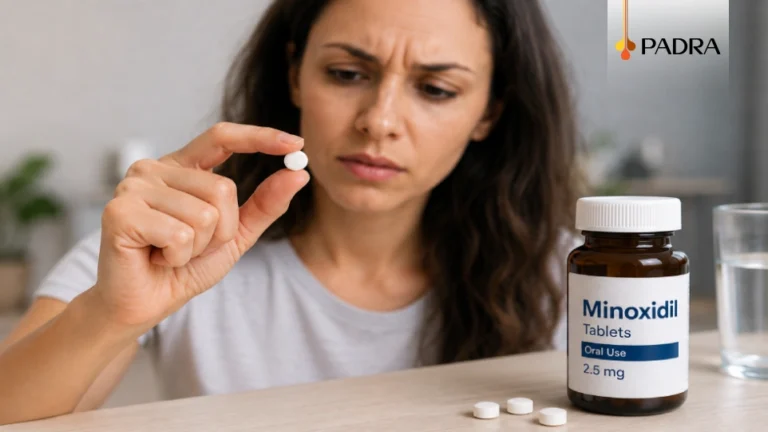
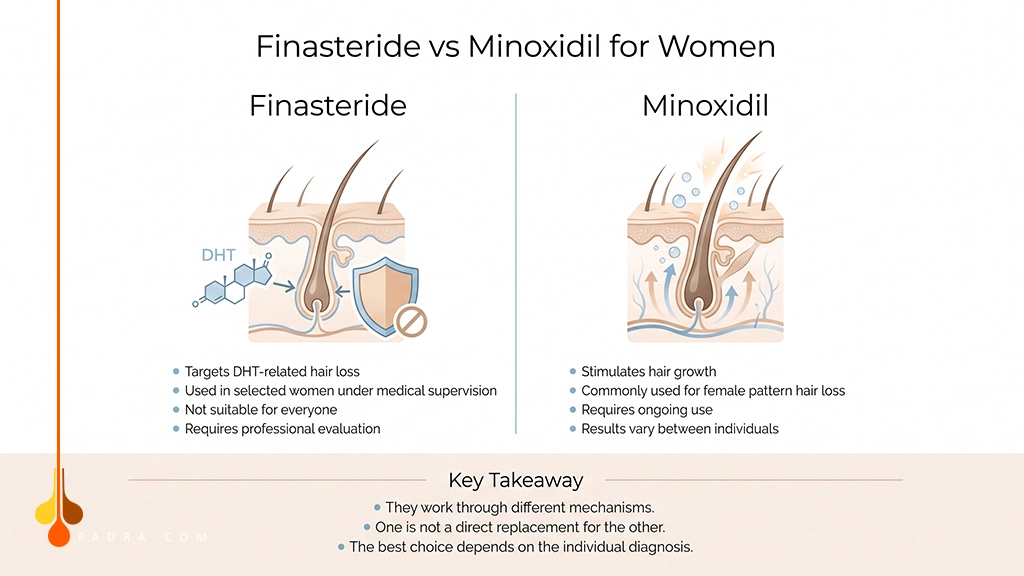
Minoxidil is more commonly used for female pattern hair loss and has a more established role in women. Finasteride targets DHT-related pathways, while minoxidil supports hair growth through a different mechanism.
The two treatments should not be viewed as direct substitutes. A woman may be more suitable for minoxidil, another medical treatment, or a combination plan, depending on diagnosis.
Neither option offers guaranteed regrowth, and ongoing use may be required to maintain results.
Alternatives to Finasteride for Female Hair Loss
Women who are not suitable candidates—or who prefer not to take finasteride—may discuss other options.
PRP hair treatment may support active or miniaturized follicles in selected patients. Hair mesotherapy may be considered as supportive scalp care depending on diagnosis and clinic protocol.
Minoxidil, low-level laser therapy, correction of nutritional or hormonal triggers, and gentle scalp care may also form part of a treatment plan.
When follicles are no longer active in a defined area and the donor region is suitable, hair transplant options may be evaluated. Diffuse female thinning does not always make a patient a suitable transplant candidate, so donor assessment is essential.
What Happens If a Woman Stops Finasteride?
Finasteride is a maintenance-based treatment. If it has been helping control androgen-related miniaturization, stopping may allow the original process to continue.
Hair maintained or improved during treatment may gradually thin again. The timing and degree of change differ between patients and depend on the original diagnosis.
Women should not stop, restart, or change their dosage without consulting the prescribing doctor, especially when other hormonal or medical treatments are involved.
When Should You See a Hair Loss Specialist?
Professional assessment is important if you have:
- Rapid or sudden shedding
- A widening part or progressive crown thinning
- Smooth or patchy bald areas
- Scalp pain, burning, redness, or scaling
- Irregular periods, acne, or possible PCOS
- Postpartum shedding that does not improve
- Fatigue or suspected iron deficiency
- Breast, sexual, or mood symptoms during treatment
A dermatologist or hair loss specialist can distinguish female pattern hair loss from telogen effluvium, hormonal shedding, traction alopecia, and inflammatory or scarring conditions.
Final Thoughts: Can Women Take Finasteride?
So, can women take finasteride? Selected women may be prescribed it off-label under strict medical supervision, but its effectiveness is variable, and the pregnancy risk is serious.
There is no standard approved female dosage, and treatment duration must be personalized. Finasteride may help maintain hair or support partial regrowth in some women with active follicles, but it does not work for every cause of hair loss.
A diagnosis-led plan is the safest way to decide whether finasteride, minoxidil, PRP, mesotherapy, or another option is appropriate.