







Many men avoid finasteride because they believe it lowers testosterone or reduces masculinity. In reality, finasteride mainly reduces the conversion of testosterone into dihydrotestosterone, or DHT. Understanding that difference is essential when weighing its hair-loss benefits against possible sexual, reproductive, or mood-related effects.
Finasteride does not usually lower testosterone levels. It blocks the 5-alpha reductase enzyme that converts testosterone into DHT. By reducing DHT exposure, finasteride may slow follicle miniaturization in male pattern hair loss. Some users experience sexual or mood-related side effects, but these cannot be explained by low testosterone alone.
Does Finasteride Lower Testosterone?
Finasteride does not usually reduce total testosterone. Its primary effect is lowering DHT production by inhibiting 5-alpha reductase.
Because less testosterone is converted into DHT, total testosterone may remain stable or increase slightly. A small increase generally remains within the normal physiological range and does not automatically cause higher energy, greater muscle growth, or improved libido.
Individual laboratory results can vary. Users should not start, stop, or change prescription treatment solely because of online claims or a single hormone result.
Finasteride lowers DHT, not usually testosterone.
Testosterone vs DHT: What Is the Difference?
DHT is not inherently harmful. The problem in androgenetic alopecia is that genetically sensitive scalp follicles respond to DHT by gradually becoming smaller.
| Hormone | What It Is | Main Roles | How Finasteride Affects It |
|---|---|---|---|
| Testosterone | The primary circulating androgen | Libido, muscle, energy, reproductive function, and other androgen-related processes | Usually remains stable or may rise slightly |
| DHT | A more potent androgen is produced from testosterone | Prostate development, facial and body hair, and follicle miniaturization in sensitive scalps | Significantly reduced |
| Estradiol | A hormone partly produced from testosterone | Bone, sexual, neurological, and metabolic functions | Small changes may occur, but regulation is usually maintained |
How Does Finasteride Affect Hormones?
Finasteride changes androgen metabolism rather than suppressing all male hormones. It inhibits type II and type III 5-alpha reductase, reducing the amount of testosterone converted into DHT.
Serum and scalp DHT decrease, while total testosterone generally does not fall. Finasteride also does not work by directly blocking androgen receptors.
This distinction matters: reducing one potent testosterone metabolite is not the same as removing testosterone or eliminating all androgen activity.
Does Finasteride Increase Testosterone?
Finasteride may produce a small average increase in circulating testosterone because less testosterone is converted into DHT. The individual response varies, and levels typically remain within physiological ranges.
A slight laboratory increase does not automatically improve sexual function, mood, athletic performance, or muscle growth. These outcomes depend on multiple biological and psychological factors rather than total testosterone alone.
Concerned About Finasteride and Your Hormones?
If you are concerned that finasteride may be affecting your testosterone, sexual health, fertility, or mood, our consultants can explain available hair-loss options and help you determine when specialist medical evaluation may be appropriate.
Why Does Finasteride Lower DHT but Not Testosterone?
The process can be understood in five steps:
- The body produces testosterone.
- The 5-alpha reductase enzyme converts some testosterone into DHT.
- Finasteride inhibits this enzyme.
- DHT production decreases.
- Genetically sensitive scalp follicles receive less DHT exposure.
Testosterone-to-DHT Pathway
| WITHOUT FINASTERIDE
Testosterone |
WITH FINASTERIDE
Testosterone |
How Does DHT Cause Male Pattern Hair Loss?
Male pattern hair loss is strongly influenced by genetics and follicle sensitivity to DHT. DHT may shorten the growth phase and cause susceptible follicles to produce progressively finer hairs.
The crown, frontal scalp, and receding hairline are commonly affected. Lowering DHT may slow progression, reduce further miniaturization, and support long-term hair maintenance.
Finasteride cannot create new follicles or reliably restore long-standing smooth bald areas where follicles are no longer active.
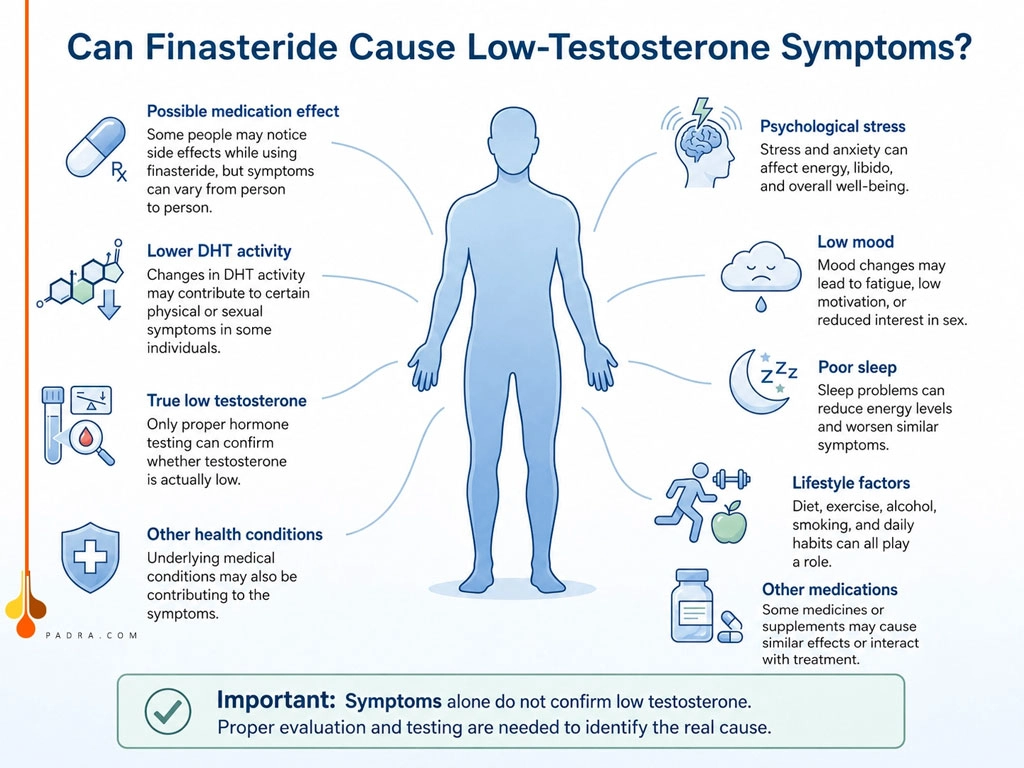
Can Finasteride Cause Low-Testosterone Symptoms?
Reduced libido, erectile difficulties, fatigue, low mood, reduced motivation, or fertility concerns do not automatically prove that testosterone is low.
Possible explanations may include:
- A finasteride-related adverse effect
- Reduced DHT activity
- Anxiety or psychological stress
- Depression
- Sleep problems
- Relationship or lifestyle factors
- Another medication or health condition
- An unrelated endocrine disorder
- Genuinely low testosterone from another cause
Symptoms should be evaluated rather than dismissed because testosterone appears normal or automatically blamed on low testosterone without testing.
Are Finasteride Sexual Side Effects Caused by Low Testosterone?
Possible finasteride sexual side effects include reduced libido, erectile dysfunction, ejaculation changes, reduced ejaculate volume, orgasm-related changes, and occasionally testicular discomfort.
These effects do not occur in every user. They may also occur when total testosterone remains within the reference range because sexual function depends on DHT activity, neurological pathways, vascular health, mood, medications, relationships, and individual sensitivity.
Anyone experiencing persistent sexual symptoms should contact the prescribing doctor. Our detailed guide to possible finasteride side effects provides additional context, but it should not replace medical evaluation.
Does Finasteride Affect Masculinity or Male Hormones?
Finasteride does not usually lower testosterone and does not eliminate male hormones. It lowers DHT, which is an androgen involved in several tissues and biological processes.
This does not mean finasteride automatically reduces muscle mass, masculinity, or male identity. At the same time, individual sexual, breast-related, reproductive, or emotional symptoms should be taken seriously.
Claims that finasteride “destroys masculinity” are medically misleading, while claims that it has no meaningful hormonal effects are also too simplistic.
Does Finasteride Affect Fertility?
Sexual function, testosterone level, semen quality, and fertility are related but distinct concepts.
Finasteride may reduce ejaculate volume or affect semen parameters in some susceptible patients. Available evidence does not show that infertility occurs universally, and improvements in semen quality have been reported after discontinuation.
Men actively trying to conceive, those with known subfertility, or anyone concerned about semen quality should discuss the issue with a physician. A semen analysis may be considered when clinically appropriate.
Finasteride and Mood Changes
Depressed mood, depression, anxiety, and suicidal thoughts require careful attention. These symptoms are not experienced by every user, and a mood change during treatment does not automatically prove causation. However, current regulatory warnings should not be minimized.
The EMA states that the frequency is unknown and advises users of 1 mg oral finasteride to seek medical advice for mood changes. Anyone experiencing suicidal thoughts or an immediate risk of self-harm should seek urgent emergency or local crisis support.

Should You Test Testosterone Before or During Finasteride?
Routine hormone testing is not automatically required for every finasteride user. Testing may be appropriate when symptoms, medical history, fertility concerns, or suspected endocrine conditions justify it.
A clinician might consider total testosterone, free testosterone, or other relevant markers based on the individual case. A single result should not be interpreted without considering:
- The time of the blood draw
- Laboratory reference ranges
- Current symptoms
- Medications
- Sleep and general health
- Reproductive concerns
Users should not order a broad hormone panel and diagnose themselves solely through online reference ranges.
Oral vs Topical Finasteride: Do They Affect Hormones Differently?
Oral and topical finasteride are different formulations, but topical application does not guarantee zero systemic absorption.
Clinical research suggests topical finasteride may reduce scalp DHT while producing less systemic exposure than oral treatment in some protocols. However, it can still affect serum DHT, and the outcome depends on concentration, applied dose, frequency, formulation, and scalp condition.
Topical approval also varies by country. Compounded products may differ in quality and evidence from authorised formulations. Users should not assume topical finasteride is side-effect-free.
Does Finasteride Work If Testosterone Is Normal?
Normal testosterone does not rule out androgenetic alopecia. Male pattern hair loss is driven mainly by genetic follicle sensitivity to DHT rather than simply by having unusually high testosterone.
Finasteride may therefore be relevant when testosterone is normal, provided the pattern, diagnosis, medical history, and risk profile support its use.
Treatment outcomes still vary according to hair-loss stage and whether follicles remain active or miniaturized.
Finasteride Benefits vs Risks
| Potential Benefits | Possible Risks or Limitations |
|---|---|
| May have slow male pattern hair loss | Sexual side effects may occur |
| May support existing hair maintenance | Mood changes require attention |
| May improve density in responsive follicles | Does not restore every bald area |
| Convenient prescription treatment | Benefits depend on continued treatment |
| Targets DHT-related miniaturization | Requires medical suitability and monitoring |
This comparison provides general information, not an individual recommendation.
When Should You Contact a Doctor?
Contact a qualified healthcare professional if you experience persistent libido changes, erectile dysfunction, ejaculation problems, breast tenderness or enlargement, testicular pain, fertility concerns, significant mood changes, depression, or uncertainty about continuing treatment.
Mood changes involving suicidal thoughts require urgent medical attention.
Alternatives to Finasteride for Hair Loss
Finasteride is not the only option, although alternatives do not necessarily produce the same effect.
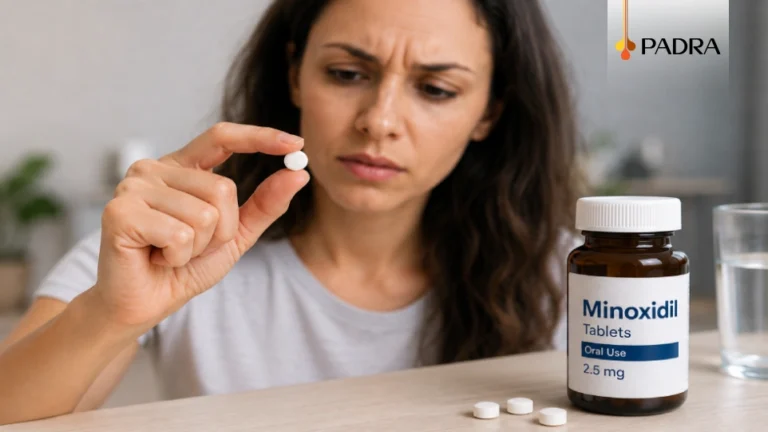
Minoxidil does not primarily target DHT and may support hair growth in suitable users.
PRP hair treatment may be considered for active or miniaturized follicles as part of a broader treatment plan.
Hair mesotherapy may provide supportive scalp treatment depending on diagnosis and clinical protocol.
Low-level laser therapy may offer non-invasive follicle support in selected cases.
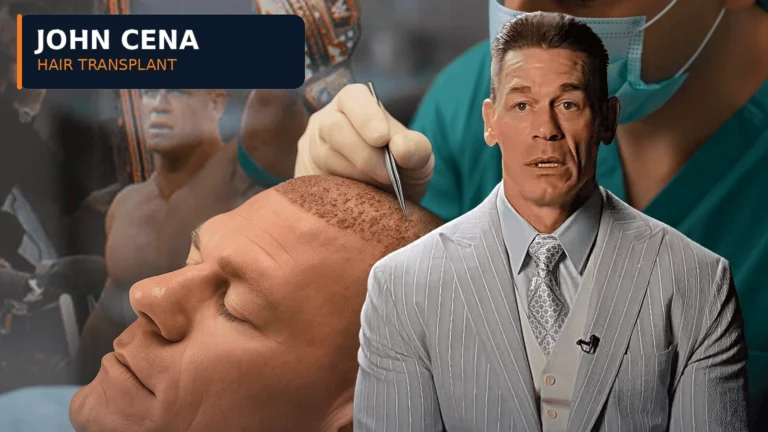
For advanced areas where follicles are no longer active, [hair transplant options] may offer long-lasting structural improvement in suitable candidates. A transplant is not a cure for ongoing hair loss, and donor quality and future progression must be assessed.
Final Answer: Does Finasteride Reduce Testosterone?
Finasteride usually does not lower testosterone. It inhibits the conversion of testosterone into DHT, helping reduce DHT-related follicle miniaturization in male pattern hair loss.
Testosterone may remain stable or increase slightly, but some users can still experience sexual, reproductive, breast-related, or mood symptoms. Normal testosterone does not automatically prove that such symptoms are unrelated to treatment.
Finasteride should be used with informed consent, realistic expectations, and appropriate medical supervision.