







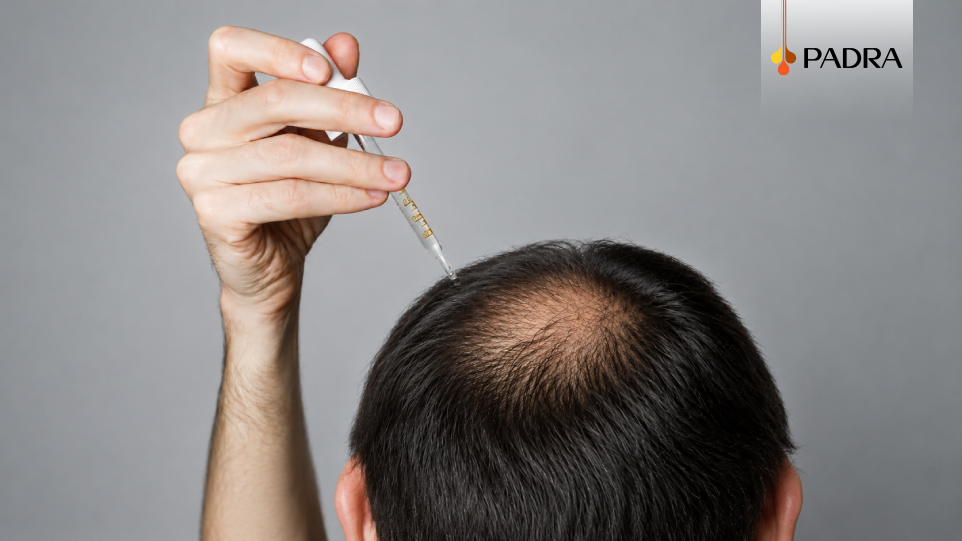
Topical minoxidil is a scalp-applied medication used mainly for certain forms of pattern hair loss. It may reduce shedding and support regrowth from active or miniaturized follicles, but it does not work for everyone, cannot recreate destroyed follicles, and usually requires continued use to maintain its benefits.
It is available as foam and liquid solution, commonly in 2% and 5% strengths. The correct formulation, amount and application frequency depend on the exact product label, intended user group, scalp condition and country-specific instructions-not simply on choosing the highest concentration.
What Is Topical Minoxidil?
Topical minoxidil is a medication applied directly to the scalp to support hair growth and maintenance in selected cases of androgenetic alopecia. It is not a vitamin, shampoo or cosmetic thickener. It is also different from oral minoxidil, which is administered as a prescription tablet and results in greater systemic exposure.
The treatment acts on follicles that are still present. It may help some miniaturized follicles produce longer or thicker hairs, but it cannot generate new follicles in smooth, scarred or long-standing bald areas.
Does Topical Minoxidil Work?
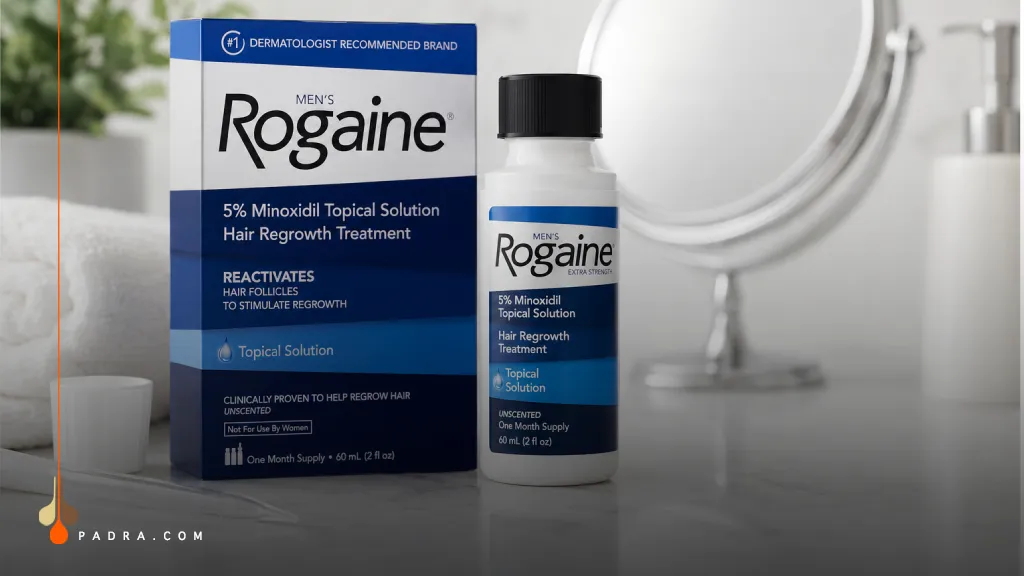
Yes. Research shows that topical minoxidil is more effective than placebo for hair-count outcomes in androgenetic alopecia. A systematic review and meta-analysis found improvements in total and non-vellus hair growth, while noting that cosmetically acceptable improvement occurs in only a subset of users. Consistent application is one of the main practical limitations.
| Outcome | What It Means | What the User May Notice |
|---|---|---|
| Hair regrowth | Active follicles produce more visible growth | Fine new hairs or improved density |
| Hair maintenance | Existing hair is preserved longer | Less shedding or slower thinning |
| Cosmetic improvement | Hair appears fuller | Better coverage or thicker-looking strands |
| Insufficient response | Little meaningful improvement | Continued thinning despite correct use |
How Types of Hair Loss Can It Help
Evidence and product labels focus mainly on gradual male and female pattern hair loss. Results are generally more plausible where follicles remain active and the thinning pattern is compatible with androgenetic alopecia.
- Sudden or patchy loss
- Hair loss associated with childbirth
- Painful, inflamed or infected scalp
- Scarring or traction-related loss
- Unexplained loss or possible thyroid, iron or hormonal concerns
Current U.S. labels advise against self-treatment when loss is sudden, patchy, unexplained or associated with an irritated scalp. Reviewing broader hair-loss treatment options can help distinguish pattern thinning from conditions that need another approach.
Topical Minoxidil Foam vs Solution
Neither formulation is universally better. The practical choice depends on scalp tolerance, product directions and whether the user can apply it consistently.
| Feature | Foam | Solution |
|---|---|---|
| Texture | Lighter and often quicker drying | Liquid applied with a dropper |
| Common strengths | Frequently 5% | Commonly 2% or 5% |
| Propylene glycol | Often absent | Present in many solutions |
| Measurement | Usually measured by capful | Usually measured in milliliters |
| Scalp tolerance | May suit some sensitive users | May irritate susceptible users |
| Styling impact | Often less greasy | May leave more residue |
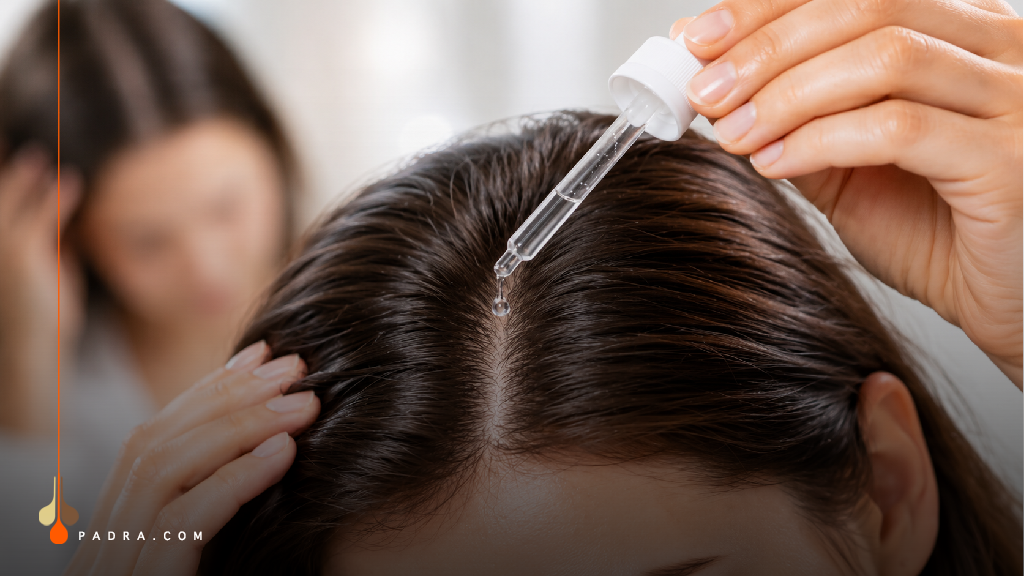
Propylene glycol can contribute to irritation in some people. However, the solution is not automatically harsh, and foam is not automatically more effective. The American Academy of Dermatology notes that foam may reduce scalp irritation for some users.
Minoxidil 2% vs 5%: Is Stronger Better?
A 5% product contains more active ingredient than a 2% product, but higher concentration is not automatically the best option for every user. Trials in men and women found stronger efficacy measures with 5% in some settings, while the higher strength was also associated with more itching, irritation or unwanted hair growth in certain participants.
| Formulation | Strength | Common Label Direction | Early Label Timeline | Key Caution |
|---|---|---|---|---|
| Men’s solution | 5% | 1 mL twice daily | Around 2–4 months | Often labeled for vertex loss |
| Men’s foam | 5% | Half a capful twice daily | Several months | Flammable; check exact label |
| Women’s solution | 2% | 1 mL twice daily | Around 4 months or longer | Pregnancy and unexplained loss need caution |
| Women’s foam | 5% | Half a capful once daily | Around 3–6 months | Facial hair and systemic warnings |
This instruction belongs to that specific product label, but it reinforces an important principle: increasing the amount or frequency is not a shortcut to faster growth.
How to Use Topical Minoxidil Correctly
- Confirm the product. Check foam or solution, 2% or 5%, intended user group, amount, frequency and expiration date.
- Apply to a dry, healthy scalp. Part the hair to expose the thinning area. Do not apply to red, infected, painful or damaged skin.
- Measure the labeled amount. Use the supplied dropper or cap; do not estimate with household spoons or increase the dose.
- Distribute carefully. Avoid allowing the product to run onto the forehead, face, neck or eyes.
- Wash your hands. This reduces accidental transfer and unwanted hair growth elsewhere.
- Let the area dry. Wait before applying styling products, wearing a hat or going to bed.
- Follow the exact frequency. There is no single schedule for every product. Do not double a missed application.
How Long Does Topical Minoxidil Take to Work?
Hair grows slowly, and treatment should not be judged after a few days or weeks.
| Treatment Stage | What May Happen |
|---|---|
| First few weeks | No visible improvement or temporary shedding |
| Around 2–4 months | Early changes may appear in some users |
| Around 4–6 months | The response becomes easier to assess |
| Around 6–12 months | A more meaningful density comparison is possible |
| Continued treatment | Maintenance depends on ongoing use |
Exact timelines differ between labels. Some men’s products mention possible early results at two months, while some women’s products may require three to six months. AAD guidance explains that a reliable assessment may require six to 12 months. Standardized photographs are more useful than memory.
What Is the Initial Shedding Phase?
Temporary increased shedding can occur during the early treatment period as follicles shift through the growth cycle. It does not happen to every user and does not prove that treatment will work. Severe or prolonged loss should not automatically be dismissed as a normal adjustment.
- Severe or rapidly worsening shedding
- Patchy loss
- Pain, inflammation, scaling or infection
- Shedding associated with other health symptoms
Topical Minoxidil for Men
Topical treatment is commonly used for male pattern baldness. Some current U.S. 5% products are labeled specifically for gradual crown or vertex thinning and state that they are not intended for frontal baldness or a receding hairline. This label restriction should not be turned into a promise that every crown responds or a claim that frontal areas can never improve.
Topical Minoxidil for Women
Both 2% solution and 5% foam are available through products intended for women, but their labeled application frequencies can differ. Unwanted facial hair may occur if the product spreads beyond the scalp. Women should also consider whether thinning may relate to postpartum changes, PCOS, thyroid disease, iron deficiency or another cause rather than assuming it is female pattern hair loss.
Women who are pregnant, planning pregnancy or breastfeeding should obtain medical guidance. Current labels and AAD guidance advise against use during pregnancy and breastfeeding.
Does Topical Minoxidil Have Side Effects?
Common Local Effects
- Scalp itching, dryness or flaking
- Redness, burning or irritation
- Contact dermatitis
- Temporary shedding
- Unwanted facial or body hair
Possible Systemic Warning Signs
- Chest pain
- Rapid or irregular heartbeat
- Fainting or significant dizziness
- Swelling of the face, hands, feet or abdomen
- Difficulty breathing
- Sudden unexplained weight gain
Systemic absorption through intact scalp skin is usually limited, but it is not zero. Absorption may increase with excessive application, larger treatment areas or damaged skin. The guide to possible minoxidil side effects explains local reactions and systemic warning signs in more detail.
Can Topical Minoxidil Cause Weight Gain?
Safety Warning
Sudden unexplained weight gain may signal fluid retention, especially with swelling, breathing difficulty or a rapid heartbeat.
Is Topical Minoxidil Dangerous?
Many people use topical products without serious complications, but the treatment is not completely risk-free. Local irritation is more common than systemic reactions. Additional caution is appropriate for people with heart disease, a history of fainting or low blood pressure, inflamed or damaged scalp skin, pregnancy or breastfeeding, concurrent scalp medication, or sudden and unexplained hair loss.
How Long Does Topical Minoxidil Stay in Your System?
1. Scalp Activity
Some medication remains on or within the scalp for hours after application.
2. Systemic Elimination
A current product monograph reports systemic absorption of approximately 1% to 2% through normal intact skin. It lists an average topical half-life of about 22 hours and states that approximately 95% of absorbed minoxidil is eliminated within four days after treatment stops. This is general pharmacokinetic information, not individualized medical clearance.
3. Hair-Loss Effect
Hair benefits do not disappear at the same speed as the absorbed medication. Treatment-supported hairs may be lost gradually over several months.
Takeaway
Drug elimination, local scalp activity and loss of hair-growth benefits follow different timelines
What Happens If You Stop Topical Minoxidil?
The underlying hair-loss process may continue after treatment ends. Hair maintained or regrown through treatment may gradually shed, allowing the original thinning pattern to become visible again. Current labels state that continued use is necessary to maintain regrowth. This does not mean the medication permanently damaged the follicles, and tapering should not be promised as a guaranteed way to prevent shedding.
Topical Minoxidil vs Oral Minoxidil
| Factor | Topical Minoxidil | Oral Minoxidil |
|---|---|---|
| Route | Applied to the scalp | Prescription tablet |
| Exposure | Mainly local; limited systemic absorption | Systemic |
| Availability | Often OTC, depending on market | Prescription |
| Common concerns | Irritation, residue, facial hair | Hypertrichosis, swelling, cardiovascular effects |
| Monitoring | Follow label and review warning signs | Medical screening and supervision |
Oral treatment is not simply a stronger version of the topical product. The guide to oral minoxidil for hair loss explains the differences in exposure, screening and monitoring.
What Does “Minoxidil Topical Solution USP 5%” Mean?
Minoxidil is the active drug ingredient. Topical solution means a liquid formulation intended for external application to the scalp. USP refers to United States Pharmacopeia standards associated with medicine identity, strength, quality and purity. It does not mean the product will work for everyone or is automatically superior to every alternative. 5% w/v means the solution contains 5 grams per 100 mL, equivalent to 50 mg per milliliter.
Who Makes Minoxidil?
Minoxidil is a generic active ingredient manufactured and packaged by multiple pharmaceutical companies. There is no single manufacturer of every topical product. Rogaine is a brand containing minoxidil; it is not the name of the generic drug itself. Generic products may differ in inactive ingredients, packager, texture and instructions.
The individual manufacturer or packager should be checked on the product label or through a database such as DailyMed.
Where to Buy Topical Minoxidil Safely
- Use a licensed pharmacy or authorized retailer
- Check intact tamper-evident packaging
- Verify the expiration date, active ingredient and concentration
- Confirm foam or solution formulation
- Check the manufacturer or packager and product-identification details
- Review country-specific instructions and storage conditions
Avoid unlabeled bottles, altered packaging, products without a manufacturer, unusually high concentrations marketed as risk-free and claims of guaranteed regrowth.
How to Evaluate Reviews and Before-and-After Photos
Topical minoxidil reviews vary because users may have different diagnoses, products, application habits and treatment durations. Some also combine medication with other therapies. Reviews can describe experience but cannot prove universal effectiveness.
- Same lighting and camera angle
- Same hairstyle and hair length
- Same scalp area
- Clear treatment duration
- Disclosure of other treatments
When Topical Minoxidil May Not Be Enough
- Follicles are no longer active
- Baldness is advanced or long-standing
- Scarring alopecia is present
- Inflammation remains untreated
- The diagnosis is not androgenetic alopecia
- Side effects prevent consistent use
- Hair loss progresses despite appropriate treatment
- The density goal exceeds realistic medication outcomes
Depending on the diagnosis, alternatives may include medical treatment, PRP, mesotherapy or hair transplant options for suitable candidates with an adequate donor area.
| Explore Your Hair-Loss Options
A professional assessment can help determine whether topical treatment matches your hair-loss pattern, which formulation may be appropriate and whether another approach should be considered. |
Final Answer: Is Topical Minoxidil Worth Using?
Topical minoxidil is an evidence-based option for selected men and women with pattern hair loss, particularly while follicles remain active. Its success depends on correct diagnosis, formulation, label-directed application and continued use. It does not work for everyone or restore destroyed follicles.
Scalp irritation is more common than systemic reactions, but palpitations, swelling, dizziness, breathing difficulty or sudden unexplained weight gain require medical attention.