








Tired of thinning hair but don’t want to shave your head for a fix? A long hair transplant might be just what you need. This clever method lets you restore your hair without cutting your current style, so you look normal right after the procedure. It’s perfect for anyone who wants to keep their hair loss solution a secret. In this guide, we’ll explain everything about long hair transplant, from how it works to who it’s best for.
What Is a Long Hair Transplant?
A long hair transplant is a special way to bring back your hair without touching your existing length. It’s a type of hair transplant long hair lovers can choose to keep their style intact.
This method is performed using a refined version of FUE Hair Transplant, where grafts are extracted and implanted with their full hair length intact.
It’s not the same as no-shave FUE. With no-shave FUE, some hair gets trimmed but not fully shaved. Long hair FUE, also called long hair surgery or long hair implants, keeps every strand long. This makes it super discreet, often called an unshaven long hair transplant. Your existing hair hides the work, so no one notices you had anything done.

Book Your Long Hair Transplant Consultation Today
How a Long Hair Transplant Works
Getting a long hair transplant is straightforward, though it takes skill. Here’s how it goes in simple steps:
- Hairline Design and Donor Check: The doctor plans your new hairline and looks at the back of your head to find healthy hair to use.
- Picking Long Hairs: They choose long hairs from the donor area to take out carefully.
- Long-Hair FUE Extraction: Using tiny tools, they remove these hair units without cutting the strands.
- Implantation: The long-strand grafts are placed in thinning areas, and you see the results right away.
This process takes longer than regular transplants because it’s so precise, but you walk out with hair that looks fuller instantly.
Benefits of Long Hair Transplant
Why choose a long hair transplant? For starters, there’s no shaving required. You keep your hair as is, so no one can tell you’re getting treatment. It’s completely discreet, which makes it great for executives, public figures, or anyone who values privacy.
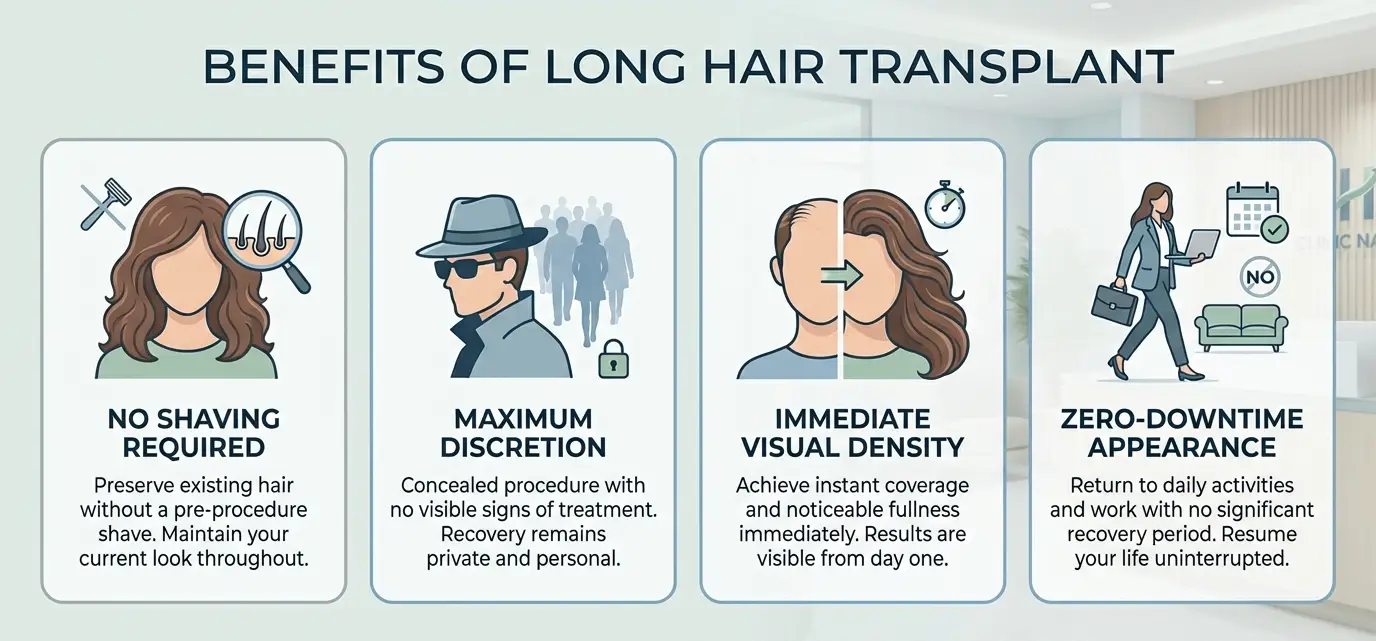
Another big win is the immediate visual density. Unlike other methods where you wait months to see results, this one shows a thicker look right after surgery. The long strands blend with your hair, giving you a preview of the final outcome. It’s ideal if you want a zero-downtime appearance and can’t afford to look “off” for weeks.
Limitations to Know
No method is perfect, and long hair transplant has some downsides. It costs more because it needs extra time and skill. The surgery itself takes longer since doctors work carefully with long strands.
It’s not ideal for big sessions. If you need a ton of grafts, this might not work well – it’s better for small or medium amounts. Also, it’s tricky to do, so you need a highly skilled surgeon. Not every clinic offers long hair surgery, and picking the wrong one could lead to bad results.
Who Should Get a Long Hair Transplant?
This procedure is best for people with mild to moderate hair loss. If your hair is thinning but not completely gone, you’re a good fit. It works great for those with medium or long hairstyles since the new hair blends right in.
If you want to avoid any obvious signs of surgery, this is for you. It’s perfect for folks needing small to medium graft counts, like busy professionals who need to look their best without downtime.
Start Your Long Hair Transplant Assessment now
Long Hair FUE vs No-Shave FUE
Still unsure which method suits you? Here’s a comparison of long hair FUE and no-shave FUE to make it clear.
| Feature | Long Hair FUE | No-Shave FUE |
| Hair Length During Procedure | Fully long — no cutting | Minimal trimming, no full shave |
| Immediate Visible Result | Yes – instant preview | No – results show after shedding |
| Discreetness | Maximum privacy | High but not instant |
| Ideal Session Size | Small–Medium | Small–Large |
| Cost | Higher | Moderate |
| Difficulty Level | Very high | High but more common |
| Best For | Privacy-focused, public-facing people | People are avoiding shaving but okay with waiting |
If you’re comparing long hair FUE with No-Shave Hair Transplant, the main difference lies in immediate visibility and overall discretion.
Healing from a long hair transplant is easy and super discreet. Since your hair stays long, no one sees the healing process. The long strands may fall out after two to three weeks – that’s normal shedding, so don’t panic.
New hair starts growing around month three. By nine to twelve months, you’ll see the full, natural results. It takes time, but the outcome is worth it.
Your Next Step Toward Instant, Natural Confidence
A long hair transplant is a game-changer for fixing hair loss while keeping your style. It’s private, quick to show results, and perfect for those who can’t pause their busy lives. If this sounds like your kind of solution, don’t wait – take the first step toward fuller hair today.
Many of our patients tell us the best part is walking out of the clinic and jumping straight back into work, meetings, or even social events without anyone guessing they just had a procedure. No hats, no awkward growing-out phase, no explanations needed. That kind of confidence boost is hard to put a price on, and it’s why so many busy professionals and public figures now choose long hair FUE as their go-to option.
Book your private consultation now