






FUE Hair Transplant is the biggest game-changer in modern hair restoration, offering natural, undetectable results through precise follicular extraction. In this technique, individual hair follicles are gently moved from the donor area to thinning or balding regions, creating a natural look while minimizing visible scarring.
What makes FUE even more reliable is its structured recovery timeline: during days 1–7, mild redness and swelling are common; in weeks 2–5, the transplanted hairs shed in a normal “shock loss” phase; and between weeks 3–6, most patients enter an almost invisible phase before new, fine hairs begin to appear by month 3. These hairs continue to thicken and mature over the next 6–12 months, with full results typically visible within 12–18 months. Proper aftercare—like keeping the head elevated and washing gently during the first week—helps the grafts anchor securely. Forget outdated, noticeable transplant methods; this guide gives you clear and honest answers about how FUE works, what recovery really looks like, and how this procedure can transform your confidence.
We’ve got the answers. Keep scrolling to see exactly how FUE works, what recovery is like, and when you’ll see those amazing results.
What Is FUE Hair Transplant?
Discover how FUE works and why it’s considered the gold standard in hair restoration. Modern & minimally invasive hair restoration method Extracts natural follicular units (1–4 hairs) with micro‑punches (0.6–1.0 mm) No linear scar — only tiny, barely visible dot marks Each graft is implanted individually for natural density and direction Allows precise angling to recreate natural hairlines (temples, crown) Can also harvest grafts from beard or chest in suitable cases.
How the FUE Procedure Actually Works: A Step-by-Step Breakdown
Here is a significantly shortened version of the step-by-step procedure section for the FUE Hair Transplant, focusing on the essential actions in each stage:
How the FUE Procedure Actually Works
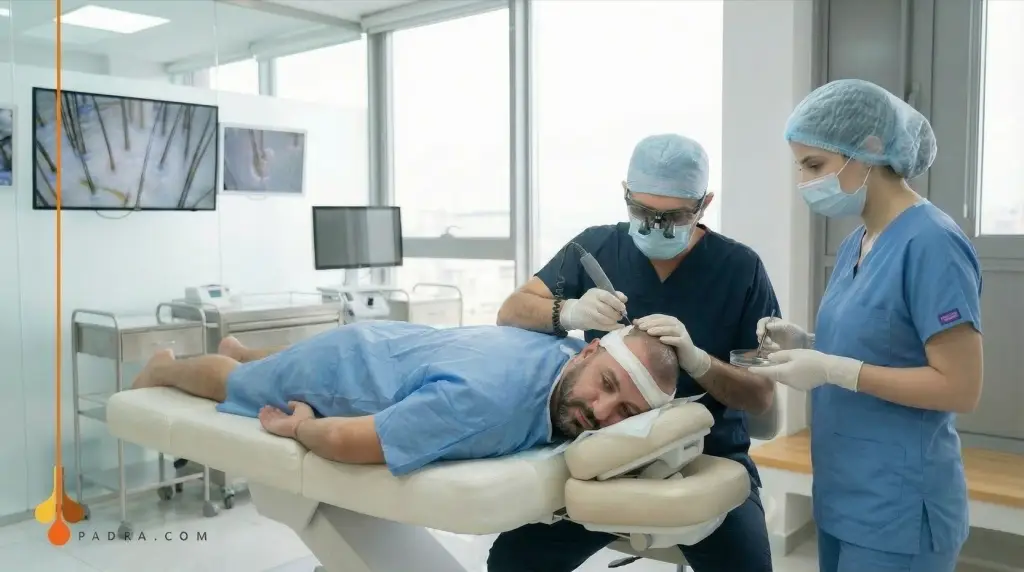
The FUE transplant is a detailed, artistic session that takes several hours. Here’s the process:
- Design Session: We analyze your hair loss and goals to design a new hairline that complements your facial structure.
- Prep & Comfort: The donor area is trimmed, and local anesthesia is applied. You remain awake, but your scalp is numb for the duration of the procedure.
- Extraction (Precision Harvesting): Using a specialized, tiny micro-punch tool, the surgeon carefully isolates and gently removes each individual follicular unit.
- Preparation & Sorting: Grafts are preserved in a solution and sorted by size (single hairs for the hairline; larger units for density).
- Implantation (Laying the Foundation): The surgeon creates micro-sized channels in the balding area, controlling the angle and direction for natural growth, and then places the grafts into their new, permanent homes.
- Final Steps: A light bandage is applied, detailed post-op instructions are given, and you are ready to go home the same day.
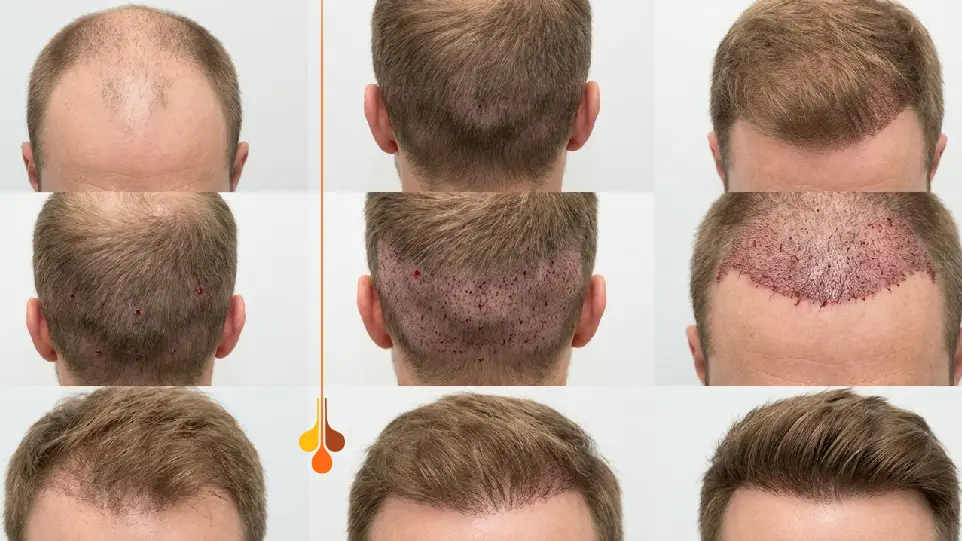
Why FUE Is the Right Choice for So Many: Key Benefits
When people ask me why FUE is worth the investment, the answer is always about freedom and subtlety:
- You Avoid the Linear Scar: This is the big one. Since we take individual grafts, you only have tiny, undetectable dots. You can wear your hair in a military cut or a buzz cut without worry.
- Faster Recovery Time: The trauma to the scalp is minimal. Most patients are back to work (light activities) within 3–5 days.
- Natural Results—Guaranteed: The level of control over each graft means we can mimic the soft transition of a natural hairline perfectly.
- Less Discomfort: Because there’s no large surgical incision, post-operative pain is typically low and easily managed with Tylenol.
The Difference is in the Details.
Our FUE procedure is performed with microscopic accuracy, ensuring maximum graft survival, while our specialists perfectly design a natural, custom hairline. Schedule a consultation with our expert team today.
Limitations, Risks, and the Tough Truth
Look, FUE is fantastic, but it’s not magic. Here are a few things to keep in mind:
- It’s More Expensive: Due to the time and specialized skill required for individual extraction, the FUE procedure generally costs more per graft than FUT.
- It’s Time-Consuming: If you need 4,000+ grafts, this procedure will take a long time—sometimes two full days—because of the meticulous effort involved in the extraction.
- Not for Everyone: If your donor hair is very thin or weak, or if you have certain medical conditions, FUE might not be the ideal solution.
What to Expect Next: Your FUE Hair Replacement Recovery
Understanding What Is FUE Hair Transplant helps patients feel confident during the recovery timeline, since shedding and early redness are normal phases.
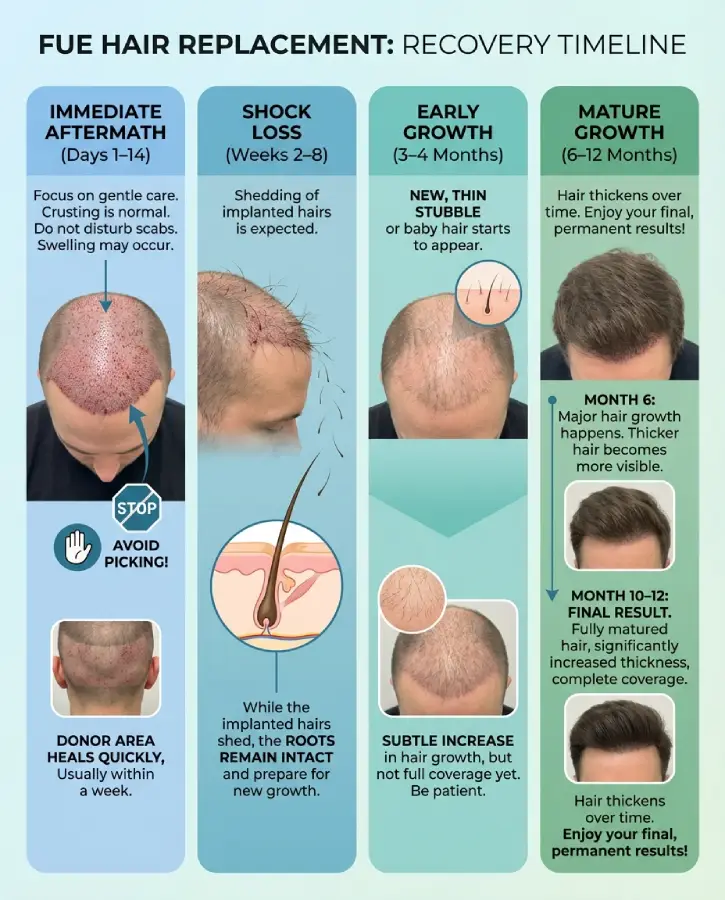
The Immediate Aftermath (Days 1–14)
You will see tiny crusts or scabs where the hair was implanted. Do not pick them. The donor area will heal quickly, often within a week. You must follow post-op instructions rigorously, especially regarding washing and avoiding strenuous exercise.
The “Shock Loss” Period (Weeks 2–8)
This is the phase that freaks people out, but it’s totally normal. The implanted hairs will shed. It’s called “shock loss.” The follicles are resting; the root is still there, safe and sound. It’s just making room for the new, permanent hair.
The FUE Results Timeline (3 to 12 Months)
- 3–4 Months: You’ll see the first new stubble. It’s thin, almost baby hair.
- 6–8 Months: Major growth starts happening. The hair thickens, and you start seeing a real difference in coverage.
- 10–12 Months: This is your final result. The transplanted hair has fully matured.
Who’s Really a Good Candidate for FUE?
The best way to know is a consultation, but generally, the best candidates for FUE transplant have:
- A stable pattern of hair loss (meaning it’s not progressing rapidly).
- Dense, healthy donor hair on the back of the scalp. You can’t put what you don’t have in the bank.
- Realistic expectations about the final density and coverage. We aim for a natural look, which means not always having the density of a 20-year-old.
Claim your personalized FUE suitability assessment with our specialists.
FUE vs. FUT – The Choice You Need to Make
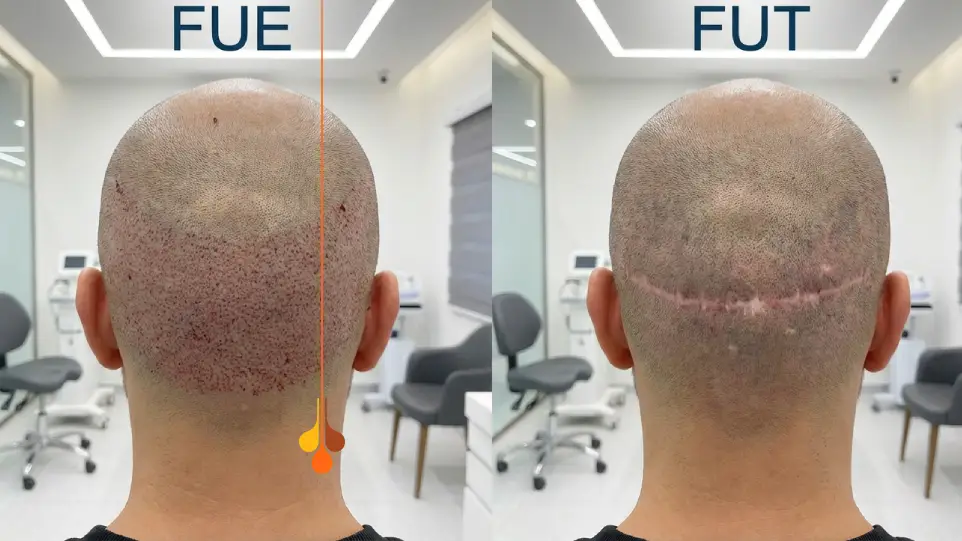
This comparison often dictates the entire plan, especially when deciding whether FUE or a FUT Hair Transplant is the better approach. Here’s the difference boiled down:
| Feature | FUE (Follicular Unit Extraction) | FUT (Follicular Unit Transplantation) |
|---|---|---|
| Scar Type | Small, dot-like scars—hidden when hair is short. | Linear scar—requires longer hair to conceal. |
| Recovery Time | Faster; minimal activity restriction after 3–5 days. | Longer; requires sutures removal and 1–2 weeks of healing. |
| Cost per Graft | Higher. | Lower. |
| Technique | Individual extraction using a micro-punch tool. | Harvesting of a skin strip; dissection under a microscope. |
| Best for | Patients who wear short hair or need moderate grafts. | Patients who wear long hair or need a high number of grafts efficiently. |
Bringing It All Together
The FUE hair transplant technique represents the absolute gold standard in hair restoration because it marries medical effectiveness with unparalleled cosmetic subtlety. It is a safe, reliable, and effective way to permanently restore your hair. Your journey toward hair restoration starts with education, but it finishes with action.
Thinking about a hair transplant? There’s no substitute for a one-on-one professional opinion. Schedule a free consultation with our certified hair restoration experts to find out if FUE is the right path for your specific goals. Let’s start crafting the plan for your new look today
FAQs – Answering Your Questions
Is FUE hair transplant painful?
The short answer: No, not really. We numb the entire area with local anesthesia, so you won’t feel the extraction or implantation. Post-op, most people describe it as mild soreness, not pain.
How long does FUE recovery take?
You’re back to non-strenuous work in under a week. The transplanted area heals cosmetically (scabs gone) in about 10–14 days. Full regrowth takes a year.
Are FUE results permanent?
Yes! The hair we move from the back of your head is genetically resistant to pattern baldness. That resistance travels with the hair, so those transplanted hairs should last your lifetime.
Can FUE be done more than once?
Absolutely. Since FUE preserves the donor area so well, it’s the ideal technique for repeat procedures if you need further density or if your hair loss progresses in new areas years down the line.
Will people notice I had a hair transplant?
For the first two weeks, yes, due to the crusting. But once that falls off, the change is incredibly subtle. Since the FUE results timeline is a gradual process over a year, most people will just notice your hair looking thicker and better, without knowing why.
How many grafts do I need?
Impossible to say without seeing you! It depends on the size of the area being treated and the density we are targeting. It could be 800 grafts for a minor hairline adjustment or 3,000+ for severe frontal and crown balding.
[Book Your Free Consultation Now]