






Washing your hair after a transplant is essential—but timing and technique matter.
- Gentle washing usually starts 24–72 hours after surgery
- Use mild, fragrance-free or baby shampoo only
- Apply foam softly, rinse with low pressure, and never rub or scratch
- Normal washing typically resumes after 10–14 days
Proper shampooing keeps the scalp clean, prevents infection, and helps grafts heal safely without damage.
The first time you look in the mirror after your surgery, you might feel two things: excitement for the future, and a little bit of fear about touching your head.
That fear is normal. You have just invested time and money into this procedure, and the last thing you want to do is wash away a graft. However, keeping your scalp clean is actually one of the most important parts of the healing process.
This guide explains the right way to handle shampoo after hair transplant procedures, helps you choose the right products, and walks you through that first nervous wash.
Why Shampooing After a Hair Transplant Needs Special Care
Think of your new hair grafts like fresh seeds planted in soft soil. For the first few days, they are not deeply rooted yet. If you disturb the soil—or in this case, the scalp—the seeds can move or pop out.
However, you can’t just avoid washing. Your scalp needs to breathe to heal. Using shampoo after hair transplant helps remove blood, oil, and crusts that form around the new hairs. If these scabs stay too long, they can trap bacteria or suffocate the graft. The goal is to find the balance: keeping it clean without being rough.
For a complete overview, read A Guide to Hair Transplant for Women, which covers available options, candidacy, and recovery in detail.
When Can You Start Washing Your Hair After a Hair Transplant?
Most patients are surprised to learn they don’t have to wait weeks to clean up.
Generally, you can start a very gentle washing routine 24 to 48 hours after surgery. However, this isn’t a rule set in stone.
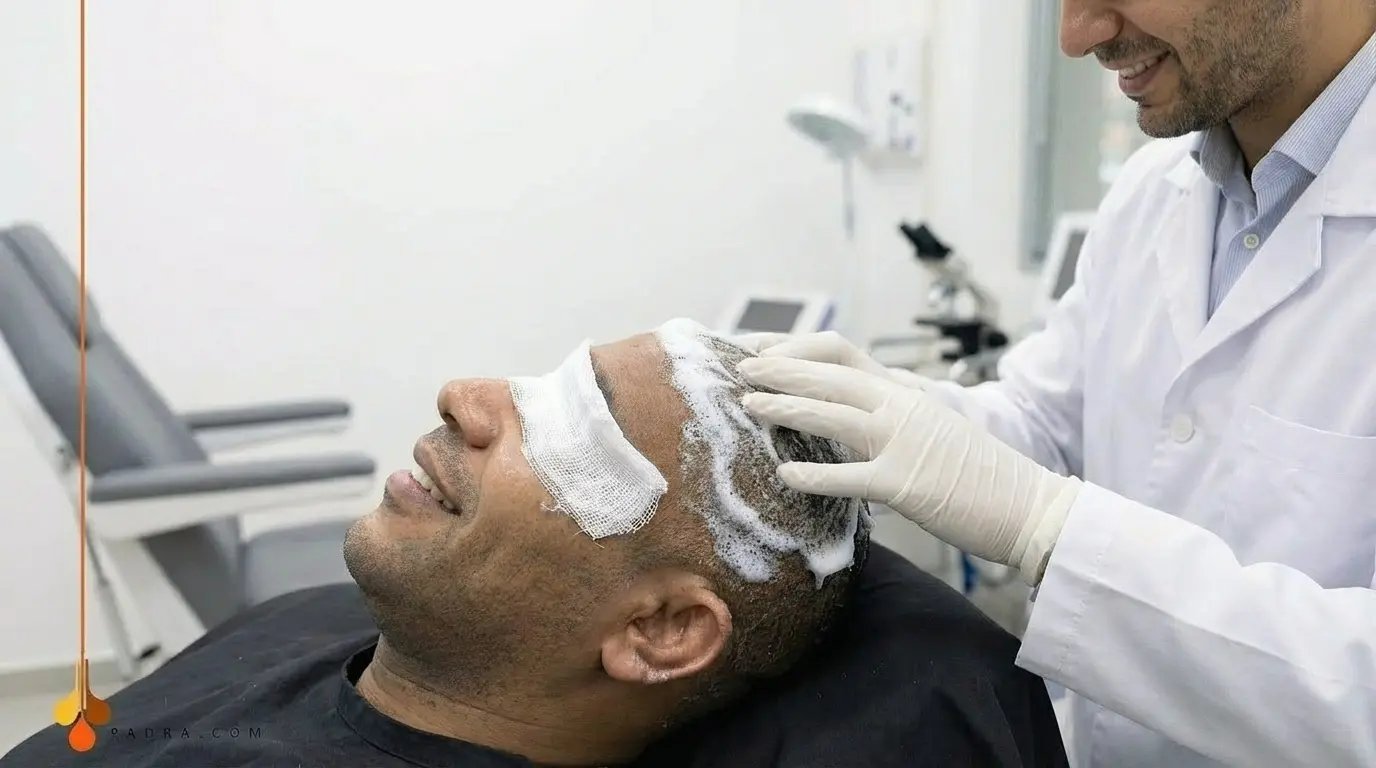
- The Clinic Wash: Many clinics prefer to do the first wash for you at their office the next day to show you the pressure and technique.
- Home Washing: If you are washing at home, usually day 3 is when you start your daily routine.
Important: Always check your discharge papers. Your surgeon knows exactly how deep your incisions were and may adjust this timeline slightly.
Post Hair Transplant Shampoo: What Type Is Usually Recommended?
You cannot use your standard grocery store shampoo just yet. Many regular shampoos have harsh chemicals, heavy perfumes, or sulfates that strip natural oils and irritate open skin.
When looking for a post hair transplant shampoo, simplicity is key.
- Baby Shampoo: This is the most common recommendation. It is pH-balanced and designed for sensitive skin.
- Medicated Lotion: Your doctor might give you a specific foam or lotion to use for the first week.
- Paraben-Free and Fragrance-Free: If you buy your own, check the label. The fewer ingredients, the better.
Tip: Avoid anti-dandruff shampoos or hair-growth shampoos (like Minoxidil products) during the early healing phase unless your doctor specifically tells you to use them. They can be too strong for raw skin.
Contact us Today
How to Shampoo Safely (Step-by-Step)
The technique matters more than the product. Forget how you used to wash your hair. For the next two weeks, you need to be incredibly gentle.
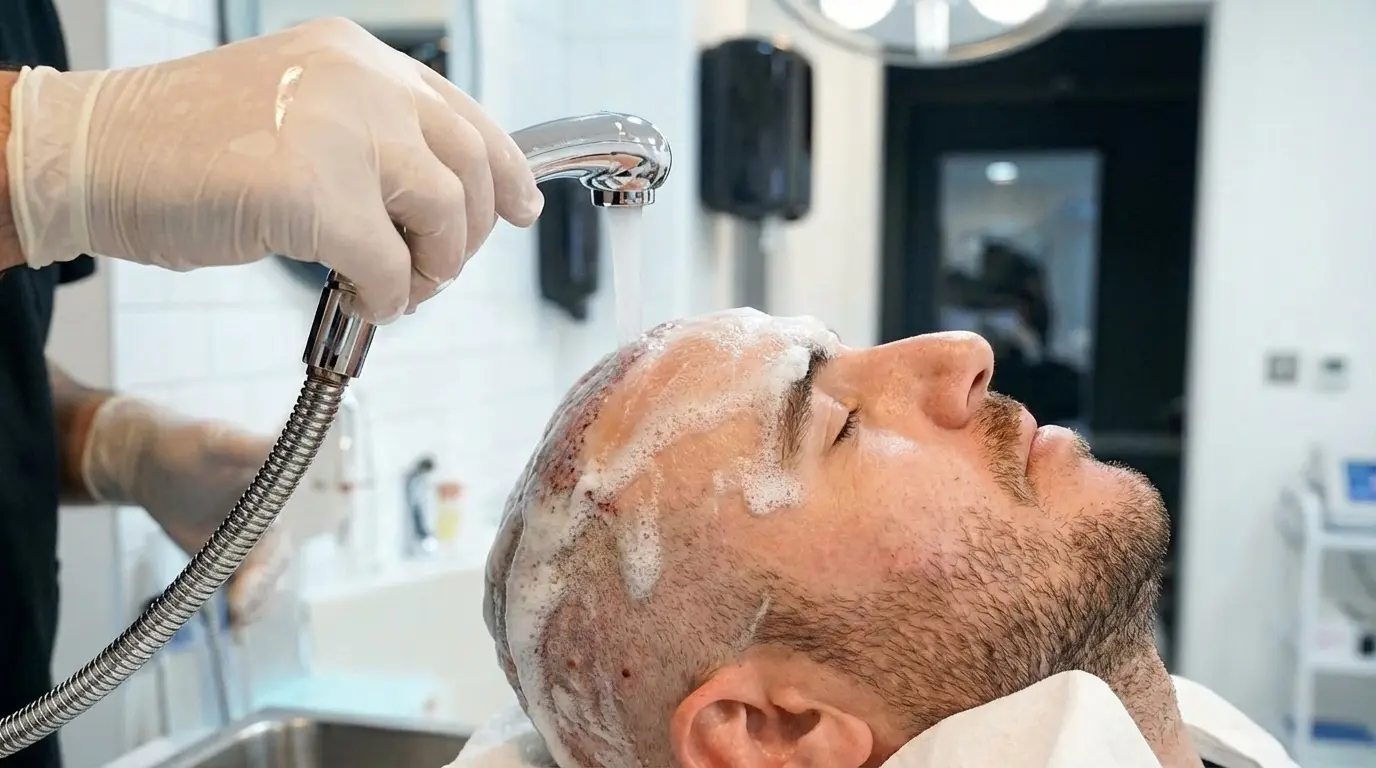
- Prepare the Water Use lukewarm water. Hot water can cause bleeding or swelling. Do not stand directly under a high-pressure showerhead. Instead, use a cup to pour water gently over your head, or use a very low-flow spray.
- Foam It Up Pour a small amount of shampoo into your hands and rub them together to create a foam before touching your head. Do not rub the shampoo directly onto your scalp.
- The “Tap” Method Gently pat the foam onto the transplanted area. Do not rub, scratch, or massage. Just dab the foam on and let it sit for a minute or two. This helps soften the scabs.
- Rinse Gently Use your cup of lukewarm water to rinse the foam off. Let gravity do the work.
- Drying Never rub your head with a towel. Use paper towels or a soft cotton cloth and gently “blot” the moisture. Or better yet, let it air dry.
To understand whether you need to Take Medication After a Hair Transplant and how it affects recovery, read this article.
What to Avoid While Washing
It is easy to go on autopilot in the shower. To protect your results, you need to be mindful of a few bad habits:
- Fingernails: Keep them away from your scalp. Even a tiny scratch can dislodge a graft in the first few days.
- High Pressure: The force of a standard shower jet is too strong for fresh grafts.
- Heat: Avoid hair dryers on the “hot” setting. If you must dry your hair, use the “cool” setting and hold it far away from your head.
- Styling Products: No gels, sprays, or wax until the scabs are gone and the skin is healed.
When to Wash Hair Normally After Hair Transplant
Here’s a table that breaks down the typical washing progression after a hair transplant:
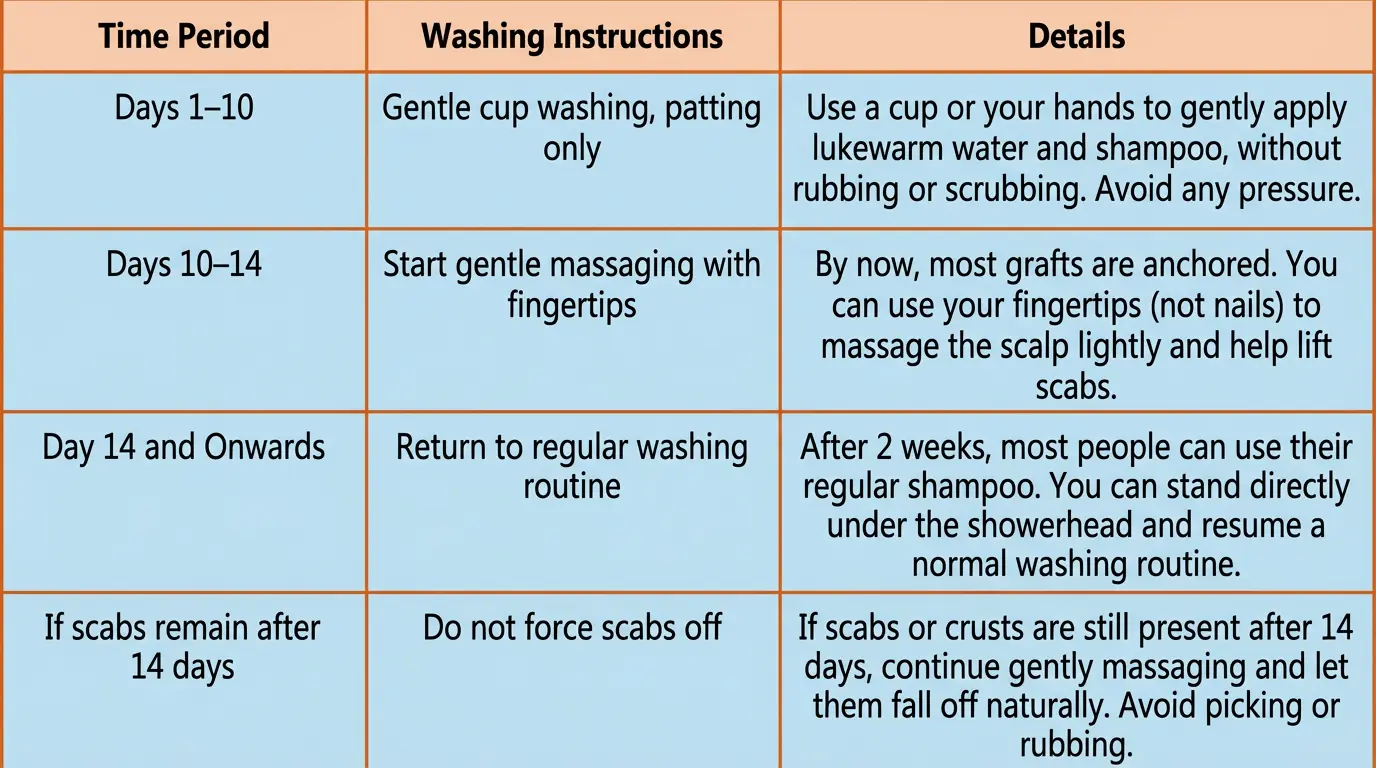
This table provides a clear timeline for when to gradually return to a normal washing routine after your transplant, helping you avoid unnecessary irritation while supporting the healing process.
Why Is Patience So Important After a Hair Transplant?
The days immediately after your hair transplant are meant for healing, not rushing results. While washing or touching the scalp in the first week may feel uncomfortable, proper shampoo and aftercare are essential. A clean scalp helps prevent infection and supports healthy, natural hair growth.