







- What is Shock Loss? A normal, temporary shedding after a hair transplant, affecting both transplanted and native hairs.
- Cause: The stress of surgery, blood flow changes, and resetting hair growth cycles.
- Timeline: Begins 2-8 weeks post-op and can last for a few weeks. New growth typically starts by 3-4 months.
- When to Worry: Severe redness, pus, or large bald patches after 6 months are signs to consult a doctor.
- Prevention: Choose an experienced surgeon, follow aftercare instructions, and consider medications like Finasteride.
You have completed your hair transplant procedure, carefully followed the post-operative care instructions, and begun looking forward to the results. However, several weeks later, you may notice areas of hair shedding when you examine your scalp.
This can be alarming and understandably lead to concerns such as, “Was the procedure unsuccessful?” or “Have I wasted my investment?”
In most cases, there is no cause for concern. What you are experiencing is likely shock loss following a hair transplant. This is a common and temporary phase of the recovery process. While it can be distressing, Initial Shedding is typically a normal biological response and often indicates that the scalp is healing and adjusting to the procedure—not that the transplant has failed.
What Is Shock Loss After Hair Transplant?
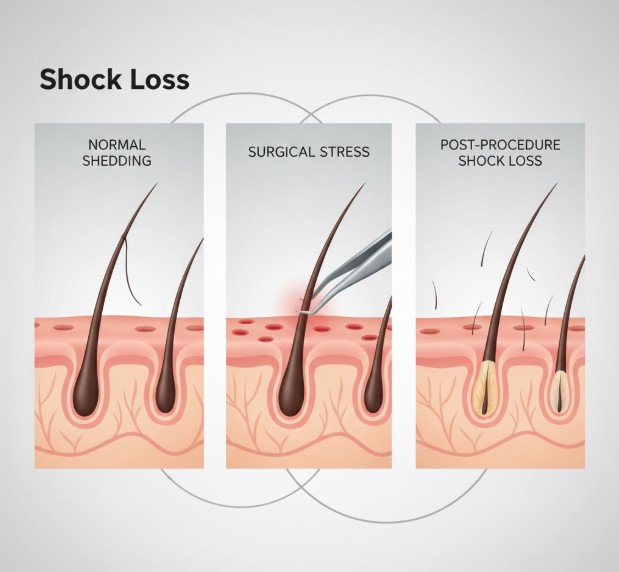
In simple terms, Post-Procedure Shedding is the temporary shedding of hair following a surgical procedure. Think of it like your hair follicles going into a “protective nap.”
The scalp is a sensitive environment. When we move hair from one place to another, the surrounding area gets a bit overwhelmed. This surprise shedding can be a shock to patients, but it’s a natural biological reaction.
Transplanted Hair Fall vs. Normal Shedding
We all lose about 100 hairs a day. However, shock hair loss after hair transplant is different because it happens all at once in the areas treated during surgery. While normal shedding is part of a daily cycle, this is a direct response to the “trauma” of the procedure.
Why Does Shock Hair Loss Occur After a Hair Transplant?
Your hair follicles are tiny living organs. During surgery, they deal with a lot:
- Surgical Stress: Tiny incisions and the fall of grafts “shock” the surrounding skin.
- Blood Flow Changes: As the scalp works hard to heal the new grafts, blood flow to the existing (native) hairs might be briefly interrupted.
- The Growth Cycle Reset: The stress pushes many hairs out of their “growing phase” and into a “resting phase.” When they rest, the hair falls out so a new one can eventually grow in its place.
When Does It Start and How Long Does It Last?
Timing is the biggest cause of panic. Shock hair loss doesn’t happen the day after surgery.
- The Start: Usually between 2 to 8 weeks post-op.
- The Duration: The shedding might last for a few weeks.
- The Regrowth: You’ll start to see new “stubble” appearing around 3 to 4 months in.
Everyone’s body is different. Some people shed a little, others shed a lot. The key is to stay patient during the “ugly duckling” phase.
Does Shock Loss Affect Transplanted Hair or Native Hair?
This is a huge misconception. Many people think they are losing the expensive new grafts they just paid for.
In reality, shock loss can affect both the new hairs and the “native” hair you already had. But here is the secret: you aren’t losing the follicle. The “root” is still alive and well under your skin. Only the hair shaft is falling out. Your new grafts are usually safely anchored within 10 days of surgery.
Understanding Shock Loss: Why It’s Usually Temporary
The short, reassuring answer is: No.
For the vast majority of people, Initial Shedding is a temporary phase. Once the scalp relaxes and the inflammation goes down, the follicles “wake up” and start growing hair again. Permanent loss only happens in very rare cases where the hair was already about to fall out due to natural balding.
Who’s Most Likely to Experience Shock Loss After a Hair Transplant?
Not every patient gets hair transplant shock, but you might be more prone to it if:
- You have a lot of thinning “native” hair in the area.
- Your surgeon used “dense packing” (placing grafts very close together).
- You have a very sensitive scalp or went through a very long surgery.
Temporary Hair Shedding or Failed Transplant? Key Signs to Look For
It’s easy to assume the worst, but a failed transplant looks very different from shock loss after hair transplant.
| Feature | Shock Loss (Normal) | Failed Transplant (Concern) |
| Timing | 2–8 weeks after surgery | Within the first 48–72 hours |
| Scalp Health | Pink or normal-looking skin | Extreme redness, pus, or heavy scabbing |
| Hair Type | Hair falls out without a “bulb” | Grafts (with roots) are physically popping out |
| Feeling | No pain, just thinning | Increasing pain, itching, or heat |
Can Shock Loss Be Prevented?
There is no way to 100% guarantee you won’t experience shock hair loss, but you can minimize it:
- Choose a Gentle Surgeon: Technical skill matters. The less trauma to the scalp, the better.
- Follow Aftercare: Don’t skip the cleaning or the medications.
- Medication: Some doctors recommend using Finasteride or Minoxidil to “strengthen” your hair before the big day.
When Should You Be Concerned About Hair Loss After Transplant?
While most shedding is fine, watch for these “red flags”:
- Signs of infection (unusual discharge).
- Pain that gets worse after the first week.
- Large bald patches that show no signs of growth after 6 months.
If your scalp feels healthy and you’re just seeing hairs in the sink, you are likely right on track.
Trust the Process: Why Patience is Key After Your Hair Transplant
It’s hard to stay calm when you see your hair thinning after you just spent time and money to fix it. But remember, a hair transplant is a marathon, not a sprint. Initial Shedding is just a small hurdle early in the race. Replace your fear with patience. In a few months, you’ll be looking at a much fuller, thicker head of hair. Are you ready to stop worrying and start growing? Don’t let the “ugly duckling” phase get you down. [Download Our Post-Op Growth Checklist] to make sure you’re doing everything possible to support your new hair!
Read this article to figure out Poor Hair Transplant Results, Why They Happen.