







- Hair Transplant to Reduce Forehead — What’s Actually Possible: Outlines how hairline lowering offers subtle, natural proportion changes rather than dramatic forehead reduction.
- Safe Hairline Lowering Limits: Explains modest lowering through graft placement based on donor strength and facial balance.
- Transplant vs Forehead Reduction: Highlights differences between gradual graft‑based lowering and surgical scalp advancement.
- Female Hairline Design: Notes the softer, rounded approach for high‑forehead cases in women.
A high forehead can affect facial balance and confidence for both men and women. Many now wonder whether a hair transplant to reduce the forehead can create a softer, more proportionate look. The idea seems straightforward—just move the hairline down—but the process involves careful planning, anatomy, and aesthetic science.
A hair transplant can improve proportions and restore harmony between the hairline and facial structure, but it cannot change bone structure or facial height. The goal is balance, not drastic reduction. This is why most specialists emphasize design and precision instead of distance.
Can You Lower Your Hairline with a Hair Transplant?
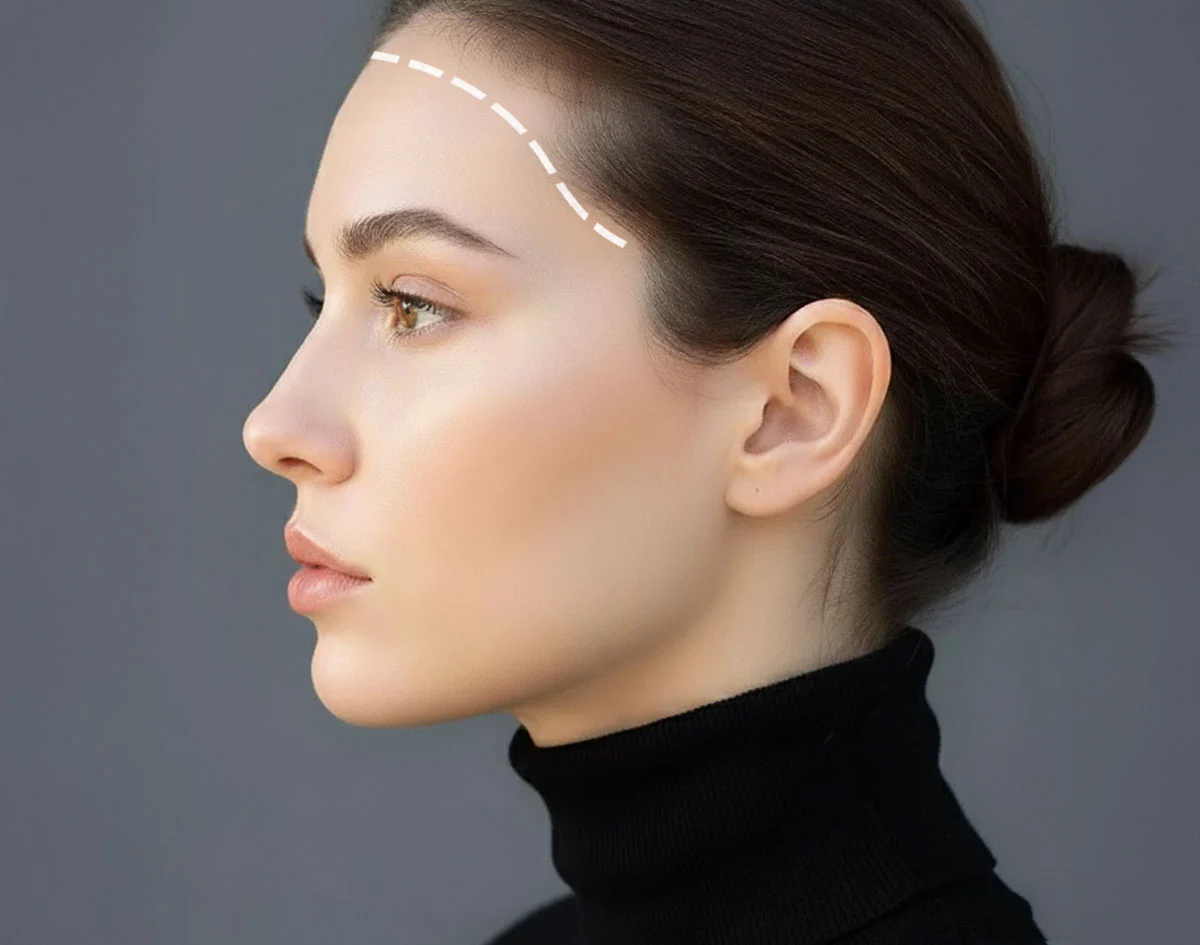
A common question in consultations is can you lower your hairline with a hair transplant? Yes, it’s possible—but only within safe, natural limits. The purpose of a hairline-lowering transplant is to recreate the illusion of reduced forehead height, not to physically move the scalp down.
A skilled surgeon considers facial symmetry, donor capacity, and long-term stability. Lowering a hairline too far can lead to an unnatural frame that disrupts facial balance and later causes awkward recession patterns.
Each millimeter counts. A reduction that looks ideal in youth may seem crowded years later as natural aging affects surrounding areas. Proper design prevents such issues and ensures that the result remains natural even as time passes.
The Hair Transplant Candidates guide explores in depth how proportion, donor density, and genetic stability all contribute to eligibility for this kind of refined transplant.
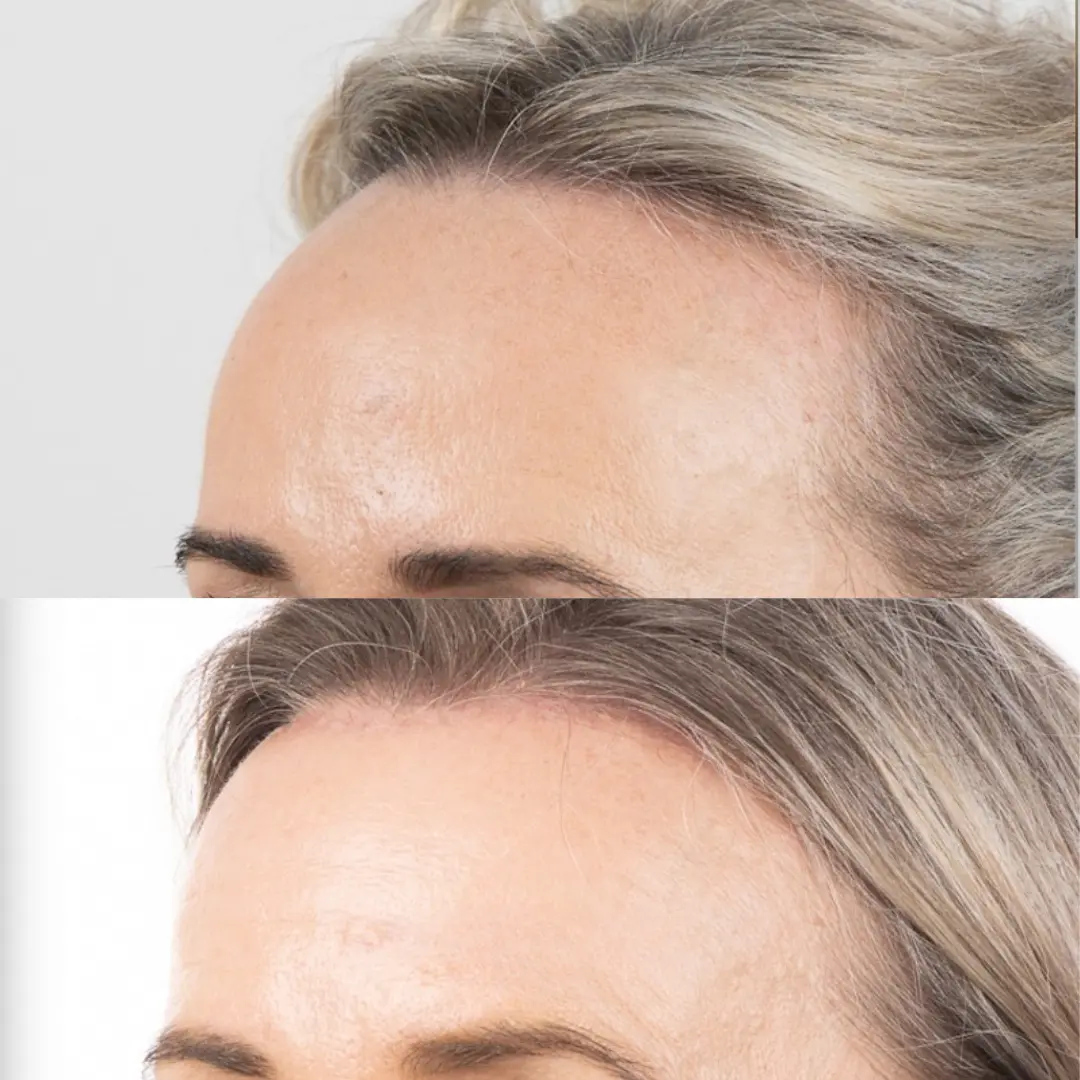
Hair Transplant for Big Forehead — How It Works
A hair transplant for a big forehead involves creating a new frontal hairline, redistributing grafts from the donor zone (often at the back of the scalp) into carefully mapped positions at the front. The goal is to form a hair transplant for a smaller forehead effect—one that softens the upper third of the face.
Instead of shrinking the forehead’s bone structure, the approach adds visual balance. Through density control and placement of delicate single-hair grafts, surgeons build a natural transition zone that mimics how real hair grows.
An artistic element guides the process. The hairline should never appear like a straight border. Irregularity—tiny arcs and micro-zigzags—helps it blend seamlessly into existing hair.
Many people cross-compare details using pages like Frontal Hair Restoration or Hairline Surgery Men, both of which explain how different techniques adapt to each patient’s hair texture and facial contour.
How Much Can a Hair Transplant Reduce the Forehead?
Every surgical plan must respect the natural proportions between the hairline, eyebrows, and upper facial frame. A hair transplant to the lower forehead generally allows a reduction of about one to two centimeters on average. Attempting more aggressive lowering can stretch the skin unevenly, decrease graft survival, and distort facial harmony.
Results depend on several elements:
|
Factor |
Influence on Reduction |
|
Donor Hair Supply |
Determines how full and low the new line can be placed |
| Skin Laxity |
Dictates how comfortably grafts can adapt to the new border |
|
Facial Structure |
Ensures proportional relationships remain realistic |
| Age & Future Recession |
Guides conservative positioning for durability |
Trying to force a dramatic change usually leads to complications or a design that ages poorly. A medically guided approach focuses on proportional harmony, not extremes—one of the key messages in the Poor Hair Transplant insight page.
Hairline Lowering Transplant — Key Design Principles
Every hairline-lowering transplant is a balance between artistic vision and anatomical truth. The surgeon constructs a frame that enhances the eyes and cheekbones without overpowering other features.
- Soft, feathered transition: The first zone uses one-hair grafts for delicate density.
- Irregular natural pattern: Enables light reflection similar to native hair growth.
- Age-appropriate shaping: Keeps the design realistic for decades ahead.
- Natural blending: Smooth shift between new and existing areas avoids harsh contrast.
A well-executed design should not declare “surgery.” Instead, it should disappear into the overall expression of the face.
Hair Transplant vs Forehead Reduction Surgery
Choosing between hair transplant vs forehead reduction involves understanding both procedures’ mechanics and outcomes.
|
Feature |
Hair Transplant | Forehead Reduction Surgery |
|
Procedure Type |
Graft-based filling |
Scalp advancement |
|
Result Time |
Gradual (12–18 months) |
Immediate |
| Scarring | Virtually invisible |
Linear frontal scar |
|
Forehead Reduction Extent |
Moderate |
More dramatic (up to several cm) |
|
Best For |
Those seeking natural, subtle change |
Those with good scalp laxity and a stable hairline |
Combining both is sometimes an option—surgical lowering followed by transplant softening—but this depends on anatomy and donor supply. Qualified consultations emphasize proportion first, then aesthetic refinement.
Detailed procedural comparisons appear in the Hair Transplant Before and After reference, where transformation timelines are outlined with realistic expectations.
Hair Transplant to Lower Forehead in Women
A high forehead female hair transplant follows a specialized design approach. Female foreheads tend to have rounded edges and softer density gradients than male patterns. Overly square or low hairlines can unintentionally add masculine traits.
For women, subtle lowering paired with gentle curvature usually delivers the most natural effect. Density along the temples is balanced to frame the face without closing it off too sharply.
Hormonal stability and future styling preferences also affect planning. Since most female patients retain thick donor regions, their results can appear exceptionally natural when the artistry aligns with biology.
Content related to Female Hair Transplant offers deeper insight into these gender-based design nuances.
Who Is a Good Candidate for Forehead Reduction With Hair Transplant?
Strong candidacy for a hair transplant to reduce the forehead depends on a collection of physical and aesthetic factors rather than one single measure.
Ideal candidates often include:
- Those with a naturally high but stable hairline.
- People with sufficient donor density at the back and sides.
- Individuals with balanced facial proportions.
- Anyone who seeks moderate improvement, not radical change.
Poor candidates may include:
- Persons with active hair thinning behind the front line.
- Those expecting a dramatic lowering beyond two centimeters.
- Patients with limited scalp flexibility or donor reserves.
For borderline cases, doctors often recommend studying Thin Hair Transplant and Hair Transplant Candidates resources, which describe how donor quality influences outcomes.
Risks and Limitations
Every surgical procedure carries some degree of risk. Knowing them in advance builds realistic expectations and prevents disappointment.
Possible complications include:
- Unnatural hairline design if lowered excessively.
- Shock loss affecting nearby native hair after surgery.
- Future recession behind the newly transplanted area if genetic thinning continues.
- Graft angle mismatch when scalp tension is ignored.
Long-term follow-up helps manage these challenges. Even with advanced techniques, a responsible surgeon will guide patients toward a plan that balances ambition with biological truth.
Final Thoughts — Subtle Improvement, Not Extreme Change
A hair transplant to reduce the forehead is best viewed as a refinement, not reconstruction. It adds softness, balance, and confidence by rebuilding a natural transition between forehead and hairline. The technique works within safe proportions, giving subtle enhancement while respecting individual facial structure.
Extreme change may capture attention, but subtle harmony endures. When artistry and restraint meet, the results age beautifully and maintain authenticity.
The priority remains proportion over magnitude—achieving not a “new face,” but a balanced one. A conservative approach, thorough assessment, and skilled surgical planning lead to results that are graceful rather than forced.