






- PRP Hair Results — What You Can Realistically Expect
Outlines how PRP strengthens existing follicles, improves density, and supports early‑stage thinning.
- Gradual, Natural‑Looking Improvement
Explains soft increases in thickness and reduced shedding over months.
- When PRP Works Best
Highlights ideal candidates, timelines, and limits of treatment.
- Support vs. Restoration
Clarifies when PRP helps and when transplant planning becomes necessary.
Early thinning often brings a quiet worry that grows each month. When strands begin to look finer or sections of the scalp appear more visible under certain lighting, many look for something that strengthens what remains before considering anything surgical. This is where PRP hair results enter the conversation.
PRP has become a steady option for mild to moderate thinning, offering support rather than a dramatic overhaul. Its value lies in improving the condition of existing follicles, helping them hold their ground a little longer. The process doesn’t create an entirely new hairline or replace areas where growth has already disappeared, but it often provides a noticeable lift in density and texture for those at the right stage.
What Is PRP Hair Treatment?
PRP stands for platelet‑rich plasma, a concentrated portion of the blood that holds a high number of growth factors. These proteins naturally support tissue repair and help nourish delicate structures, including weakened hair follicles.
During treatment, this plasma is injected into thinning areas. The approach is entirely non‑surgical, which is one reason it’s often considered before exploring more involved options. PRP works where follicles are still alive but performing poorly. Areas that have been bald for years usually show no change because the structures needed for growth no longer exist.
For people comparing early therapies against more advanced solutions, discussions often point toward the natural progression seen in Hair Transplant Candidates, where doctors outline the conditions that qualify someone for surgical restoration.
PRP Hair Before and After — What Do Results Look Like?
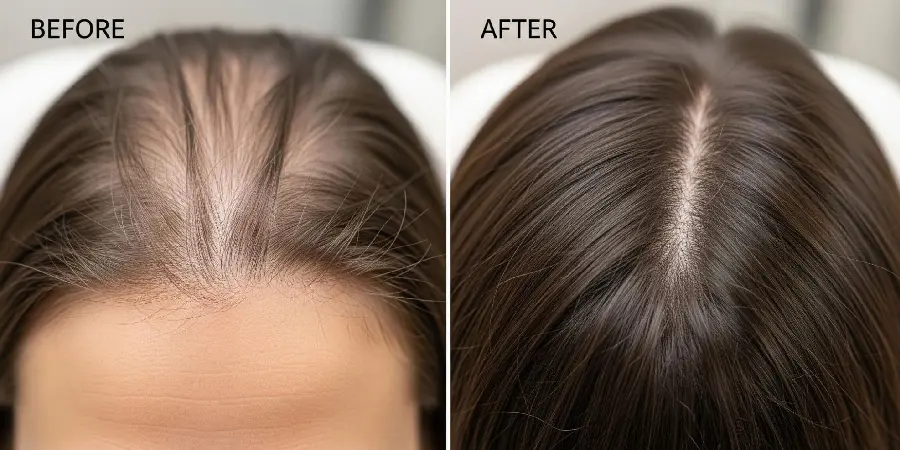
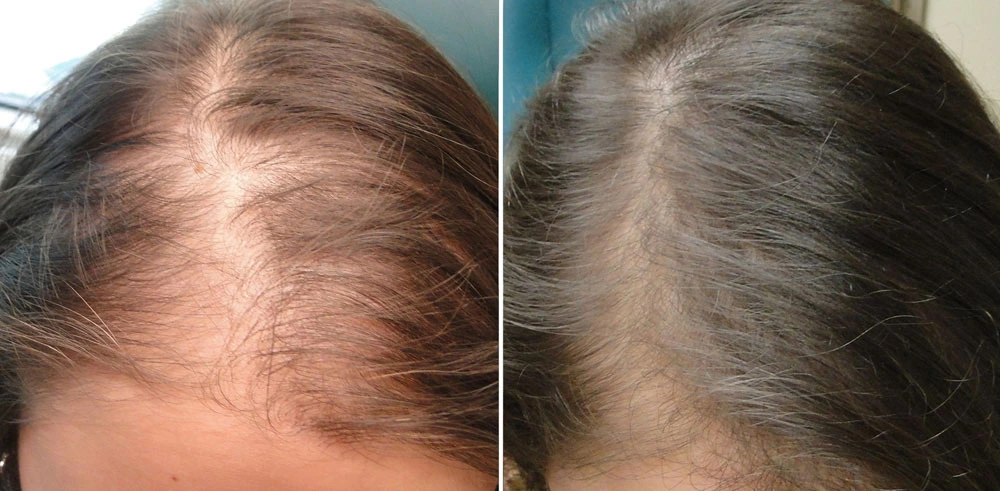
The shift seen in PRP hair before and after images tends to be subtle but meaningful. Rather than a dramatic jump in density, there’s a slow strengthening of the strands that remain. Over time, the scalp looks less exposed, especially around the part line or crown.
In many cases, PRP hair growth before and after photos highlight small gains in thickness that create a fuller impression. Hairs that once appeared wispy take on a more stable look. Light doesn’t reflect off the scalp as sharply, which softens contrast and improves overall coverage.
Still, PRP cannot rebuild frontal outlines that have receded significantly, nor can it fill completely empty zones. It functions best in thinning regions where the roots still have life, especially in patterns similar to those discussed in Thin Hair Transplant evaluations.
PRP Hair Treatment Results — What Does It Actually Do?
Reliable PRP hair treatment results focus less on new growth and more on the health of what’s already there. The growth factors within the plasma encourage a friendlier environment around weak follicles. With consistent sessions, several patterns often emerge:
- A gradual reduction in daily shedding
- An improvement in hair shaft quality
- A soft increase in volume where strands once felt fragile
PRP also supports the active phase of the growth cycle, allowing strands to stay in it longer. Even though the treatment can improve density, it doesn’t multiply follicles or reverse long‑established loss. This distinction becomes important when long‑term planning is considered, especially for those eventually comparing medical support to surgical options.
How Long for PRP to Work for Hair?
A common question revolves around how long for PRP to work hair and when the first meaningful sign appears. The process unfolds in stages, each tied to the natural rhythm of hair growth rather than immediate change.
|
Time Period |
What Usually Happens |
|
1–2 months |
A gentle decline in shedding |
| 3–4 months |
Early thickening in thinning regions |
|
6 months |
More noticeable fullness and calmer loss pattern |
|
Ongoing |
Maintenance sessions help sustain improvement |
The slow progression can feel uneventful at first. Yet, once past the initial cycle, the cumulative effect becomes easier to observe. For people who track their progress through seasonal shifts, situations described in Hair Loss During Ramadan often show how temporary shedding patterns interact with PRP’s stabilizing influence.
PRP Hair Injections Before and After — What Affects Results?
When looking at PRP hair injections before and after comparisons, the difference from one person to another stands out. Several factors quietly shape the eventual outcome:
Age plays a role because younger follicles tend to be more responsive. Hormonal stability matters as well; fluctuations often influence the hair cycle and can either help or slow progress. The number of sessions affects how long improvements last, and combining PRP with medically guided therapy gives the results a broader foundation.
In images showing PRP hair loss before and after, mild cases usually respond best, especially when thinning has not progressed to permanent gaps. Severe forms of patterned loss, on the other hand, may see little improvement unless paired with additional strategies. These cases sometimes move toward surgical discussions and topics such as Shock Loss After Hair Transplant, where doctors explain how transplanted and existing hairs react to stress during recovery.
Who Gets the Best PRP Hair Results?
Predictable PRP hair results appear in those with early thinning, especially when strands have recently begun to weaken. Diffuse hair loss often responds favorably because the follicles are still present across the scalp, even if they are shrinking.
People with stable patterns of loss also tend to notice more consistent benefits since rapid decline leaves less time for PRP to reinforce the existing hair. Stronger underlying follicles give the treatment more to work with, allowing for better quality and coverage after a few sessions.
Less ideal candidates include those with completely bald areas where follicles have been inactive for many years, or individuals in advanced stages of patterned loss. Expectations in such situations rarely match the gentle nature of PRP, and these cases often require more substantial restoration. Many ultimately review Hair Transplant Before and After examples to understand what surgical rebuilding can provide that PRP alone cannot.
PRP vs Hair Transplant — Which One Do You Need?
PRP and surgical restoration serve different roles. PRP supports living follicles, giving them a chance to improve in texture and density, especially early on. A hair transplant, on the other hand, restores follicles that are already gone. Both approaches can work well, but they address separate levels of loss.
A simple way to view the difference is through their purpose. PRP maintains and strengthens. Transplantation replaces and rebuilds. When thinning is still mild, PRP may be enough to delay progression for a while. When thinning has turned into permanent gaps, the missing follicles need to be repositioned through surgery.
This distinction forms the core of discussions surrounding PRP compared to surgical approaches, including Hair Transplant vs PRP, where the practical limits of each path become clearer.
Limitations of PRP Hair Treatment
No treatment is without boundaries. PRP’s limitations help frame realistic expectations:
The effect is temporary and depends on repeated sessions. Once maintenance stops, the benefits gradually fade. Because the treatment works only on existing follicles, areas without active roots cannot show improvement. Genetics, hormones, and lifestyle also influence how well PRP performs. Two people with similar levels of thinning may see very different outcomes.
PRP should be seen as support, not a cure. Severe stages of loss or long‑standing bald patches usually require more than one technique, which is why balanced planning matters in long‑term hair restoration.
Final Thoughts — Is PRP Enough for Your Hair Loss?
PRP often suits those who catch thinning early, when the structural foundation of the hair is still intact. In this stage, platelet-rich plasma before and after hair changes feel encouraging without giving the impression of a complete transformation. The treatment stabilizes, strengthens, and slows decline.
For hair that has reached an advanced stage of loss, PRP can accompany other therapies but rarely replaces more targeted solutions. Thorough evaluation guides the process, making it easier to decide when gentle support is sufficient and when replacement becomes necessary. These decisions often connect back to principles outlined in Hair Transplant Candidates and similar clinical evaluations.