

Deciding to get a hair transplant is a big deal. It’s an investment in your confidence and your future look. But let’s be real: it is still a surgical procedure. It’s completely natural to feel a bit nervous about what happens after you leave the clinic.
If you’ve been searching for the truth about hair transplant side effects, you’ve probably seen everything from minor “redness” to scary-looking “complications.” The goal of this guide is to clear the fog. We want to help you understand what’s just a part of the healing process and what actually deserves a phone call to your doctor.
Is It Actually “Normal” to Have Side Effects?
The short answer? Yes. Think of it this way: your scalp just went through a marathon. Whether you had FUE or FUT, thousands of tiny punctures were made to move hair from one spot to another.
Your body’s natural response to any “injury” is to protect itself and heal. This is why you see hair transplant after effects like swelling or scabbing. These aren’t signs that the surgery failed; they are signs that your immune system is working hard to repair your skin and anchor those new grafts. There is a huge difference between a “normal surgery response” and actual complications of hair transplant surgery. Understanding that difference is the key to a stress-free recovery.
What to Expect in the First 7 Days: Common (and Normal) After Effects
Most people experience a few “standard” side effects in the first week. These are usually more annoying than they are painful.
- Swelling (Edema): It’s very common for your forehead or even around your eyes to swell up a bit 2–5 days after surgery. It looks a bit strange, but it’s just fluid moving through your tissues.
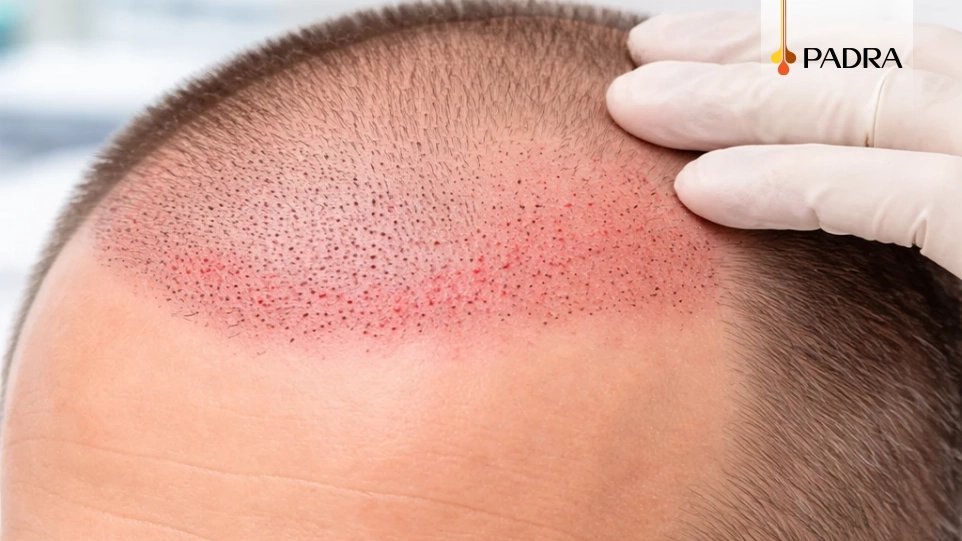
- Redness: Your scalp will likely look like it has a mild sunburn. This usually fades within a week or two.
- Scabbing: Tiny crusts will form around each graft. Don’t pick them! They are like little natural bandages.
- Itching: This is a classic sign of healing. It can be tempting to scratch, but you have to resist to protect the new hair.
- Mild Pain or Tightness: You might feel a “tight” sensation, especially in the donor area, but this is usually managed easily with basic over-the-counter pain relief.
- Temporary Numbness: It’s normal for your scalp to feel a bit “wooden” or numb for a few weeks as the tiny nerve endings recover.
Are you curious about your specific recovery path? Every scalp is unique. If you want a professional look at your hair loss and a personalized risk assessment, Book a Free Transparency Consultation with our experts today.
The “Ugly Duckling” Phase: Shedding and Shock Loss
This is the part that scares patients the most. About 2 to 6 weeks after your procedure, the newly transplanted hairs will likely fall out.
Don’t panic. This is called “shock loss.”
The hair follicle (the “factory”) is still safe under the skin, but the hair shaft (the “product”) falls out because the follicle is entering a resting phase after the trauma of being moved. It’s almost always temporary. The hair will grow back, usually starting around the 3 or 4-month mark. It’s a side effect of the surgery’s impact on the scalp’s rhythm, not a sign of graft loss.
When Things Go Wrong: Rare Complications to Watch For
While the items above are “normal,” there are some complications of hair transplant surgery that are less common but important to know about.
- Infection: This is rare in modern, clean clinics, but it can happen. It usually looks like increasing pain, heat, or pus around the grafts.
- Folliculitis: These look like small pimples or whiteheads in the transplant area. It’s an inflammation of the hair follicles and is usually easy to treat.
- Poor Wound Healing: This is more common in smokers or people with certain medical conditions.
- Uneven Growth: Sometimes, hair grows at different speeds, which can look patchy for a few months before it fills in.
The Long Game: Realistic Long-Term Side Effects
When we talk about the side effects of hair transplant long-term, we aren’t talking about illness. We are talking about the “aesthetic” reality of having had surgery.
- Texture Changes: Sometimes the new hair comes in a bit wiry at first. This usually softens up after a few haircuts.
- Density Perception: A transplant can’t give you back the exact density you had as a teenager. It’s about creating the illusion of density.
- Scarring Visibility: Every surgery leaves a scar. In FUE, they are tiny dots; in FUT, it’s a thin line. If you shave your head completely, they may be visible.
- Ongoing Hair Loss: The transplanted hair is usually permanent, but your original hair around it might keep thinning over the years.
Planning for the future matters. Don’t just think about how you’ll look next month—think about the next decade. Speak with our specialists to create a long-term hair restoration plan that stays looking natural.
How to Protect Your Results and Minimize Risks
You have more control over your recovery than you think. To keep things smooth:
- Pick the Right Clinic: Don’t just go for the lowest price. Look for transparency.
- Follow the Rules: If your doctor says “sleep upright” for three days, do it. It stops the swelling from reaching your eyes.
- Avoid the Gym: Sweat and high blood pressure can literally “pop” the new grafts out in the first few days.
- Be Patient: Most “side effects” are just temporary stops on the way to a full head of hair.
Safety Through Education
A hair transplant is a process, not an overnight transformation. While hair transplant side effects can be a bit annoying in the short term, they are usually a small price to pay for a lifetime of better hair.
The key is education. By knowing what is normal, you can relax and focus on the exciting part: watching your new hair grow over the coming months.
Ready to take the next step with total confidence? We believe in being honest about what to expect. If you want a medical team that puts your safety and long-term results first, let’s talk and schedule your risk-free hair assessment today.