







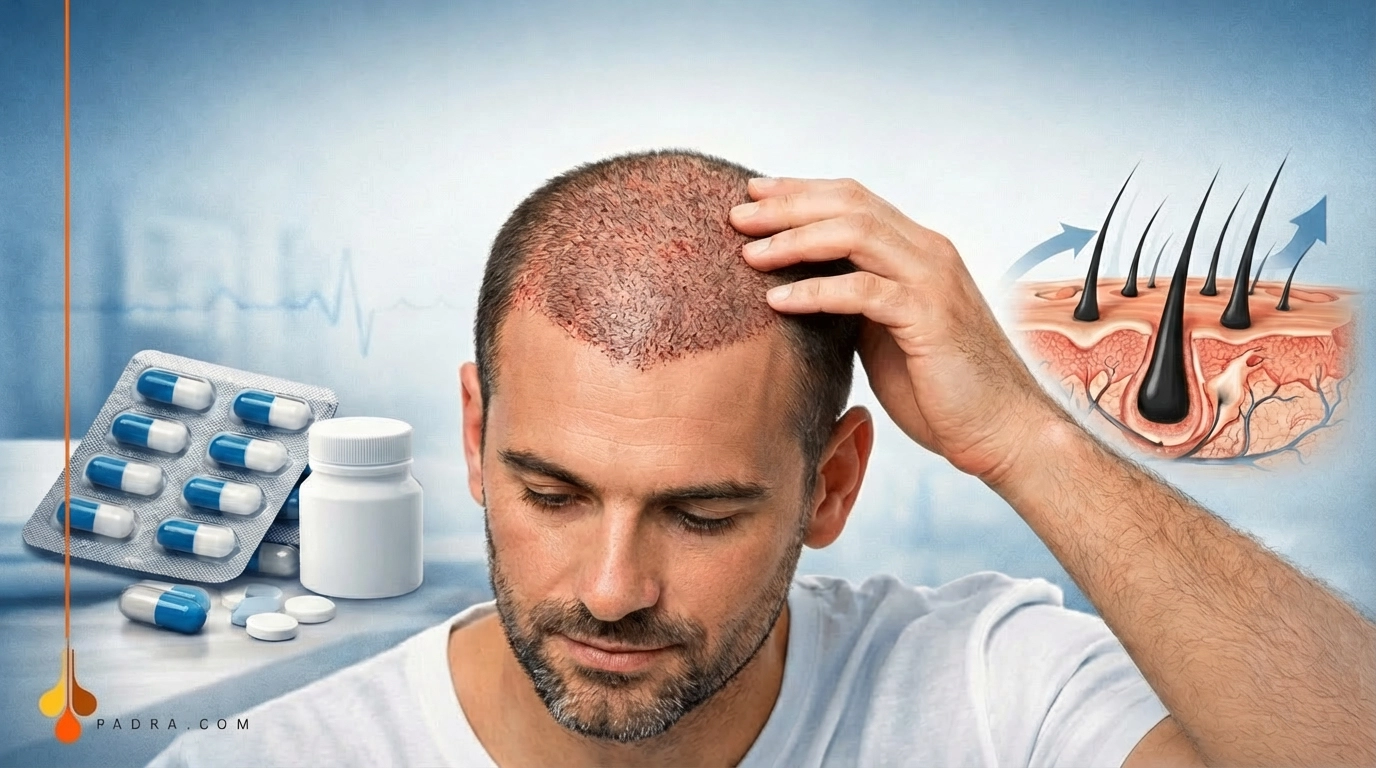
Medication after a hair transplant is usually short-term but important for smooth healing.
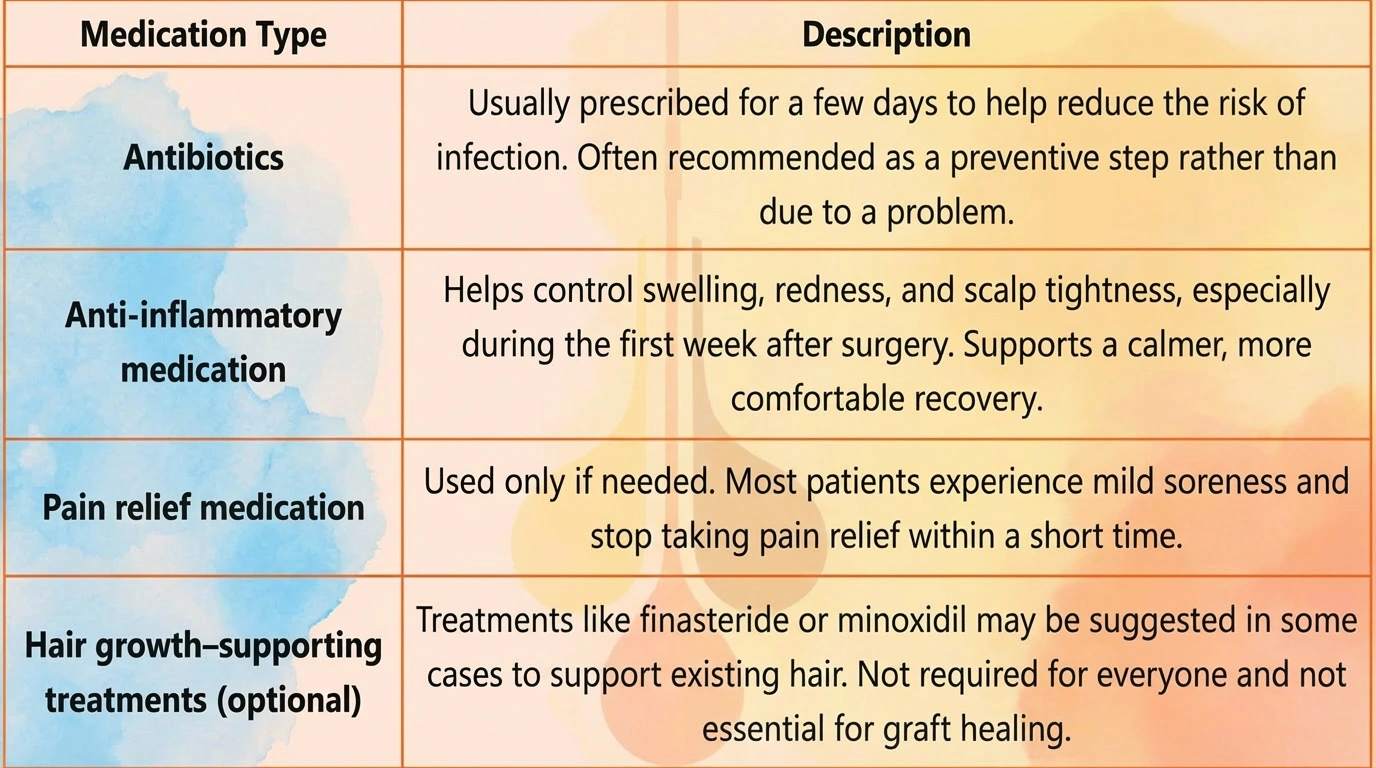
- Antibiotics help prevent infection in the first days
- Anti-inflammatories reduce swelling, redness, and discomfort
- Pain relief is used only if needed
- Optional treatments like minoxidil or finasteride may support existing hair
These medications don’t grow new hair, but they protect grafts, support recovery, and reduce complications when taken exactly as prescribed.
The honest answer is yes—you generally have to take them, but the good news is it’s usually only for a few days.
So, you’ve either just had the surgery or you’re looking into it, and you’re wondering about the aftercare. Specifically, the prescriptions. It’s a valid question. Nobody likes the idea of popping pills if they don’t have to. Are they actually necessary, or is the clinic just being over-cautious?
Here is the breakdown of what you’re actually putting in your body and why skipping it is a bad idea.
Why Medication Matters: Preventing Infection After a Hair Transplant
A hair transplant is minimally invasive, but it’s still surgery. Someone just made thousands of tiny holes in your head.
Your body’s natural reaction to that is to swell up and (potentially) let bacteria in. The medication isn’t there to make the hair grow; it’s an insurance policy. It’s there to make sure the expensive procedure you just paid for doesn’t get ruined by an infection or swelling that pops the grafts out.
Want a personalized consultation?
Contact us Today
Common Medications Prescribed After a Hair Transplant
Do You Really Need Medication After a Hair Transplant?
After a hair transplant, most people need medication, like antibiotics and anti-inflammatories, to aid recovery. Optional treatments, like hair growth meds, depend on your specific situation, such as your age and health. Your doctor will customize your aftercare based on factors like the procedure type and how your scalp heals. That’s why recovery plans can vary between patients. Using the right Shampoo After a Hair Transplant is also an important part of aftercare, as it helps keep the scalp clean and supports proper healing.
How Long Should You Take Post-Hair Transplant Medication?
Most medications after a hair transplant are only needed for a short period.
- Antibiotics and anti-inflammatories are usually taken for several days up to a week.
- Pain relief is only needed if you feel sore and is often stopped after a few days.
- Hair growth medications, like finasteride or minoxidil, may be prescribed for longer, but only if your doctor recommends them.
Important: Always finish your prescribed medication, even if you start feeling better. Stopping too soon can make the treatment less effective and slow down your recovery
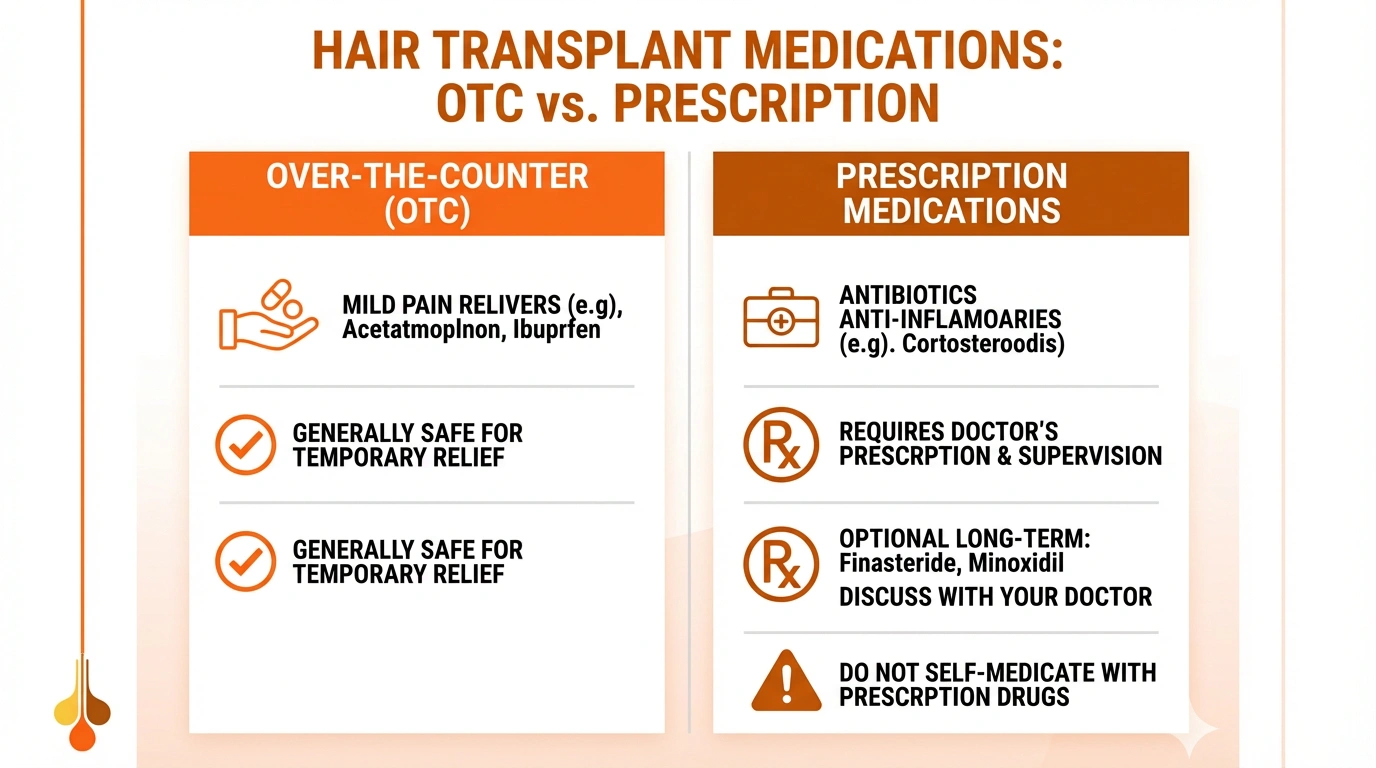
Over-the-Counter (OTC) vs. Prescription Medications
Not all medications are safe to take on your own. Some over-the-counter pain relievers may be okay, but only if your doctor approves. Prescription meds like antibiotics or stronger anti-inflammatories should be followed exactly as prescribed. Mixing them or taking supplements without guidance can slow healing or cause issues.
Can Medication Influence Your Final Hair Transplant Results?
Medication supports healing:
While medication doesn’t guarantee results, it plays a crucial role in helping the healing process. It reduces inflammation, controls discomfort, and lowers infection risks, all of which are essential for graft survival. A stable healing environment is key for new follicles to settle properly.
Consequences of skipping or misusing medication:
Ignoring or not following your medication plan can lead to swelling, irritation, or delayed healing. This can make recovery more difficult and stressful than necessary, slowing down the overall healing process.
When Should You Contact Your Doctor About Medication?
You should contact your clinic if you experience strong or worsening pain, unusual swelling, signs of infection, allergic reactions, or confusion about how to take your medication. It’s always better to ask early rather than wait and worry.
For a complete overview, read A Guide to Hair Transplant for Women, covering available options, candidacy, and recovery.
Following the Right Aftercare for a Smooth Recovery
Keep it simple, stick to the aftercare your clinic gives you.
In most cases, you will need medication after a hair transplant for a short time. Those medicines ease pain, cut swelling, and lower the chance of infection — in short, they help your grafts settle in without drama.
Don’t guess or mix pills on your own. Follow the instructions you were given, finish the course you were prescribed, and check with your clinic if anything feels odd. If you want a second opinion or a quick clarification, call your specialist — a short question now can save time and worry later.