







Shaving after a hair transplant is possible, but timing is critical.
- Donor area: Often safe to trim earlier, usually after 3–4 weeks
- Transplant area: Avoid shaving for the first month
- Months 1–3: Scissors only; no clippers or razors
- After 3 months: Clippers with a guard are generally safe
- After ~6 months: Razor shaving may be considered
Rushing can irritate the scalp or risk graft damage, so patience protects your results.
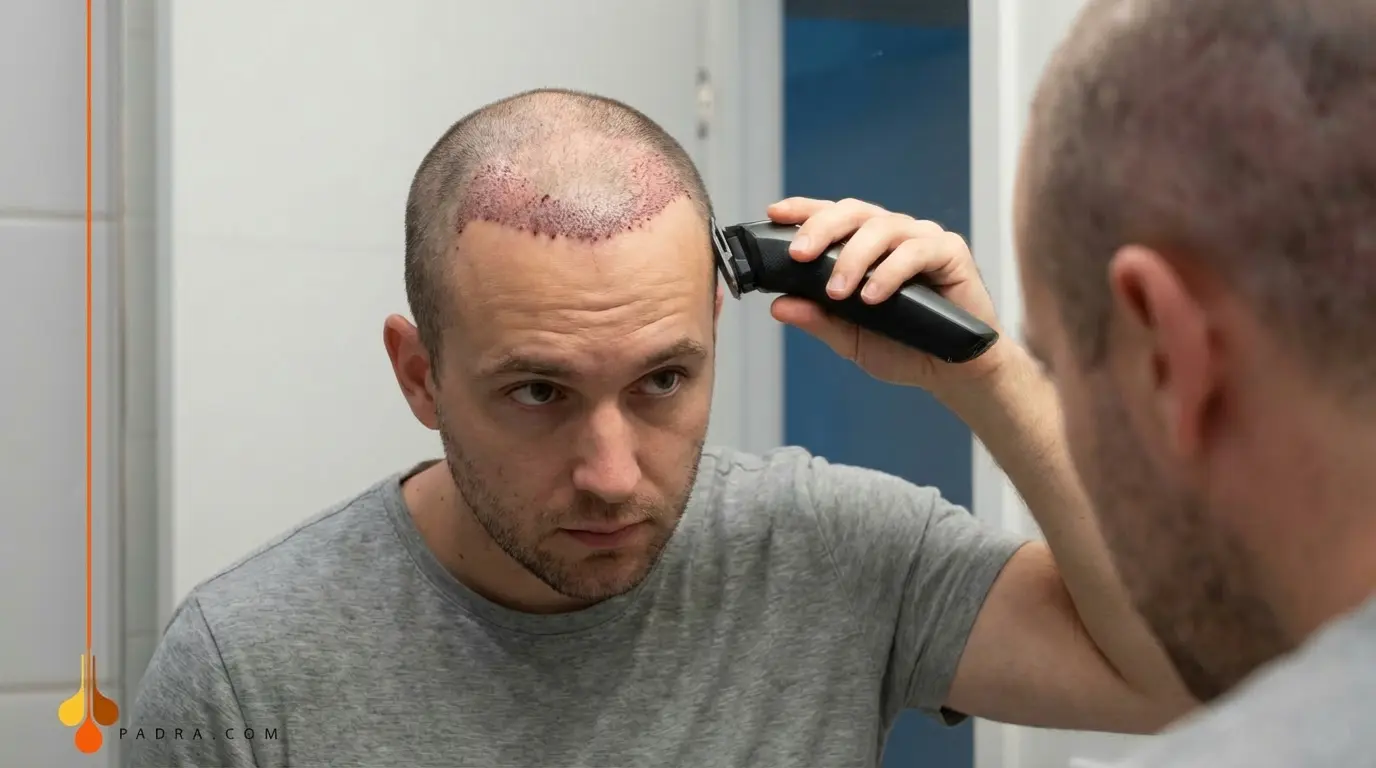
You’ve finally done it. You’ve had your hair transplant, and you are on the road to restoring your hairline. But a few weeks in, you look in the mirror and see a mix of scabs, short stubble, and the surrounding native hair getting long and messy. The urge to grab the clippers is strong.
But before you reach for the trimmer, pause. Shaving hair after hair transplant procedures requires careful timing. The grafts are delicate, and rushing the process can jeopardize the investment you just made in your appearance.
This guide breaks down exactly when it is safe to cut your hair, the difference between treating the back of your head versus the top, and how to keep your new follicles safe.
Can You Shave Your Hair After a Hair Transplant?
The short answer is yes, you can. However, it is not as simple as buzzing it all off the week after surgery.
When patients ask, “Can you shave your hair after hair transplant?” The answer always depends on the timeline. Your new hair grafts are like freshly planted seeds. They need time to take root in the scalp. If you disturb them too early with the vibration of clippers or the scrape of a razor, you risk dislodging the graft entirely.
Generally, most clinics agree that you need to wait until the follicles are fully anchored. This ensures that a haircut is just a haircut, and not a way to accidentally undo the surgeon’s work.
Waiting is important, because the skin on your scalp has gone through trauma. It needs to heal from the tiny incisions. Shaving too soon can introduce bacteria to unhealed skin or mechanically pull out a graft that hasn’t secured its blood supply yet.
Haircut After Hair Transplant is a vital part of your journey.
Shaving the Transplanted Area vs. the Donor Area
It is important to understand that your head has two different healing zones right now: the Recipient Area (where the new hair is) and the Donor Area (where the hair was taken from). The rules for these two areas are different.
The Donor Area (Back and Sides)
The back of your head heals much faster. Since no new hairs are trying to root here, the main concern is just wound healing.
- Recovery: You can usually trim the donor area sooner than the top.
- Method: Scissors are safest early on, but clippers with a guard are often permitted by clinics after the initial healing phase (usually around 3-4 weeks).
The Recipient Area (Top and Hairline)
This is the danger zone in the early weeks. These grafts are fragile.
- Sensitivity: The skin here may be numb or red for a while.
- Risk: Shaving here too early is the biggest mistake patients make. You must treat this area with extreme caution.
Note: Just because the back of your head looks healed doesn’t mean the top is ready for a buzz cut. Always treat them as separate zones.
Contact us Today
When Can I Shave My Transplanted Hair?
This is the most common question during follow-ups: “Can I shave my transplanted hair yet?” While every patient heals at a different speed, here is a general timeline framework to help you plan.
The First Month: Hands Off
For the first 30 days, avoid shaving the transplanted area entirely. The grafts are settling. You might be able to get a scissor trim on the sides (donor area) by a professional who knows you had surgery, but keep machines away from the top.
Month 1 to Month 3: Scissors Only
After the first month, the grafts are usually secure. However, the skin might still be sensitive. Most surgeons recommend using scissors for the transplanted area during this window. This avoids the pulling or vibration that comes with electric trimmers.
Month 3 Onwards: Clippers are usually safe
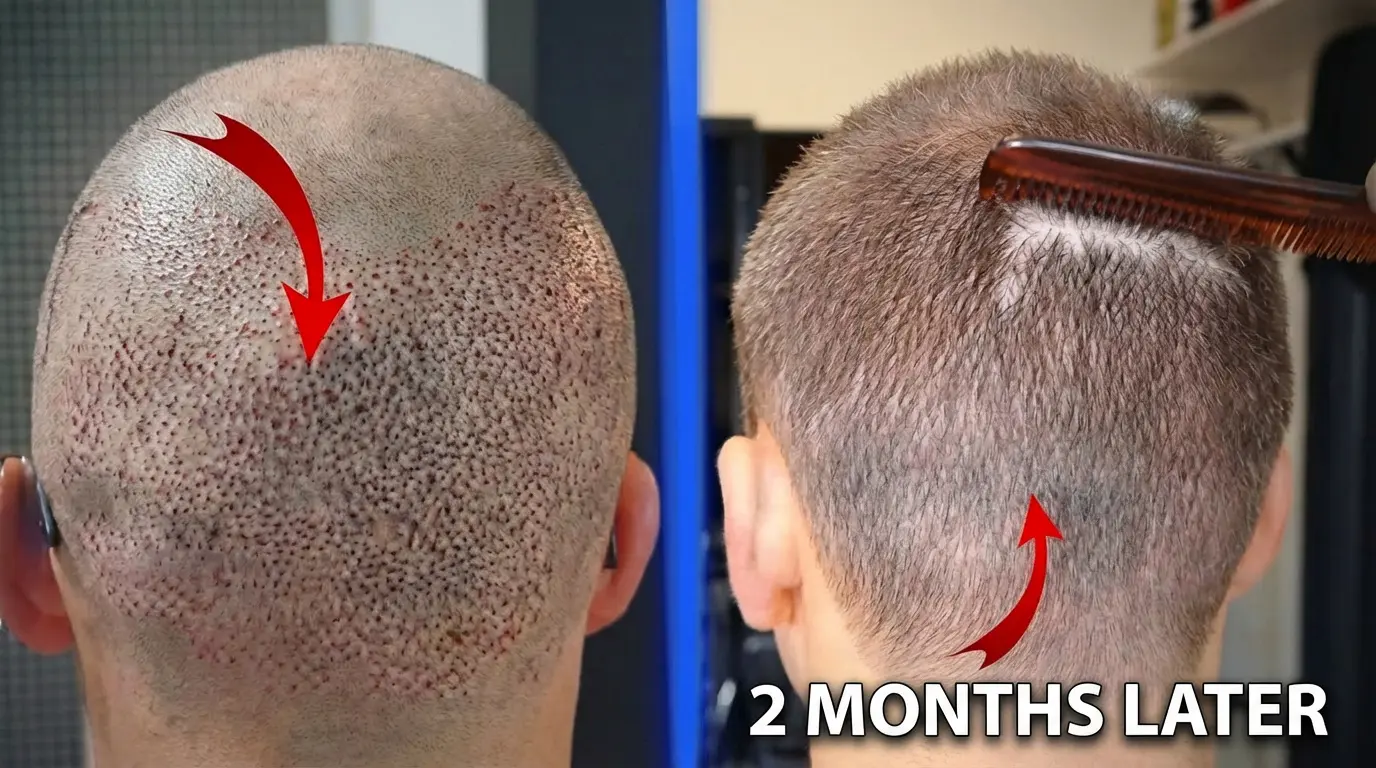
By month three, the “shock loss” phase (where transplanted hair falls out before growing back) has usually passed. Most patients can return to using clippers with a guard.
Month 6: The Razor
Taking a razor blade to the skin (wet shaving) is the final step. Most experts suggest waiting until the scalp is completely normalized, often around the 6-month mark, to avoid ingrown hairs in the new graft sites.
Can You Shave Your Head After a Hair Transplant With a Razor?
There is a big difference between using an electric trimmer with a plastic guard and using a razor blade (like a Bic or Mach3) directly on the skin.
Many patients ask, “Can you shave your head after hair transplant with a razor?” to achieve that smooth, bald look while waiting for growth.
The risk with razors:
- Irritation: A razor scrapes the top layer of skin. On a healing scalp, this can cause massive irritation.
- Ingrown Hairs: Shaving against the grain can cause the new, fine hairs to curl back under the skin, leading to folliculitis (infected bumps).
- Dislodging: Even months later, dragging a blade across the scalp can be harsh.
If you must cut your hair short, stick to an electric trimmer with a guard (grade 1 or 2) for the first few months. It keeps the blade off the skin and prevents damage.
How to Shave Safely After a Hair Transplant?
Once you have hit the safe timeline (usually after month 3 for clippers), you still need to be careful. Here is how to do it without harming your results.
- Clean Everything: Ensure your clippers or scissors are sanitized. You do not want to introduce infection to the scalp.
- Use a Guard: Never use the “zero” setting on clippers directly on the recipient area initially. Use a plastic guard to create a buffer.
- Go With the Grain: Cut in the direction the hair grows. Going against the grain pulls the hair shaft and creates tension on the root.
- No Pressure: Let the clippers glide. Do not press down into the scalp.
- Watch for Redness: If the skin looks angry or irritated after the first pass, stop immediately.
Book your consultation today
Will Shaving Affect Growth or Cause Hair Loss?
There are many myths floating around the internet. Let’s clear them up.
- Myth: Shaving makes hair grow back thicker.
- Truth: It doesn’t. It just gives the hair a blunt tip, which feels coarser.
- Myth: Shaving pulls out the root.
- Truth: If you wait the recommended time (usually 1 month for scissors, 3 months for clippers), the root is anchored deep in the fat layer of the scalp. Shaving the hair shaft above the skin won’t kill the root.
- The “Shedding” Phase: Remember, it is normal for transplanted hair to fall out around weeks 3 to 6. Shaving doesn’t cause this; it’s a biological reaction to the surgery. The root stays, and a new hair will grow in its place.
To know more about Hair Transplant Scabs |Timeline, Healing and What’s Normal, just click and read this article.
Final Thoughts
The desire to look neat is understandable, especially during the “ugly duckling” phase of recovery. However, patience is your best friend when it comes to shaving hair after hair transplant surgery.
Treat the recipient area like gold. Stick to scissors for the first few months, avoid razor blades until the scalp is fully healed, and always prioritize the safety of your grafts over a fresh haircut. The temporary messy look is a small price to pay for a lifetime of great hair.