







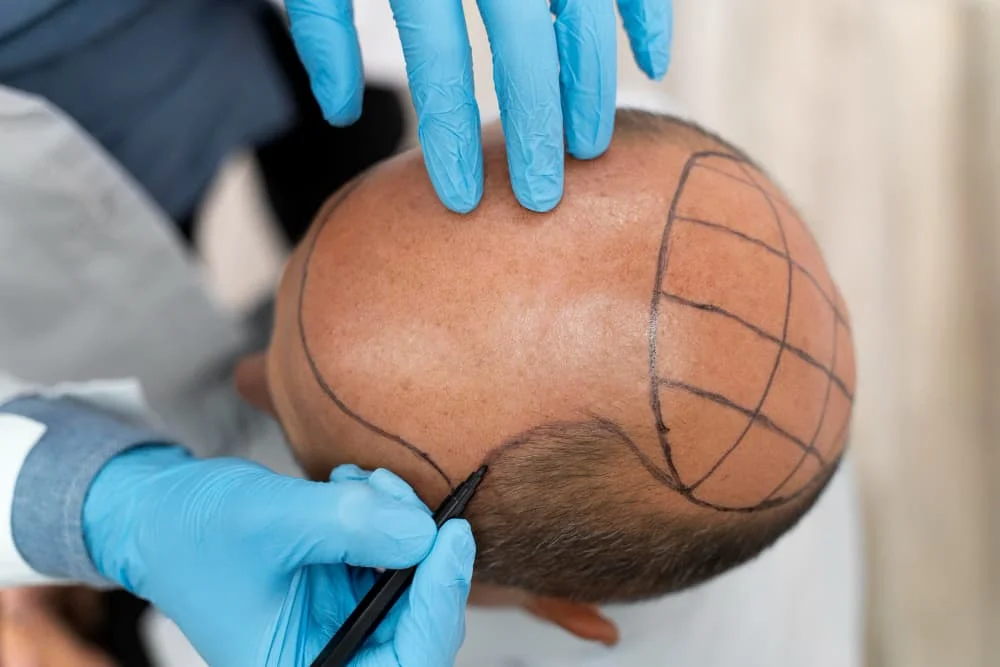
- Hair Transplant With Donor Hair: What Patients Need to Understand — Uses your own follicles, not another person’s, ensuring realistic expectations.
- Donor Source — Back and sides of scalp; body hair is secondary and less predictable.
- External Hair Impossible — Immune rejection makes transplants from others unsafe.
- Limited Supply Matters — Donor quality and density set achievable results.
- Key Takeaway — Knowing donor hair prevents false promises and ensures safe, effective transplants.
If you’re researching hair restoration for the first time, the phrase “hair transplant with donor hair” can be confusing. Many people assume it means hair donated by another person, or even shared donor hair, similar to organ donation. This misunderstanding is extremely common — and it often leads to unrealistic expectations or poor decisions early in the research process.
In reality, every medically approved hair transplant with donor hair relies on your own hair, taken from specific areas of your scalp (or sometimes your body). This article explains what donor hair actually means, why hair from another person cannot be used, and why donor quality is one of the most important factors in determining whether a transplant is even possible.
The goal here is clarity; understanding donor hair properly helps you avoid false promises and protects you from procedures that should never be offered.
What Is Donor Hair in a Hair Transplant?
In hair restoration, donor hair refers to hair follicles taken from your own body. These follicles are living tissue, not cosmetic fibers or dead strands. Once transplanted, they must survive, grow, and function permanently in their new location.
Most donor hair comes from the back and sides of the scalp. These areas are genetically resistant to common forms of hair loss, especially androgenetic alopecia. This resistance is why transplanted hair tends to last long-term when taken from the correct zones.
The word “donor” often confuses because it suggests an external source. In medical hair transplantation, however, you are both the donor and the recipient. No third-party hair is involved.
Can You Get a Hair Transplant From a Donor?
A common question patients ask is: Can you get a hair transplant from a donor, meaning another person
The short answer is no.
Hair transplants do not and cannot use hair from another individual. This is not a limitation of technique or technology — it is a biological reality. Hair follicles are living tissue that carry genetic material. If follicles from another person were implanted, the body would immediately recognize them as foreign and reject them.
Unlike organ transplants, hair transplantation does not involve immunosuppressive drugs, and using them for cosmetic hair restoration would be medically unjustifiable.
Why Hair from Another Person Cannot Be Used
- Hair Follicles Are Biologically Active
- Hair follicles need a blood supply, oxygen, and immune acceptance to survive.
- They are not passive tissue that can simply be transplanted from another person.
- Immune Rejection Makes Transplants Impossible
- Hair from another person would be attacked by the recipient’s immune system, similar to other rejected tissues.
- Preventing this would require lifelong immunosuppression, which carries serious risks like infections, cancer, and organ damage.
- Cosmetic Risks Are Unacceptable
- Because of these dangers, no reputable surgeon or medical body performs transplants using external donor hair.
- Claims about shared donor hair, family donor hair, or “compatible” donor hair are medically false and should be treated as red flags.
Where Does Donor Hair Actually Come From?
In a standard hair transplant with donor hair, follicles are harvested from areas of the scalp that are genetically stable. These are usually the mid-occipital and parietal regions — the back and sides of the head.
These zones are chosen because of a principle called donor dominance. This means that transplanted hair retains the genetic characteristics of its original location, even after being moved. Hair taken from a resistant zone will usually continue to grow even when placed into an area affected by hair loss.
In some cases, surgeons may also consider body hair as a supplemental donor source. This approach is covered in more depth in the Hair Transplant Using Body Hair pillar, as it has specific limitations and is not suitable for everyone.
What If You Don’t Have Enough Scalp Donor Hair?
Not every patient has enough donor hair for a full restoration. Advanced hair loss, previous overharvesting, or repair cases can significantly limit the available follicles.
Alternative Options
- Beard Hair: Can provide additional coverage but differs from scalp hair in texture and growth cycle.
- Chest Hair (Rare Cases): Used only when necessary; also behaves differently from scalp hair.
Why This Matters
- Donor limitations are a key factor in determining candidacy.
- Every graft must be used strategically—there’s no unlimited supply.
- A responsible surgeon will clearly explain what can and cannot be achieved, rather than promising unrealistic density.
Key Takeaway: If scalp donor hair is limited, results will depend on careful planning and realistic expectations. Alternative hair sources can help, but they are not exact substitutes for scalp follicles.
Hair Transplant With Donor Hair vs Body Hair Transplant
Scalp donor hair remains the gold standard in hair restoration. It offers the most predictable growth, natural texture, and long-term reliability.
Body hair transplantation can be useful in select cases, especially for adding bulk or supporting repair work. However, it should be viewed as a secondary option, not a replacement for scalp donor hair.
Patients are often surprised to learn that “more donor hair” cannot simply be added later. Donor supply is finite. Once it is depleted or damaged, it cannot be replenished.
Why Donor Hair Quality Determines Results
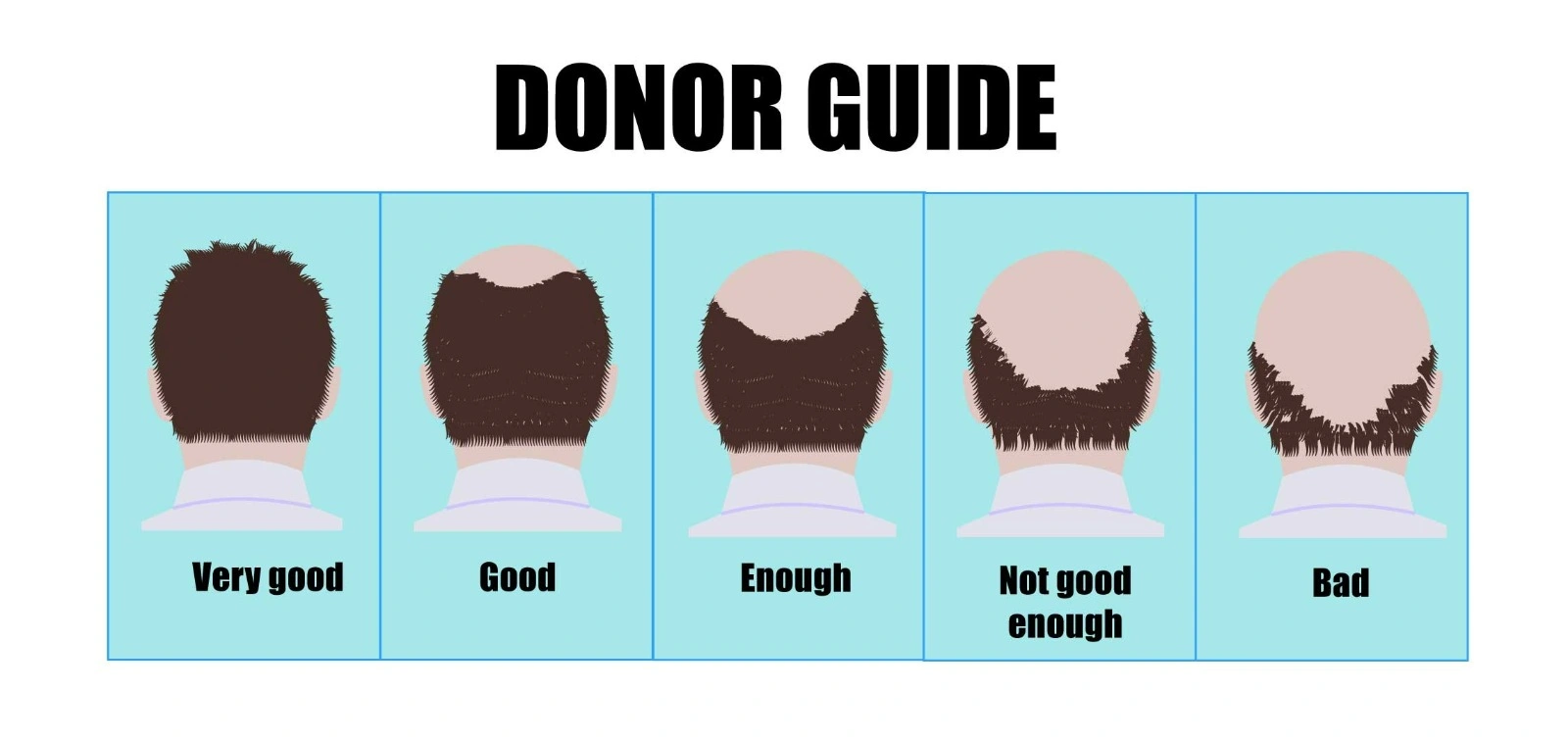
The quality of donor hair sets the ceiling for what a transplant can achieve. Density, hair shaft thickness, curl pattern, and donor stability all influence the final result.
Overharvesting the donor area can lead to visible thinning, patchiness, or scarring in the back of the scalp. This damage is permanent. That’s why donor preservation is one of the most important ethical responsibilities in hair restoration.
A transplant that ignores donor limits may look acceptable in the short term but cause long-term cosmetic problems that are difficult or impossible to fix.
Common Myths About Donor Hair
Myth 1 — Another Person Can Donate Hair
- Reality: This is biologically impossible. Transplanted follicles from another person would be rejected by the immune system and cannot survive long-term.
Myth 2 — Synthetic or Lab-Grown Hair Equals Real Follicles
- Reality: Artificial hair fibers exist, but they aren’t living tissue. They don’t behave like natural follicles and cannot replace real donor hair.
Myth 3 — Donor Hair Can Always Be “Topped Up” Later
- Reality: Donor supply is limited from the start. Each graft must be used strategically because future donor hair is not guaranteed.
How Surgeons Evaluate Donor Hair Before Transplant
Before recommending surgery, ethical surgeons carefully evaluate the donor area. This includes measuring density, assessing follicle miniaturization, and planning for future hair loss progression.
A proper evaluation considers not just current appearance, but long-term sustainability. In some cases, the most responsible decision is to advise against surgery altogether if donor hair is insufficient.
This evaluation process is central to the Hair Transplant Candidates pillar, which explains how candidacy is determined and why some patients should not proceed with surgery.
In Summary, Understanding Donor Hair Prevents Bad Decisions
Every hair transplant with donor hair depends entirely on your own donor supply. There is no external donor option, no shared hair solution, and no shortcut around biological limits.
Understanding what donor hair truly means protects you from misleading claims and unrealistic expectations. Donor quality determines what’s possible, and honest evaluation matters more than bold promises.
When patients understand donor hair correctly, they make better decisions — and better decisions lead to better outcomes.